
Photographed last Sunday.
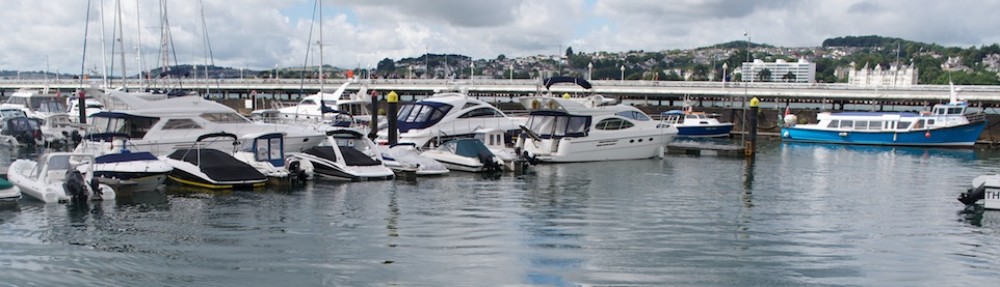
Photographed last Sunday.
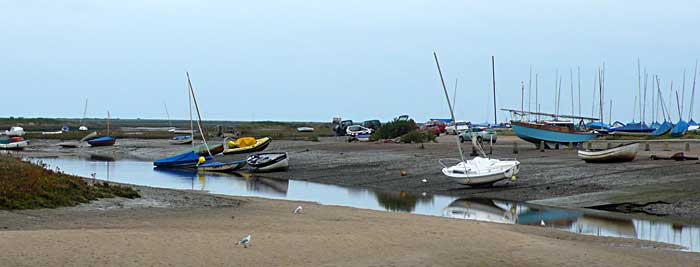
Blakeney Harbour last Thursday. Photographed by Fiona.
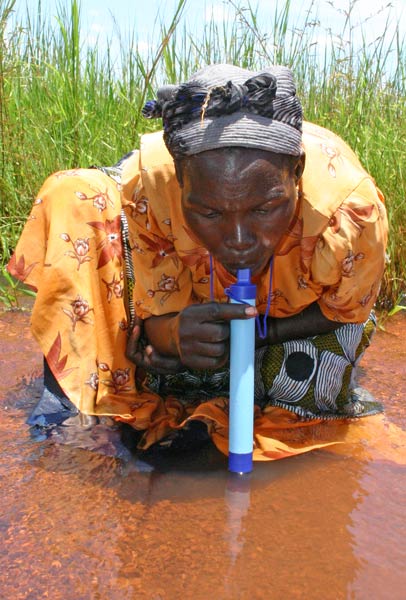
Picture credit: Vestergaard Frandsen
From Photos: Low-cost tech that meets basic needs | CNET News.com…
People can safely drink from polluted bodies of water through the go-anywhere LifeStraw, which filters more than 99 percent of life-threatening bacteria and viruses. It costs up to $5 and lasts about a year, filtering 2 liters per day. A quarter of a million LifeStraws are in use throughout Asia and Africa, where nonprofit groups distribute them following emergencies, such as this month’s monsoon floods in India.
LifeStraw maker Vestergaard Frandsen is working to develop water filters to shut out toxic chemicals, such as arsenic found commonly in Bangladesh. Its new household filter can handle 15 times the amount of water as the straw. The Swiss company spent millions of dollars over a decade to develop the LifeStraw, which grew out of the nonprofit Carter Center’s goal to eradicate the Guinea worm disease. The prevalence of this ailment, caused by a water-borne parasite prevalent in western Africa, has shrunk to less than 100,000 cases from 50 million in the 1950s.
Neat, eh?
And all done in 97 images on Flickr!
Thanks to Pete for the link.
This is a truly lovely idea: a series of portraits of people along with photographs of what they have for breakfast.
Thanks to Pete for spotting it.
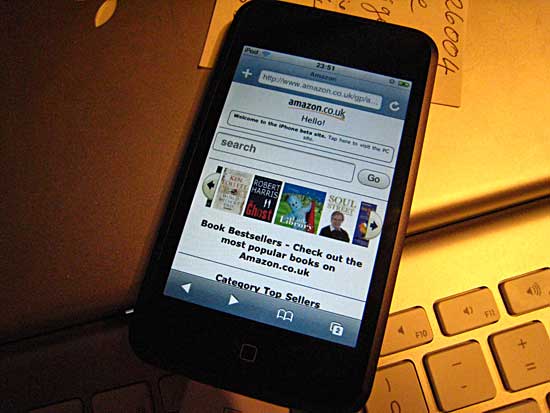
As Quentin says, who would have thought ten years ago that Unix machines would look like this? The most interesting thing about the iPod Touch is not that it’s a music player, but that it’s the best portable browsing machine we have yet seen. Its capacity to render web pages and make them readable is simply astounding. The touch interface plus the software’s rendering ability also suggests that the newspaper industry has been looking in the wrong place all the time. It always supposed that its electronic salvation lay in display hardware — in the form of ‘e-paper’, i.e. lightweight foldable, flexible, high-resolution displays. The effectiveness of the iPod Touch suggests that the combination of clever software and even a small high-res display can do the trick.
The Economist isn’t impressed by the huge valuations currently being placed on Facebook. Neither am I.
Update: In the end, Microsoft valued Facebook at $15 billion.
Microsoft has paid $240m for a 1.6% stake in Facebook that values the hugely popular social networking site at $15bn.
Facebook spurned an offer from Microsoft’s rival Google, which was also keen to invest the site.
Microsoft will also sell internet ads for Facebook outside the United States as part of the deal that took several weeks of negotiating.
What’s surprising is how small the Microsoft stake is. This has to be about advertising rather than investment.
Hmmm… From Good Morning Silicon Valley…
Ask people these days who Big Brother symbolized in Apple’s classic “1984″ commercial, and a goodly number of folks are liable to say Microsoft. But 23 years ago, the target of Apple’s hammer-wielding freedom fighter was IBM, the PC market leader at the time. So it must have been with an exhilarating sense of satisfaction that Steve Jobs and the Apple brass watched another dazzling set of quarterly financials push the company’s stock price up to around $187 a share today, vaulting Apple’s market cap past IBM’s by about $6 billion.
And while Google-watchers go gaga over its soaring share price (see “A six-letter word for bubble? Try gasbag“), note that an investor who bought Apple on the same day Google stock debuted in 2004 would have, as of the close of market yesterday, made 40 percent more than if the same money had been put into the search sovereign’s shares.
Some interesting cases were decided last week.
Disgruntled fans of Sheffield Wednesday who vented their dissatisfaction with the football club’s bigwigs in anonymous internet postings may face expensive libel claims after the chairman, chief executive and five directors won a high-court ruling last week forcing the owner of a website to reveal their identity.
The case, featuring the website owlstalk.co.uk, is the second within days to highlight the danger of assuming that the apparent cloak of anonymity gives users of internet forums and chatrooms carte blanche to say whatever they like.
In another high court case last week, John Finn, owner of the Sunderland property firm Pallion Housing, admitted just before he was due to be cross-examined that he was responsible for a website hosting a scurrilous internet campaign about a rival housing organisation, Gentoo Group, its employees and owner, Peter Walls.
Exposing the identity of those who post damaging lies in cyberspace is a growth area for libel lawyers.
Dan Tench, of Olswang, the law firm representing Gentoo, said: “This case illustrates an increasingly important legal issue: proving who is responsible for the publication of anonymous material on the internet. This is likely to be a significant issue in defamation cases in the future.”
The website Dadsplace, set up to campaign against perceived injustices in the family courts, had a forum where anonymous postings made various accusations against Gentoo, Mr Walls and his staff.
Those posting the comments went to considerable lengths to hide their identity, and Gentoo’s lawyers ran up a bill estimated to be about £300,000 – which Mr Finn will now have to pick up, along with any damages awarded – taking the case to court and amassing circumstantial evidence that he was behind the website…
Another lucrative line of business for m’learned friends. And a salutary reminder to utopian libertarians that the law has a longer arm than we once supposed.
The best news we’ve had in months came from the Polish electorate, which comprehensively rejected the crew who have been ruining the country for the last few years. As the Guardian leader-writer puts it…
Polish democracy grew up on Sunday, when the country’s voters rejected the strident, xenophobic nationalism of Jaroslav Kaczynski. The election mattered not just because it was the first time a generation born after 1989 could vote. Nor because the liberal conservative winner Donald Tusk won the strongest mandate of any prime minister in the post-communist era. It was important because it saw a new generation of voters express its impatience with a leadership that saw the rise of Poland exclusively through the prism of 20th-century invasion and occupation. Though Mr Kaczynski’s twin brother Lech still holds the presidency, Poland has turned a corner.
The reaction in European capitals to the departure of the intellectually dominant Kaczynski twin is not the best way to gauge the result of a snap election. But it does show how many countries the twins alienated in their brief but incident-packed reign. There was Germany, which found that the country they had sponsored for entry into the EU was now using membership as a way of settling old scores. There was Russia, whose relationship with the EU was embittered by Poland, retaliating to a Russian ban on Polish meat. There was the EU itself, whose reform treaty was nearly scuppered in the summer by Polish demands for more votes. The election was as much about Poland’s image abroad as it was about the need for more tolerance and liberty at home. If Mr Kaczynski’s model for Poland was a combative, xenophobic country surrounded by perceived enemies, and committed only to a relationship with a dwindling band of US neoconservatives, that model was rejected by the thousands of Poles living in Britain and Ireland who had a calmer, less hysterical view Poland’s place in Europe…