On the beach

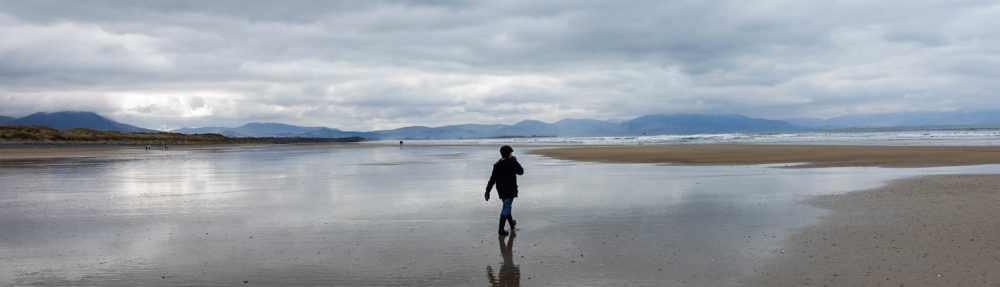
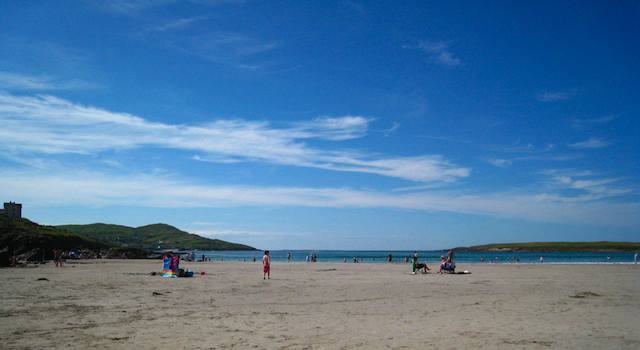
This is where I spent last Sunday — on the beach at Naran. There were all kinds of exciting proposals for what we should do that day, and the others went off on cycle rides and other energetic pursuits. But I just got a folding chair and a book and sat on the beach. And, in the end, I didn’t do much reading, but simply sat there watching and listening and drinking in the scene.

I fell to wondering what it is that is so satisfying about beach holidays. Partly it’s because they’re perfect for families with young children — especially when the beach is as gentle and safe as this. At one stage a nice young couple and their toddler arrived and came past me. The child had clearly just begun to walk, and I watched, enthralled, as she tottered determinedly, hands outstretched, towards the sea with her proud (and slightly anxious) parents following in her wake. And I remembered how Sue and I used to sigh with relief when we came on such a place when our children were young: we could set up a base with rugs and towels and drinks and the kids could roam without us having to worry about their safety. We could even snatch a moment or two to read, or just to talk quietly together. But now the kids are grown up and independent, and still I choose to be here. Why?

One answer is that this is what I craved when I was a child myself. I envied families who had seaside houses. But my parents weren’t ones for beach holidays. They believed in shuttling from relative’s house to relative’s house over the holiday period. Given that they both came from large families, this made for a lot of time on the move. In fact, the only time I can ever remember a long period on a beach with them was a blissful June day we spent at Portnoo — the next beach along this Donegal coast — when I was seven or eight. I remember the water being temperate (and the waves gentle, as they were last Sunday), the sandwiches delicious, and tea (brewed on a Primus stove) tasting like tea never tasted at home. And because it’s light until nearly 11pm in June in this part of the world, the day seemed to go on forever. I remember thinking that this is how I always wanted summers to be. But they never were.

Until now. However, I reflected, getting up to fetch a (delicious) cup of tea from the cafe at the end of the rudimentary promenade, better late than never.

Poorly chestnuts

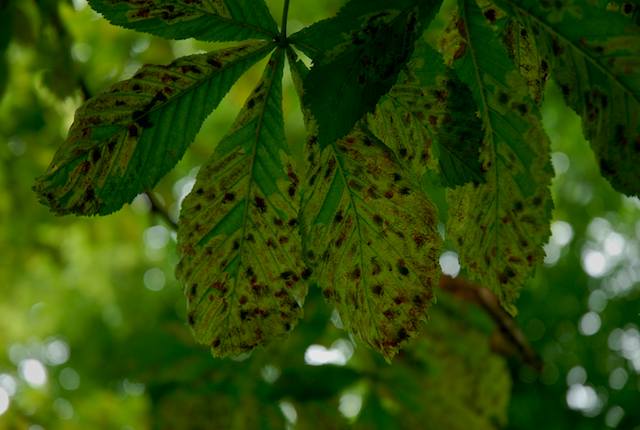
I love Horse chestnut trees, and so am worried by the fact that many of them appear to be ailing — at least in East Anglia. From a distance, they look as though they’re going brown, as if Autumn has arrived suddenly and early. Close-up, their leaves are mottled like this.

Here’s the culprit: a ‘leaf-mining’ moth called Cameraria ohridella. According to the Forestry Commission, the damage is caused by its larvae. “The spread and establishment of C. ohridella is of particular concern”, it says, “because once established, the moth appears always to maintain exceptionally high rates of infestation without any evidence of decline. In European towns and cities there has been no decrease in populations even after many years, and severe damage to horse chestnuts has occurred on an annual basis, greatly impairing the visual appearance of the trees”.

The middling way

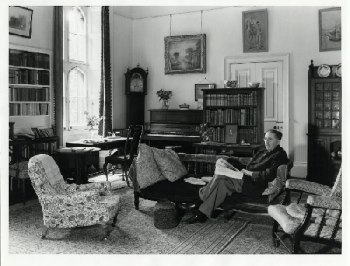
One of the highlights of my student career was meeting E.M. Forster. Carol (my first wife) and I were members of the Cambridge Humanists, and the society threw a party for Forster on his 90th birthday. It was held in King’s, where he was a Life Fellow (the photograph, taken in 1968, shows him in his Set) and hosted by Francis Crick who — as a Nobel laureate — was Cambridge’s most prominent humanist at the time (and may even have been the society’s Patron). Forster was in a chair (it may have been wheelchair — on that my memory is foggy) and sat quietly while a good deal of celebratory bedlam — which he viewed with a mildly quizzical expression — went on around him.

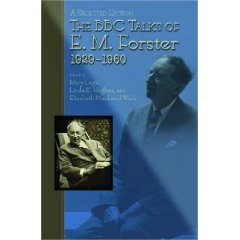
As someone whose pet hate is people who are endowed with certainty: religious fundamentalists, for example and ideological fanatics — I’ve always admired Forster for his uncertainty, open-mindedness and willingness to entertain the thought that he might be wrong. So the works of his that I’ve enjoyed most have been his essays, and the broadcast talks he gave on the BBC. Which is why it’s wonderful to discover that the collected talks have now been published in a handsome, footnoted edition.

Zadie Smith (whose novel On Beauty was allegedly inspired by Forster’s Howard’s End) has written a thoughtful review in the current issue of the New York Review of Books. “In the taxonomy of English writing”, she writes,

E.M. Forster is not an exotic creature. We file him under Notable English Novelist, common or garden variety. Still, there is a sense in which Forster was something of a rare bird. He was free of many vices commonly found in novelists of his generation—what’s unusual about Forster is what he didn’t do. He didn’t lean rightward with the years, or allow nostalgia to morph into misanthropy; he never knelt for the Pope or the Queen, nor did he flirt (ideologically speaking) with Hitler, Stalin, or Mao; he never believed the novel was dead or the hills alive, continued to read contemporary fiction after the age of fifty, harbored no special hatred for the generation below or above him, did not come to feel that England had gone to hell in a hand-basket, that its language was doomed, that lunatics were running the asylum, or foreigners swamping the cities.

Smith’s angle is that Forster was the ultimate middleman. He was, she thinks,

a tricky bugger. He made a faith of personal sincerity and a career of disingenuousness. He was an Edwardian among Modernists, and yet—in matters of pacifism, class, education, and race—a progressive among conservatives. Suburban and parochial, his vistas stretched far into the East. A passionate defender of “Love, the beloved republic,” he nevertheless persisted in keeping his own loves secret, long after the laws that had prohibited honesty were gone. Between the bold and the tame, the brave and the cowardly, the engaged and the complacent, Forster walked the middling line.

I’ve always thought of him as the epitomé of mild common sense. He understood the primacy of friendship, for example, and his aphorism about it (that if he had to choose between betraying his country and betraying his friend he hoped he’d have the courage to do the former) is a pretty good guide for living. And, when one remembers the jingoistic times in which he said that, it’s a aphorism that took courage to articulate.

In fact, he’s always seemed to me to be, in his mild-mannered way, rather courageous. He was a distinguished humanist, but one who recognised that the creed had its weaknesses: “the humanist shirks responsibility”, he wrote, “dislikes making decisions, and is sometimes a coward”. But during the war and the years running up to it Forster didn’t display much cowardice. He ridiculed Nazi “philosophy” from the early 1930s onward, attacked the prison and police systems, defended the Third Program, spoke up for mass education, the rights of refugees, free concerts for the poor, and art for the masses. In other words, he kept faith with liberal principles that many of his more cocksure contemporaries abandoned. “Do we, in these terrible times”, he asked, “want to be humanists or fanatics? I have no doubt as to my own wish, I would rather be a humanist with all his faults, than a fanatic with all his virtues.”

Right on.

Horseman pass by

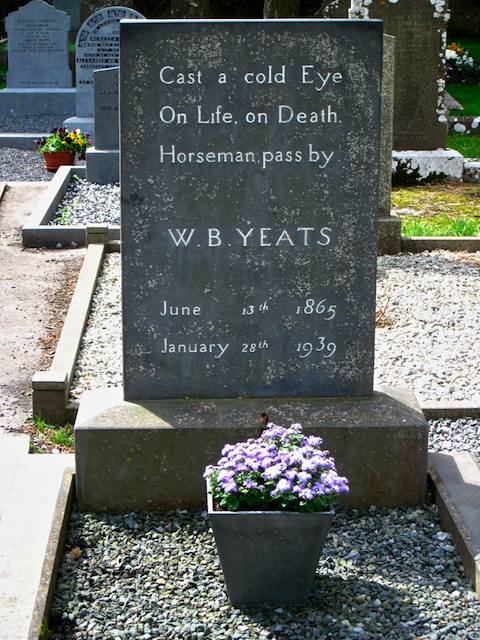
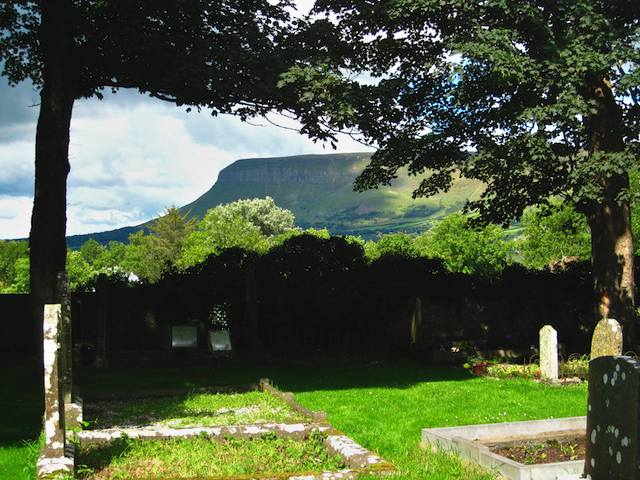
We made our annual pilgrimage to W.B.’s grave today, partly because it’s an excuse to visit a beautiful (and IMHO under-rated) part of Ireland, but also because Drumcliffe is a lovely churchyard lying, as it does, at the foot of Ben Bulben.

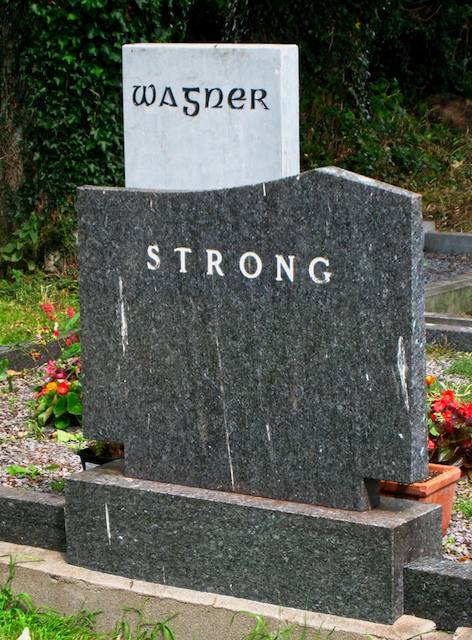
By Church of Ireland (i.e. Protestant) standards, it’s an extraordinarily well-preserved and maintained churchyard, with fascinating name juxtapositions, as here:

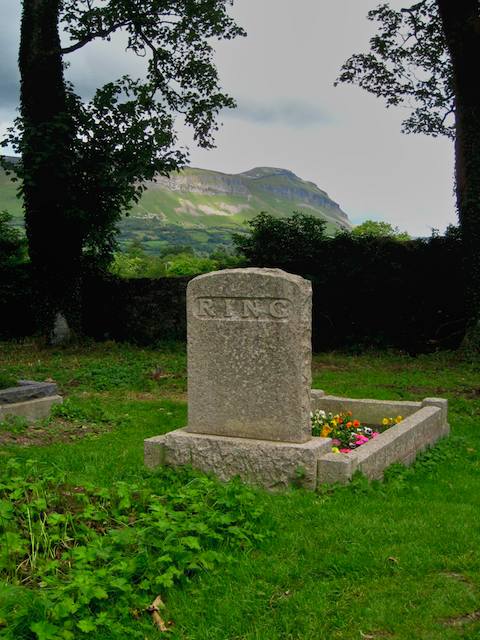
And just along from Wagner, what do we find?

Call that a camera…

Michael Dales is the first of my Camvine colleagues to bag a Google StreetView car

Yesterday on my walk to work I spotted someone stood on top of their car erecting upon it what looked like a ship’s superstructure. I had my suspicion as to what this might be, so I went to have a chat with the guy, and my guess was confirmed – it was the Google Streetview Car!

Maybe we should start a Googlecar Twitchers club?

Hard Times

TV presenter Carol Vorderman felt forced to leave Channel 4 quiz show Countdown after she was told to take a 90% pay cut, her manager has said.

Agent John Miles said Vorderman, 47, had been told the series survived the death of host Richard Whiteley in 2005, and could “easily survive without you”. Vorderman, a co-host since its 1982 start, said she wanted everyone “to know the truth” about her departure.

A Channel 4 spokeswoman said: “We never comment on presenters’ salaries.”

Vorderman, who is reported to earn in the region of £900,000 a year from the show, announced she was leaving on Friday.

Mr Miles said his client had offered to accept a pay cut of one-third, in line with a 33% budget cut being imposed on the show by ITV Productions, which makes Countdown for Channel 4. But he said she felt she was left with no alternative but to leave after she was told to take or leave an offer of 10% of her current salary, and given 48 hours to decide.

Aw shucks. The poor dear — offered only £90k for standing up and breathing. Still, the show must go on. Apparently.

Randy Pausch RIP

From Good Morning Silicon Valley

Randy Pausch, the popular computer science professor at Carnegie Mellon whose appetite for life was only sharpened by a diagnosis of terminal pancreatic cancer in September 2006, has died.

Pausch’s inspirational “Last Lecture” a year later, titled “Achieving Your Childhood Dreams,” was posted to YouTube and became an unexpected sensation, viewed millions of times. It evolved into a best-selling book, and Pausch used his sudden celebrity to be an advocate for both cancer research and savoring life. Randy Pausch died this morning at his home. He was 47. In the “Last Lecture,” he said, “I mean I don’t know how to not have fun. I’m dying and I’m having fun. And I’m going to keep having fun every day I have left. Because there’s no other way to play it. You just have to decide if you’re a Tigger or an Eeyore. I think I’m clear where I stand on the great Tigger/Eeyore debate. Never lose the childlike wonder. It’s just too important. It’s what drives us.”

The key to the past

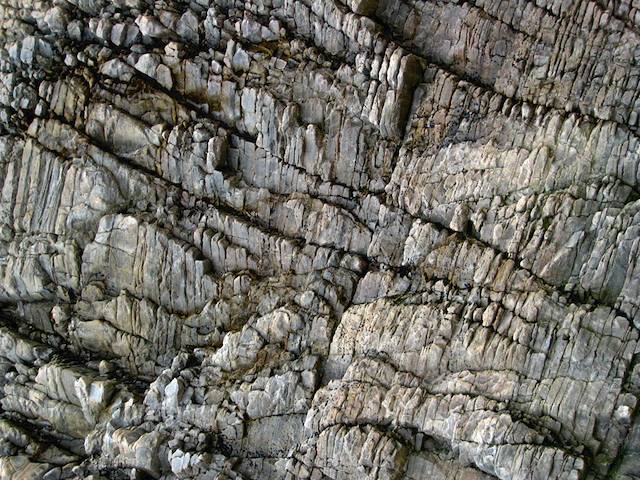
The Donegal coastline makes one want to be a geologist. Walking it leaves one awestruck by the evidence of the forces which have shaped and tortured the trillions of tons of rock which makes up this landscape. Looking at the segment shown in the photograph (at Maghera, near Ardara) I fell to thinking that, to a geologist, it’s probably like an open book, whereas to me it’s just awe-inspiring and opaque.

And then I fell to thinking about Charles Lyell, the geologist without whom Charles Darwin’s theory of evolution by natural selection would have been incomprehensible. Evolution needs aeons to do its work, and it was Lyell who provided the evidence that the geological timescale was sufficient.