
Wednesday 3 June, 2026

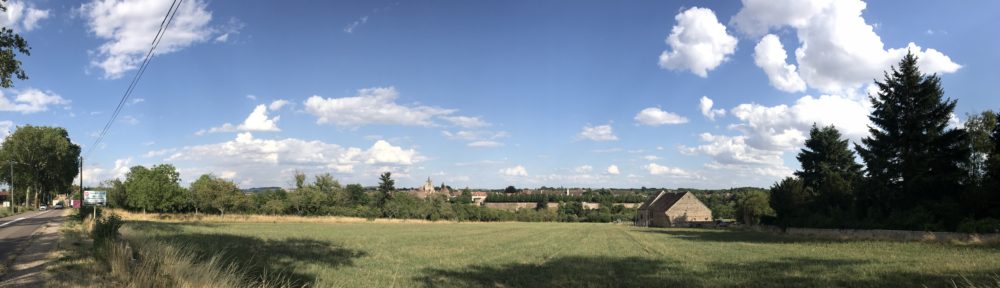
Galway Bay

I love this picture, which was taken on the northern shore of Galway Bay with the barren hills of the Burren on the other shore.


Quote of the Day

”The British have long had a taste for bad books, but they like them well written.”

  • Malcolm Bradbury

John Field | Nocturne No. 6 in F Major, H. 40 (“Cradle Song”) | Elizabeth Joy Roe

Link


Long Read of the Day

The Men Who Don’t Want Women to Vote

Terrific long read (Gift article) by Helen Lewis in The Atlantic on masculinism, which she says has become the single most important force uniting the American right, bringing together an unlikely constellation of pastors, posters, senators, preachers, influencers, podcasters, and fanboys.

She starts with Douglas Wilson, “a twinkly, avuncular” guy

who joined a hippie congregation fresh out of the Navy because he liked to play guitar, and ended up leading services once the regular pastor moved on. The same guy who once went on a multicity debating tour with the New Atheist Christopher Hitchens, and bonded with him over their shared love of P. G. Wodehouse. But the 72-year-old shows a different side on his website, Blog & Mablog. For more than two decades, Wilson has been airing piquant opinions on unruly women—or, as he calls them, “small-breasted biddies,” “harridans,” “lumberjack dykes,” and “Jezebels.” He once referred to Gloria Steinem and another feminist as “a couple of cunts.” And this is the polite version. Every year he celebrates “No Quarter November,” when he promises to tell readers what he really thinks.

There’s a political and ideological side to this. Wilson has been propelled to fame because Trump’s ‘Secretary for War’ invited him to lead a ‘Worship Service’ in the Pentagon.

This isn’t just a movement of grifters exploiting a quirk of the algorithm. In the past decade, one of the New Right’s major challenges has been to retrofit a consistent ideology onto the electoral power of Donald Trump. Masculinism has been a great gift, because factions with different views on, say, protectionism or Israel or Big Tech can all agree on the overreach of feminism and the need for a return to traditional gender roles. Far from being a fringe belief system, masculinism has become the single most important force uniting the American right, bringing together an unlikely constellation of pastors, posters, senators, preachers, influencers, podcasters, and fanboys…

It’s an interesting piece. There was a time when the rise of the white-male-supremacist right was explained by America’s election of a black president, but Lewis thinks that its roots go deeper than that — to males’ fury at their loss of status in society over a couple of decades. “The pithiest short version of that”, says Laura Field, the author of a book on the intellectual underpinnings of Trumpism, “is that it’s the women. It’s the women who took their status.”

Lewis quotes a troll named Nick Fuentes, who she regards as Douglas Wilson’s intellectual heir.

“Our No. 1 political enemy is women, because women constrain everything, every conversation, every man—everything,” Fuentes said on a livestream earlier this year. He added: “Just like Hitler imprisoned Gypsies, Jews, Communists—all of his political rivals—we have to do the same thing with women.” He suggested that they be sent to “breeding gulags. The good ones will be liberated. The bad ones will toil in the mines forever.”

This is a very long piece, but it’s a stunning piece of reportage. Among other things, I marvelled as Lewis’s stamina as well as her ability to converse with a long list of unspeakable male creeps.


Don’t call the midwife: smartphones are dialling down global birthrates

Sunday’s Observer column

Sometimes, a number is worth a thousand words. One such number is 2.1. It’s called the “replacement rate”: the number of children born to each woman that keeps a population stable without immigration. And in more than two-thirds of the world’s 195 countries, that average number of births has fallen below the replacement rate. In 66 countries, according to a study by John Burn-Murdoch of the Financial Times, the average is now closer to one than two. And in some it is zero.

Combine that with the fact that people are, on average, living longer, and you have the makings of the perfect storm that lies ahead for many societies. Exhibit A in this context is Japan, which currently has about 100,000 citizens aged 100 or more. In 1963 there were just 153 centenarians. The replacement rate in Japan has fallen from four in 1950 to 1.15 now, with consequences that are sometimes, er, awkward. The country now produces more nappies for incontinent adults than for infants, for example. And each solitary Japanese infant born today could have as many as 16 great-great-grandparents vying for his or her attention in due course…

Read on

Also available in a pdf version here


  This Blog is also available as an email three days a week. If you think that might suit you better, why not subscribe? One email on Mondays, Wednesdays and Fridays delivered to your inbox at 5am UK time. It’s free, and you can always unsubscribe if you conclude your inbox is full enough already!



Monday 1 June, 2026

King’s re-framed

An unusual view of one of Cambridge’s iconic buildings.


Quote of the Day

”We live in a world where there is more and more information and less and less meaning.”   Jean Baudrillard

This insight, that reality has been replaced by representation, was what inspired the movie The Matrix.


Musical alternative to the morning’s radio news

Franz Schubert | An die Musik, D. 547 (Live at Metropolitan Opera, New York, 2023) | Lise Davidsen

Link

Short and exquisite.


Long Read of the Day

 On Teaching Machines to Predict Death

Interesting essay by Muhammad Aurangzeb Ahmad which examines how AI mortality-prediction models can perpetuate healthcare inequities and create harmful self-fulfilling prophecies.

The French poet Jean de La Fontaine has a famous quote that “A person often meets his destiny on the road he took to avoid it.” We find echoes of this phenomenon in global literature, whether it’s Oedipus in the Greek Myths, Rostum and Sohrab from Iran, or the story of Kamsa and Krishna in the Hindu tradition. There are elements of self-full filling prophecy that we are seeing in the world of predictive modeling.

Consider the use of AI and machine learning models to predict risk of mortality in an ICU setting. Some of these models have extremely high accuracy and precision. They do in milliseconds what it would take a team of clinicians hours to synthesize. The predictive power of such models need to be contextualized however: A mortality prediction model is trained on historical data i.e., on what happened to patients who looked like this, had these labs, were managed in this way. But the historical data does not merely record biology, it also records medicine as it was practiced. This includes all its established patterns, its habits, its inequities, and its mistakes.

Consider a well known finding that has been often used as a cautionary tale: in a certain historical ICU dataset, patients with a diagnosis of asthma had lower predicted mortality than otherwise similar patients without it. This seems absurd, asthma is a serious respiratory condition. When researchers looked closely, they realized that the problem was not about asthma biologically but it was about care. Asthma patients were more likely to have their respiratory distress recognized early. They arrived with better documentation, better advocates, better access to specialists who knew them. The asthma diagnosis was not a protective biological factor. It was a marker of a particular kind of patient i.e., one who had navigated the healthcare system in a way that produced better documentation, faster escalation, more attentive management…


Remembering James Mayall 

On Friday I went to the Memorial event for James Mayall organised by his Cambridge college to honour the memory of an extraordinary man. I was there because I had been lucky enough to have had his friendship, and because he had changed the way I think.

I first got to know him in the mid-1990s when he was Professor of International Relations in Cambridge and I was writing A Brief History of the Future, on the origins of the Internet. He was emphatically not a techie but he was intrigued by the technology and the impact that a global network might have on the international system. And so we began to meet and talk.

He was one of the wisest people I ever knew. On the one hand he was a formidable scholar who wore his erudition lightly. But he also had a kind of worldly wisdom which came from having travelled very widely, and from working outside of academia. One felt sometimes that James had seen everything, good and bad, about humanity. Among other things, he had been a British Army officer who had served in Africa and elsewhere. And he looked like a handsome Brigadier whose sense of humour had not been surgically removed at Sandhurst.

On one memorable occasion he and I travelled to Seattle for a meeting of the Internet Political Economy Forum, a small discussion group of engineers and international relations scholars which had sprung up after the arrival of the World Wide Web. This particular meeting took place in the Whiteley Centre, a beautiful scholarly retreat on Friday Island in the Puget Sound. (Among its many attractions was the fact that one was transported to it by seaplane!)

One morning there was a particularly animated discussion in the conference room and at one stage James reached over to me and asked (in a whisper) if I’d brought any cigars. I nodded and he suggested we slip outside onto the deck overlooking the Sound for a breath of fresh air (and tobacco). We sat peacefully in the sunshine watching a mega-yacht owned, no doubt, by a Microsoft billionaire, dropping anchor. And after a while he asked, “Do you think that this technology will have the revolutionary impact on the world that your friends inside think?”

I answered — confidently — “yes” because this was indeed what I thought. James sat back meditatively puffing on his cigar and looking quietly thoughtful. After a few minutes, slightly irritated by his reticence, I said “What do you think, James?” He puffed away briefly and then replied: “We’ll see, dear boy, we’ll see.” And at that moment the first inklings of doubt entered my utopian soul! Where it has remained — and festered — ever since. And it’s why, when asked for a brief description of myself, I always reply that I’m a recovering Utopian.


My Commonplace booklet

The bottled-water racket

Henry Mance has a nice piece in the Financial Times arguing that “None of modernity’s silly purchases can compare with bottled water when there is drinkable stuff in the taps.”

He’s right, which is why when that bright smiling waitress asks you “Still or Sparkling?”, the correct answer is “Neither”.

The bottled-water fad, he says, is everywhere.

”Really, it should never have survived the farce that is Fiji Water: a US-owned brand of “natural artesian water” that is extracted more than 5,000 miles from America, while nearly a fifth of Fijians have no domestic access to drinking water. “

Spot on. Mine’s a glass of tap water. Cheers!


This Blog is also available as an email three days a week. If you think that might suit you better, why not subscribe? One email on Mondays, Wednesdays and Fridays delivered to your inbox at 5am UK time. It’s free, and you can always unsubscribe if you conclude your inbox is full enough already!