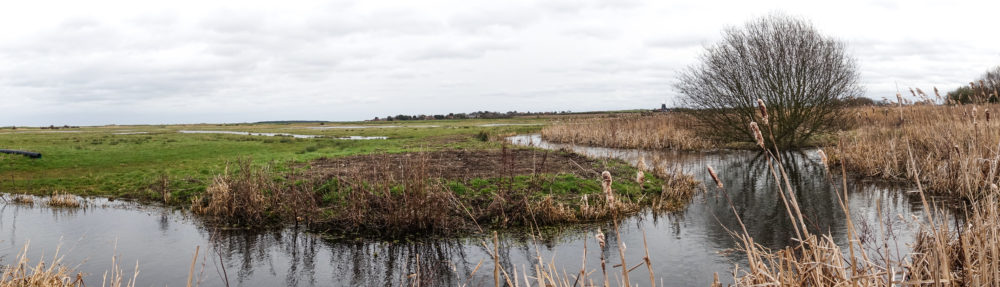
Through a glass, brightly

A window in a lovely old Yorkshire hotel
Quote of the Day
”The markets are moved by animal spirits, and not by reason.”
- John Maynard Keynes
C.f. the current AI ‘investment’ bubble
Musical alternative to the morning’s radio news
Abdullah Ibrahim | Bra Timing From Phomolong
Long Read of the Day
Sovereign AI is really hard to achieve
This is a really sobering read from Anton Leicht on what Europe would need to do to achieve AI sovereignty. It was prompted by the fact that the U.S. government shut down Anthropic’s Fable 5, currently the leading frontier AI model. The decision was motivated ostensibly by domestic cybersecurity reasons, but the effects on U.S. allies — fear, disorientation, alienation — were not only not the goal, but weren’t even seriously considered. But what it means is that in 2026’s AI policy, the rest of the world is so powerless that it can be cut off from frontier AI as mere collateral damage of domestic U.S. policy.
These days, if you can’t see the noose of a politically charged security apparatus wrapping around previously-abundant artificial intelligence, I’m not sure you’re paying attention. Increasingly, the frontier of AI capability is controlled by a maximally volatile version of the U.S. executive branch. Evidence is generated ad-hoc or perhaps deep inside the intelligence community, action is taken based on personal loyalties and with little respect for long-run consequences, decisions are biased toward immediate effects and domestic concerns. All this is carried out by an American presidency that considers itself a unitary executive that wields supreme power, and Congress is frozen into inaction by vociferous AI politics and institutional dysfunction. No interdependence and rational economic incentive truly binds this sort of administration—and so no ally can truly rely on American frontier AI.
Now assume another thing to be true: frontier AI really matters, the best systems are strategically and economically superior to the rest, and the resulting lead gives those at the frontier a decisive economic and military advantage. Frontier systems become so powerful that they threaten the sovereign state’s monopoly on violence, and that their owners become as powerful as any nation. In that world, you either own a frontier system yourself, or you are at the mercy of those who build, own, and control them. From that, any reasonable country would conclude that it simply needs its own frontier AI, however high the costs.
His argument is that achieving this will be a more formidable task than is understood by most European politicians.
This is not only a matter of succeeding at the most ambitious infrastructure project in recent history. It’s a matter of succeeding at this project while under adversarial pressure from the U.S. and strict scrutiny from fickle electorates. No one voicing the ambition of reaching the frontier is grappling with that further challenge of insulating the project against American coercion and domestic backlash at the same time.
As a result, the debate about sovereign frontier AI remains unserious. The LinkedIn types and Euroboosters, stripped of real resources, are forced to pretend that you can build AGI in a coworking space in Stockholm. EU institutions voice lofty ambitions, just to shape them into massively underfunded subsidies for blue-skies research that would bear its first fruits after American superintelligence has already been deployed. And everyone who is aware of the scope of the challenge shies back from discussing it. Just seriously discussing middle power parity at the frontier has become the marker of a fool. But that won’t cut it anymore. If things continue down this path, sovereign frontier development might yet become the only play. I think we sceptics have dismissed that future too readily…
He goes on to sketch what would be needed to achieve AI sovereignty. It’s not quite on the ‘Manhattan Project’ scale, perhaps, but it will require more resources, political determination and stamina to bring it off. And at the moment only one state other than the US seems likely to pull it off. Guess who?
Books, etc.

In 2005, a former senior Facebook executive, Sarah Wynn-Williams published a book about her experiences in Facebook. It’s a pretty graphic account of what a toxic corporation is like on the inside. As Larry Lessig, the great American lawyer and campaigner put it “If you ever need to be convinced that the future of humanity should not rest with the judgment (or integrity) of Silicon Valley executives, this book is a must read.”
It is. I know Sarah slightly, and she’s a formidable witness. Ever since Careless People came out, Meta — Facebook’s owner — has waged a relentless campaign against her. Here’s how her lawyer described it in a letter to the Hay Festival organisers who were putting on an event in which Sarah would appear on a panel with Carole Cadwalladr and Tim Wu.
As you may know, in March 2025, Meta initiated an emergency arbitration against Ms. Wynn-Williams and her publishers, demanding an order blocking publication of her memoir, Careless People: A Cautionary Tale of Power, Greed, and Lost Idealism.
Through that process, Meta has obtained a temporary order preventing Ms. Wynn-Williams from “promoting” her book or speaking about certain topics, regardless of whether what she says is true. As a result, while we continue to challenge that order, Ms. Wynn-Williams has been careful not to speak about her book or about Meta during her public appearances.
Despite Ms. Wynn-Williams’s caution, Meta has threatened her with further sanctions. In March 2026, Meta filed a sanctions motion claiming that Ms. Wynn-Williams violates the order any time she appears in public in a place where she should know that her book is available for sale and her presence might draw attention to it e.g. a bookstore.
Meta’s motion expressly identified her forthcoming appearance at the Hay Festival as an example of conduct that should be formally sanctioned. Meta based this assertion in part on Ms. Wynn-Williams’s planned appearance with Carole Cadwalladr, who Meta called “the British investigative journalist primarily known for her negative coverage of Meta” and with the academic Tim Wu, who Meta described as “another known critic.” Meta also said attending the Hay Festival would violate the order because the Hay Festival’s “promotional materials include a direct link to ‘Browse the Festival Bookshop,’ … which offers Careless People for sale.”
In the event Sarah sat on the panel, silent, motionless and expressionless while the other panellists discussed her book. At the end of the session the audience gave her a sustained standing ovation.
Meta’s legal persecution of Sarah reminded Larry of the ’Streisand Effect’ — the phenomenon in which an attempt to hide, remove, or censor information results in the unintended consequence of the effort instead increasing public awareness of the information. And it gave him and idea: Sarah may not be allowed to publicise her excellent book, but there’s nothing to prevent the rest of us from doing it.
So here’s a little poster that will be appearing on this blog from time to time.

Nil carborundum: don’t let the bastards grind you down.
My commonplace booklet
There’s no Leica like an old Leica
As long-term readers will know (only too well), I’ve been a keen photographer since I was a teenager, and I have used Leica cameras since the early 1970s, which is why I was often broke in those days. What I like about the cameras is that they’re nearly indestructible. (The guy who sold me my first M2 said — jokingly, I think) that it was “made from a melted-down German battleship”).
Well, here’s one that has obviously been through the wars.

It was put up for sale at in auction in Wetzlar on the other day. According to the catalogue…
With a total production volume of just 402 units – of which only 141 were finished in black paint – the “M Professional” (MP) ranks among the rarest Leica cameras ever made. Developed specifically for reportage photography, it was conceptualised in response to American press photographers such as Alfred Eisenstaedt and David Douglas Duncan, who wanted to use their M cameras with the added benefit of the Leicavit rapid winder – which, at the time, was only available for the Leica IIIf. This particular model (with the serial no. MP-33) was originally delivered to Brandt, a Swedish Leica retailer, on July 29, 1957.
It went for 600,000 Euros. But at least it’s still in working order.
This Blog is also available as an email three days a week. If you think that might suit you better, why not subscribe? One email on Mondays, Wednesdays and Fridays delivered to your inbox at 5am UK time. It’s free, and you can always unsubscribe if you conclude your inbox is full enough already!