
Well, more accurately, on which services is your username already taken? Useful service –> Where is Your Username registered.
Category Archives: Asides
Remembering Barry
The Observer had the great idea of asking people who had known Barack Obama in earlier times for their recollections. Here’s Terry Link, who was a fellow State Senator with him in Illinois.
I don’t drink at all, Barack would have a beer once in a while, so we didn’t carouse the bars like lots of the others. You could say that we were both measured personalities. So I said: ‘Why don’t we have a card game?’ We called it the ‘Committee Meeting’ but there was no shop talk allowed. We had seven or eight Republicans and Democrats and it was a time to get to know one another out of the shadows of the Capitol. We’d take the suits and ties off, sit back and have a night of relaxing. It was low-stakes poker: a dollar stake, three dollar top raise. No one was going to lose their mortgage or house. Barack wore sweat pants and a baseball cap, drank a beer and would cadge a few cigarettes.
If his style of poker is like how he’ll run the White House I’ll sleep well at night. He is very conscious of the odds. If he thought he had a chance of winning he’d stay in the game; if he thought not he’d fold straight away. He read and played the field very well. He was serious at it.
There was another player, Larry Walsh, a relatively conservative Democrat. Barack trumped his four of a kind with a higher four of a kind to take the pot and Walsh threw his cards down. ‘Doggone it, Barack,’ he said. ‘If you were more liberal in your card playing and more conservative in your politics, we’d get along much better.’
There’s an interesting epistemological problem here, in that people’s memories of someone are inevitably coloured by what they know of his or her subsequent career. If Obama had turned out to be a moderately successful academic lawyer or a community organiser, would people have the same kinds of memories of him? I suspect not.
Another Observer correspondent was Larry Tribe, a law professor at Harvard. Here’s part of his reminiscence:
Barack came to see me during his first year at Harvard. It was 31 March 1989. I found my desk calendar and I’d written his name with an exclamation point. From the late 1960s, when I began teaching as a professor at Harvard Law School, until the present, there has been no other student whose name I’ve noted in that way.
He impressed me from the beginning as an extraordinary young man. He was obviously brilliant, driven and interested in pursuing ideas with a clear sense that his reasons for being in law school were not to climb some corporate ladder, nor simply to broaden his opportunities, but to go back to the community.
He had a combination of intellectual acumen, open-mindedness, resistance to stereotypical thinking and conventional presuppositions. He also had a willingness to change his mind when new evidence appeared, confidence in his own moral compass and a maturity that obviously came from some combination of his upbringing and earlier experience.
[…]
We used to take long walks on the Charles River in Boston. Our conversations were enormously wide-ranging and enjoyable, about life in general, not just about work. I had no doubt as I got to know him that he had an unlimited future. I didn’t have a clear sense of what direction it would take, but I thought it would be political and I thought the sky was the limit.
He had a personal quality which was transcendent and I continued to feel that way about him each time we met. And the quality he demonstrated that I’ve always been left with more than any other is authenticity. There isn’t a fibre of phoniness about this guy.
W
The movie. Opening in UK cinemas on November 7. Must see.
Netbooks
Quentin’s got a netbook. So has Dave Winer, who is not impressed by the way Steve Jobs poured cold water on the whole netbook concept. So here’s Dave’s definition of the essence of the netbook.
1. Small size.
2. Low price.
3. Battery life of 4 hours. Battery can be replaced by user. Atom processor seems to be a requirement, those that aren’t Atom aren’t selling (and are apparently being discontinued).
4. Rugged.
5. Built-in wifi, 3 USB ports, SD card reader. It seems it must have 802.11n to be taken seriously.
6. Runs my software.
7. Runs any software I want (no platform vendor to decide what’s appropriate).
8. Competition (users have choice and can switch vendors at any time).
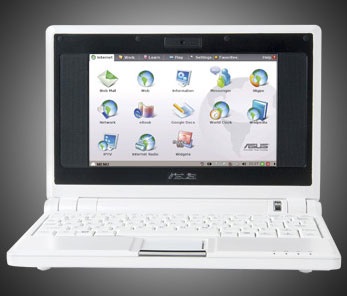
I’ve had an Asus EeePC for just under a year, and have found it impressive and useful. It has some annoyances (battery life not great, forgets WEP passwords when hibernating, undersized trackpad and screen slightly too small for serious browsing). But on the other hand, it came configured with great applications (including Skype and all major flavours of webmail out of the box), is delightfully small and light and fits in anywhere. I took it away on holiday once to see what was lacking — and found that the only thing I really missed was the ability to upload and edit photographs from my digital camera.
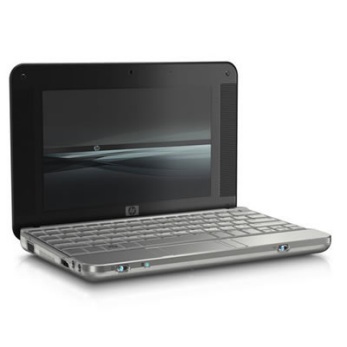
I also bought an HP MiniNote for research purposes — and to see what an established computer manufacturer would do with the netbook idea. The HP machine is beautifully made, has a bigger, nicer screen, a 160GB hard drive and a much better keyboard. But it’s also over-engineered and heavy, has unimpressive battery life and came with the worst Linux distro I’ve ever seen. The machine was effectively unusable until my colleague Michael installed Ubuntu on it.
So… The Netbook genre is still in its early days. The big challenge for the manufacturers is how to resist the temptation of feature-creep. That’s one of the problems of the HP machine — it’s edging back into small laptop territory. And that’s a mistake. The motto for the genre should be KISS — Keep It Simple, Stoopid.
As Dave Winer says, Steve Jobs may be dissing netbooks in public but behind the scenes he’s probably hassling his designers to come up with Apple’s distinctive take on the genre.
LATER: Bang on cue, here’s TechCrunch in speculative form:
This week saw an interesting story come out of the New York Times. The Times reported seeing traffic from an Apple product which has a screen resolution greater than that of an iPhone but less than that of a MacBook. This seems to correlate very well with reports of Apple building something that is akin to a new Newton, although whether it is a bigger iPhone or a MacBook Tablet is still any one’s guess.
Employment news
Stephen Hawking is retiring. The professorial Chair once occupied by Isaac Newton is vacant.
The Board of Electors to the Lucasian Professorship of Mathematics invite applications for this Professorship, to take up appointment on 1 October 2009 or as soon as possible thereafter.
Applications are invited from persons working on mathematics applied to the physical world, with strong preference for the broad area of theoretical physics.
The appointment will be subject to the Statutes and Ordinances of the University.
Form an orderly queue.
If They’re Too Big To Fail, They’re Too Big Period
From Robert Reich’s Blog
Pardon me for asking, but if a company is too big to fail, maybe – just maybe – it’s too big, period.
We used to have public policies to prevent companies from getting too big. Does anyone remember antitrust laws? Somewhere along the line policymakers decided that antitrust would only be used where there was evidence a company had so much market power it could keep prices higher than otherwise.
We seem to have forgotten that the original purpose of antitrust law was also to prevent companies from becoming too powerful. Too powerful in that so many other companies depended on them, so many jobs turned on them, and so many consumers or investors or depositors needed them – that the economy as a whole would be endangered if they failed. Too powerful in that they could wield inordinate political influence – of a sort that might gain them extra favors from Washington.
He’s right. But guess what? In trying to contain the financial panic, governments here and everywhere are creating even bigger behemoths.
A Time of Gifts
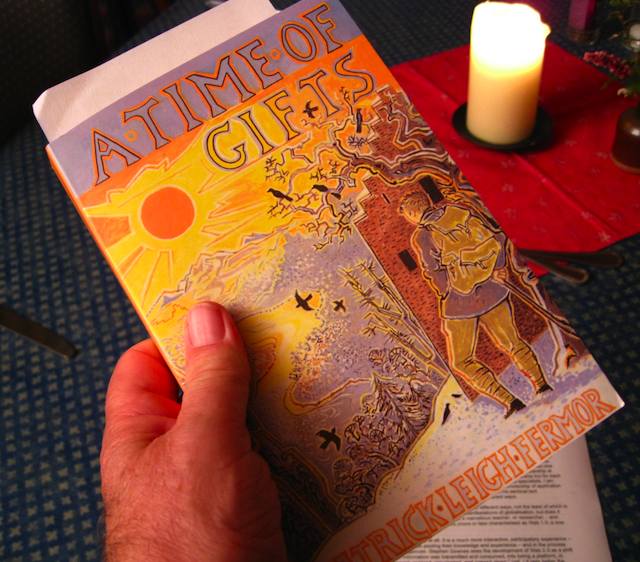
At the age of 18, Patrick Leigh Fermor set out to walk from Rotterdam to Istanbul, equipped only with a stick, a rucksack, a notebook and a gift for languages. This is the first of the two retrospective volumes in which he recounted his adventures. It’s a ravishing book, which has made me revisit my own memories of various places on the Continent where he passed through in the 1930s. I lived and worked in Holland for a year in the 1970s, for example, and have loved the country ever since, so his summary resonated with me:
“I was astonished … at the impressive, clear beauty of the country and its variety, the amazing light and the sway of its healing and collusive charm. No wonder it had produced so many painters! And the Dutch themselves? Although we were reciprocally tongue-tied, the contact was not as light as these pages must suggest. On foot, unlike other forms of travel, it is impossible to be out of touch; and our exchanges were enough, during this brief journey, to leave a deposit of liking and admiration which has lasted ever since.”
He’s very perceptive about the Dutch landscape and its eerie, consoling familiarity — the product of centuries of painterly mastery. I lived in the East of the country, near the German border, but often drove to Amsterdam by myself on Saturday afternoons, and I remember vividly how oddly familiar the landscape seemed as I neared the coast, especially in the winter.
“If there is a foreign landscape familiar to English eyes by proxy, it is this one; by the time they see the original, a hundred morning and afternoons in museums and picture galleries and country houses have done their work. These confrontations and recognition-scenes filled the journey with excitement and delight. The nature of the landscape itself, the colour, the light, the openness, the expanse and the detail of the towns and the villages are leagued together in the weaving of a miraculously consoling and healing spell. Melancholy is exorcised, chaos chased away and wellbeing, alacrity of spirit and a thoughtful calm take their place.”
I’ve always thought that if I were deported from the UK as an undesirable alien, Holland is where I would settle.
Michaelmas ’08
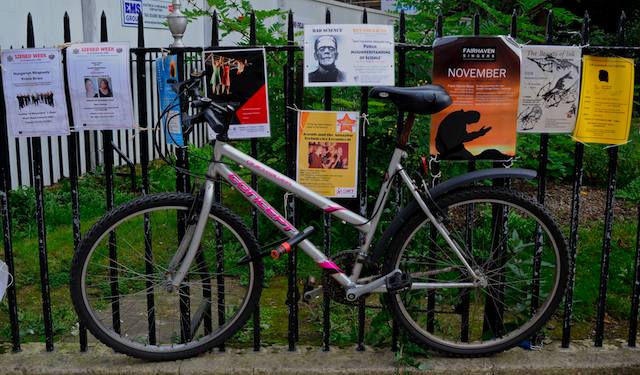
You can tell it’s the start of the busiest term in the academic year.
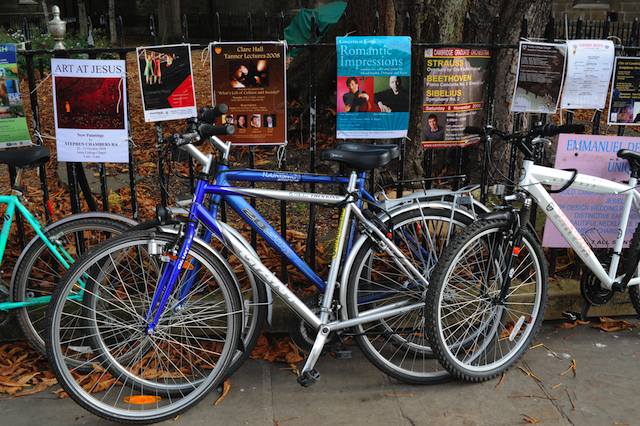
The town is plastered with notices of concerts, drama productions, debates, readings, recitals, meetings. There’s nothing quite like a big university.
Politics, US-style
From FiveThirtyEight.com…
So a canvasser goes to a woman’s door in Washington, Pennsylvania. Knocks. Woman answers. Knocker asks who she’s planning to vote for. She isn’t sure, has to ask her husband who she’s voting for. Husband is off in another room watching some game. Canvasser hears him yell back, “We’re votin’ for the n***er!”
Woman turns back to canvasser, and says brightly and matter of factly: “We’re voting for the n***er.”
Don’t drink and email
Hah! NYTimes piece about Mail Goggles — a new service available only to Gmail users,
The experimental program requires any user who enables the function to perform five simple math problems in 60 seconds before sending e-mails between 10 p.m. and 4 a.m. on weekends. That time frame apparently corresponds to the gap between cocktail No. 1 and cocktail No. 4, when tapping out an e-mail message to an ex or a co-worker can seem like the equivalent of bungee jumping without a cord.