Wednesday 7 January, 2026

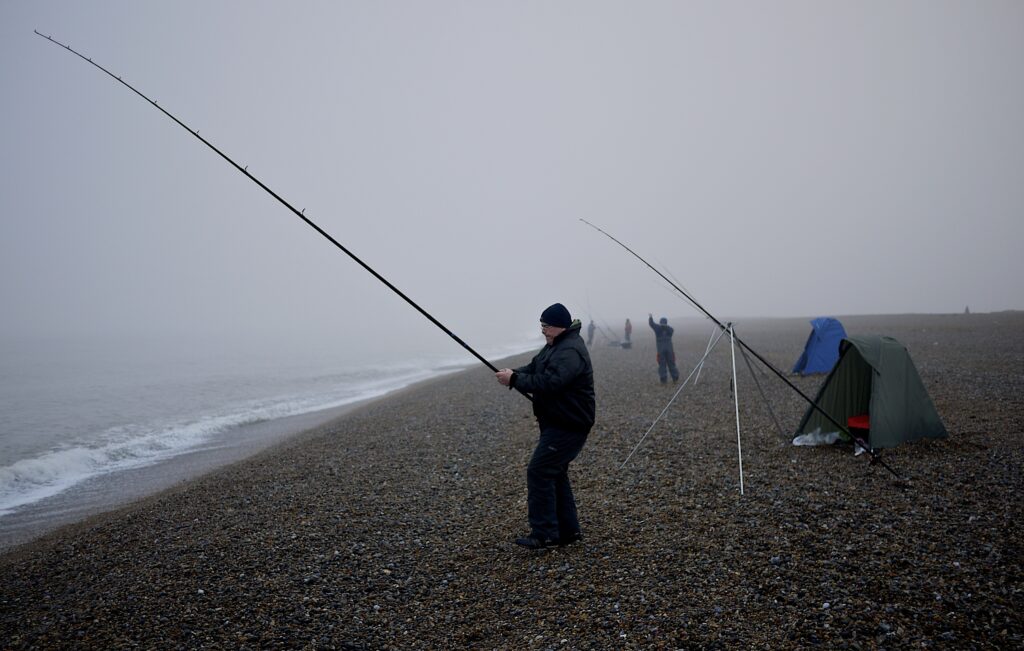
Hoping for a bite

I’ve always been impressed by the phlegmatic endurance of these fishermen on the beach at Cley-next-the-Sea in North Norfolk.


Quote of the Day

”To be an enemy of America can be dangerous, but to be a friend is fatal.”

  • Henry Kissinger

I wonder if Keir Starmer has got the message.


Musical alternative to the morning’s radio news

Tom Waits | Waltzing Matilda )

Link


Long Read of the Day

 America’s world turned upside down

Bill Emmott’s reflections on 2025.

It has been a dark and stormy year, although not in as benign a sense as the much-mocked melodrama by Edward Bulwer-Litton from which this paraphrase of his opening line derives, nor as funny as the Peanuts cartoons that played on it. The year has blended dangerous geopolitical turmoil and extraordinary political destructiveness with a powerful surge of technological development that could presage either prosperity or calamity – or perhaps both.

As such, for this author the year’s principal themes are best evoked not by the purple prose of Victorian gothic fiction but by one famous quotation from an Ancient Greek historian and two famous book titles from past eras.

The Greek historian is Thucydides (who else?) and the quotation his poignant description of the might-is-right era of the Peloponnesian War, nearly 2,500 years ago. That was a time, as he wrote, when some felt that ‘the strong do what they can and the weak suffer what they must’.

This, certainly, is how the great powers of our time, Russia, China and, most shockingly, now the United States have been behaving. They believe that their strength and size entitles them to behave in ways smaller fry cannot. The rest of the world, they think, just has to put up with it.

Until 2025, it was generally believed that, for all its faults and occasional bullying behaviour, the United States had stood behind the international laws and norms that since the 1945 United Nations Charter have sought to protect the weak and constrain the strong. But in his second term in office President Donald Trump has shown no interest in laws or norms…

Great essay. Do make time for it.


Books, etc.

It’s that time of year when publishers persuade literary editors to highlight books that are coming out soon-ish. I usually approach these with a jaundiced eye, but some one in the FT’s list looked interesting.

January:

  1. The Elements of Power: A Story of War, Technology and the Dirtiest Supply Chain on Earth by Nicholas Niarchos, Penguin Press
  2. Billionaire Backlash: The Age of Corporate Scandal and How It Could Save Democracy by Pepper Culpepper and Taeku Lee.

March:

  1. The Coming Storm: Power, Conflict and Warnings from History by Odd Arne Westad (Allen Lane).
  2. Muskism : A Guide for the Perplexed by Quinn Slobodian and Ben Tarnoff (Allen Lane).
  3. The Infinity Machine: Demis Hassabis, DeepMind, and the Quest for Superintelligence by Sebastian Mallaby (Allen Lane)

June:

Land by Maggie O’Farrell, (Knopf). Particularly interesting to me because it’s a novel about the Ordnance Survey mapping of Ireland during the Great Famine.


My commonplace booklet

Birdlife and death
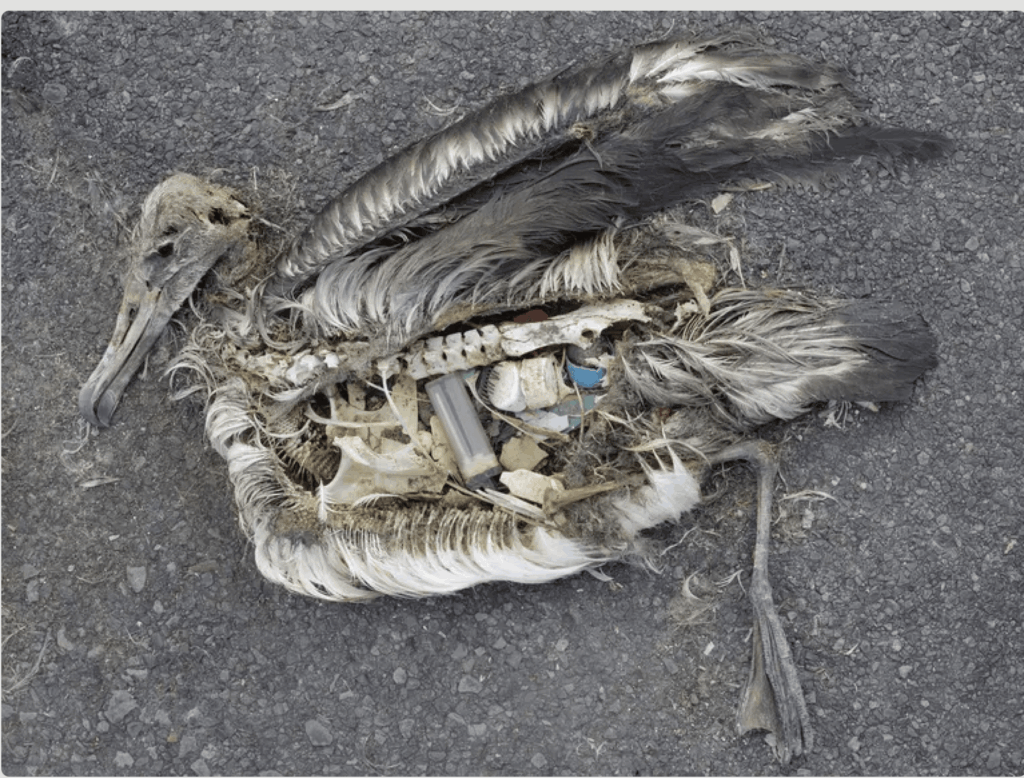
What a dead Albatross chick ingested.

Remember Coleridge’s poem — The Rime of the Ancient Mariner? An albatross starts following his ship. The sailors see it as a good omen because it seems to bring a following wind, but the Ancient Mariner suddenly and inexplicably kills the bird with his crossbow. Afterwards, when disaster strikes the ship, the crew force the Mariner to wear the dead albatross round his neck. The symbolism: the bird represents the natural world and something holy or even divine. Killing it was an act of spiritual transgression for which the killer should — and did — feel guilt. It’s great poem, with a contemporary resonance evoked by the photograph.

Source


Linkblog

Something I noticed, while drinking from the Internet firehose.

  • The world’s largest accounting body has decided to scrap remote exams to combat a rise in students cheating when sitting tests remotely

The Association of Chartered Certified Accountants, which has 257,900 members, will end its online exams from March, requiring candidates to sit assessments in person unless there are exceptional circumstances, its chief executive Helen Brand told the Financial Times.

Remote invigilation was introduced during the Covid-19 pandemic to allow students to continue qualifying into the profession during lockdowns.

But the ACCA has concluded that online tests have become too difficult to police, particularly as artificial intelligence has made cheating more difficult to combat.

Link


  This Blog is also available as an email three days a week. If you think that might suit you better, why not subscribe? One email on Mondays, Wednesdays and Fridays delivered to your inbox at 5am UK time. It’s free, and you can always unsubscribe if you conclude your inbox is full enough already!
Monday 5 January, 2026

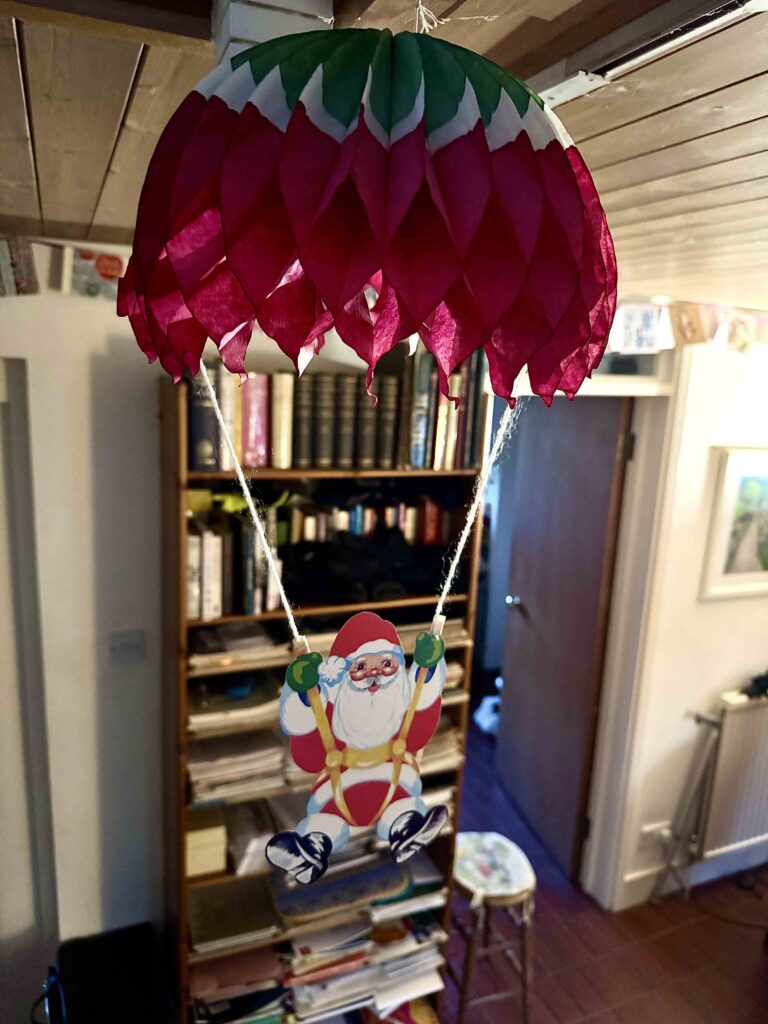
Crash landing

Family traditions around Christmas are funny. When my kids were small, Christmas didn’t properly begin until Santa had parachuted in (er, was suspended from the ceiling). They’re all grown up now, but the tradition endures. Accordingly, he will return to his bunker tomorrow (the last day of Xmas), and prepare for 2026. It’s daft, of course. But then many such traditions are.


Quote of the Day

”A man with whom one cannot reason is a man to be feared.”

  • Albert Camus

(Especially when he is President of the United States.)


Musical alternative to the morning’s radio news

Cher | If I Could Turn Back Time

Link

Sorry about the associated video.


Long Read of the Day

Blind Into Caracas

Brilliant blog post by James Fallows on Trump’s latest implementation of the Monroe Doctrine

Here are ten quick reactions to the most disturbing presidential press conference I have seen in my life.

  1. Trump himself looked and sounded very bad. He slurred and slumped more than usual. His eyes fluttered many times toward seeming shut. He had trouble working his way through big words in the written script. His off-script riffs were from a very small span of his standard repertoire. (“We’re a respected country again, like never before,” etc.) Yes, he had probably been up all night. But even for him, he looked bad. When answering one of the many policy questions that Trump shunted to him, Marco Rubio found himself saying, “It’s a country run by incompetent, senile men.” He was talking about Cuba. But even as the words came from his mouth, with Trump standing with drooping eyes behind him (as shown above), you could see Rubio wishing he had phrased the point a different way…

You get the message. Read on.

If you have the time and the inclination (not to mention the stomach for it), a recording of the C-SPAN coverage of the press conference is here.


Books, etc.

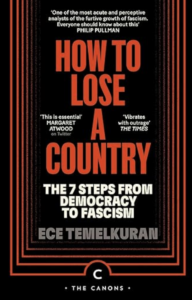
If you’re looking for (as I was) for an insightful and well-written account of how liberal democracies are sliding into authoritarianism or even fascism, then this book by a formidable Turkish journalist would be hard to beat. I’m midway through it and already my notebook is full of notes and quotes. One of the great advantages Tempelkuran has is that she has lived through several of the phases down the slippery path to contemporary fascism.


My commonplace booklet

I had dinner in London with my grandson one evening just before Christmas and after we’d gone our separate ways I made my way through busy Soho streets to my next destination, an office ‘Christmas party’. En route, I was struck by the throngs of people hell-bent on celebrating Christmas. Every pub I passed was crammed, with massive overflows of drinkers standing on the pavement outside and mostly engaged in cheerful conversation and banter. Since I’d spent the earlier part of the day reading and brooding on the looming crises that are coming down the track I had sanctimonious thoughts about the cognitive dissonance that now characterises many liberal democracies. Which brought to mind a recent interesting column on this topic by the FT’s “View from Nowhere” columnist, Janan Ganesh, Here’s the money quote:

Of course, the price of looking away, of “defective imagination”, is that malign forces in the world go unchallenged. Better to engage. But there are two mistakes in this argument. First, it overrates how much sway we have over events. The most that most people can do about the deteriorating world is to vote sensibly every few years. If fellow citizens do otherwise, that in itself is beyond your control. Second, and more bluntly, your first duty is to your own sanity. Out there this winter, in the shopping, the drinking, the theatre-going, I no longer see mindlessness but the ultimate calculation.

Fatalistic realism?


  This Blog is also available as an email three days a week. If you think that might suit you better, why not subscribe? One email on Mondays, Wednesdays and Fridays delivered to your inbox at 5am UK time. It’s free, and you can always unsubscribe if you conclude your inbox is full enough already!


Friday 2 January, 2026

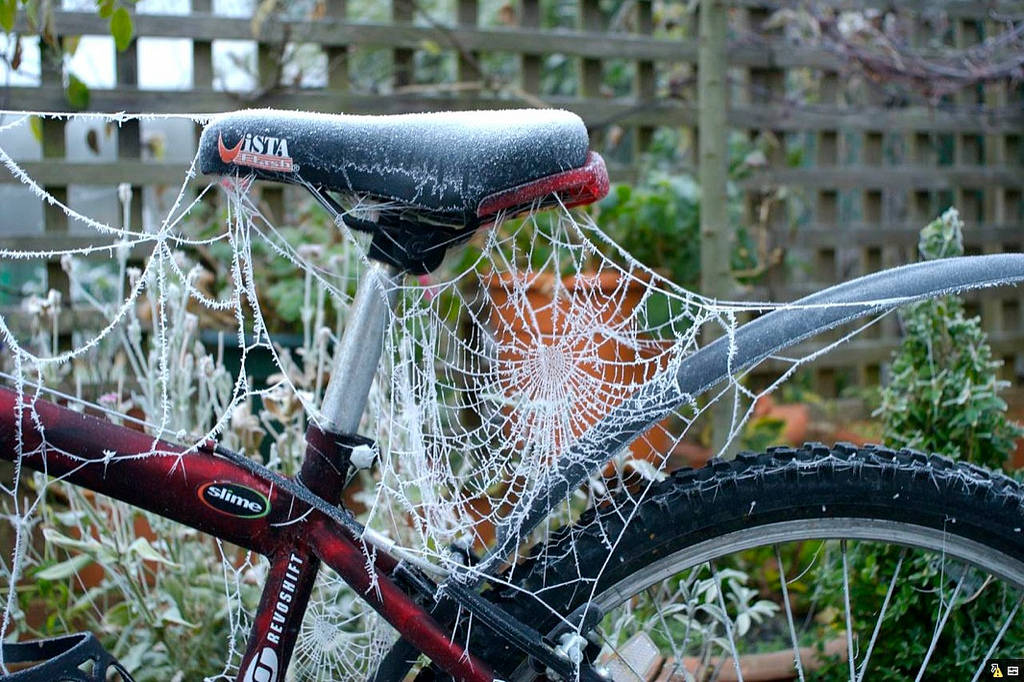
Frozen


Quote of the Day

”The conductor is a peculiar person. He turns his back on his friends in the audience, shakes a stick at his players in the orchestra, and then wonders why nobody loves him.”

  • Viktor Borge

Musical alternative to the morning’s radio news

Martin Hayes and Dennis Cahill | John Naughton’s Green Mountain

Link

I wish I could claim the credit for this reel, but, alas it was another JN. It’s sometimes known as Eddie Maloney’s.

Thanks to Andrew Curry for reminding me of it.


Long Read of the Day

 Philip Roth E-Mails on Trump

In 2004, Roth published The Plot Against America, a clever alternative history of the US in which an Aryan supremacist hero, Charles Lindbergh, unseats Franklin Roosevelt in the 1940 presidential election with catastrophic consequences for America’s Jews. The novel is narrated by a fictional character named Philip Roth, who describes the impact of Lindbergh’s presidency on a Newark insurance salesman, Herman Roth and his (Jewish) family.

On January 22, 2017, just after Trump had been inaugurated for the first time, the New Yorker writer Judith Thurman had the great idea of emailing Roth about whether the alternative reality articulated in his novel might actually have happened.

Here is how he replied.

It is easier to comprehend the election of an imaginary President like Charles Lindbergh than an actual President like Donald Trump. Lindbergh, despite his Nazi sympathies and racist proclivities, was a great aviation hero who had displayed tremendous physical courage and aeronautical genius in crossing the Atlantic in 1927. He had character and he had substance and, along with Henry Ford, was, worldwide, the most famous American of his day. Trump is just a con artist. The relevant book about Trump’s American forebear is Herman Melville’s ‘The Confidence-Man,’ the darkly pessimistic, daringly inventive novel…

Do read on.


My commonplace booklet

In February 2022 after Russia launched its full-scale invasion of Ukraine and video footage of what was happening began to appear I had an eerie epiphany: the thought that Europe’s ‘holiday from history’ is over. The footage reminded me of newsreel footage of WW2. The only difference was that now it was in colour.

It was quite a holiday. A supposedly civilised continent which had been responsible for the two biggest and most destructive wars in history had lived in peace for 76 years. The collective memory of the horrors of warfare had more or less been erased and with that amnesia came a strange complacency — the feeling that such things as shelling of civilian apartment blocks on the European continent were unthinkable.

And here we are and the complacency continues despite the certainty that if Ukraine falls then Poland and the Baltic states will be next. And after that…? Fill in the blanks. The idea that a dictator with romantic fantasies of a Russian empire to rival the old Soviet one might stop at the Oder is magical thinking.

The strange thing is that Putin can be stopped in his tracks — as the Ukrainians have done a pretty good job of demonstrating. The idea that a country with an economy only the size of Italy’s could manage warfare on this scale against serious opposition is implausible. But at the moment most of Europe doesn’t seem to be thinking about how to provide that kind of opposition, and only a few (led by the countries most immediately at risk — Poland and the Baltic States) are seriously contemplating the steps needed to start building the capability that is needed.

This week’s Economist has a sobering article about this — particularly the worrying growing divide in Europe over military preparedness for potential conflict with Russia. It’s probably behind a paywall, so here’s a summary, courtesy of Claude.ai

The central tension: Western European countries are struggling to accept what their security chiefs are warning —that they exist “in a space between peace and war.” While countries near Russia (Baltics, Poland, Nordics) take war readiness seriously, those farther away like France and Spain remain skeptical.

Two main responses are emerging:

  1. Military service reforms: Germany is creating a database for potential mobilization starting in 2026. France announced voluntary paid service for young adults. These follow Nordic models–Finland and Norway have long had conscription, while Sweden reintroduced it in 2018 as part of “total defence.”

  2. Civilian preparedness: Nordic and Baltic countries actively prepare their populations–Sweden sends households detailed survival guides and holds annual “preparedness weeks.” Lithuania does similar. Most Western European nations have nothing comparable, with Spain and Italy barely discussing the issue publicly.

The gap: A December poll showed 77% of Poles saw high war risk versus only 34% of Italians. Yet across Europe, 69% on average believed their country couldn’t defend itself against Russia — including majorities in every nation surveyed.


This Blog is also available as an email three days a week. If you think that might suit you better, why not subscribe? One email on Mondays, Wednesdays and Fridays delivered to your inbox at 5am UK time. It’s free, and you can always unsubscribe if you conclude your inbox is full enough already!