Regulatory teeth

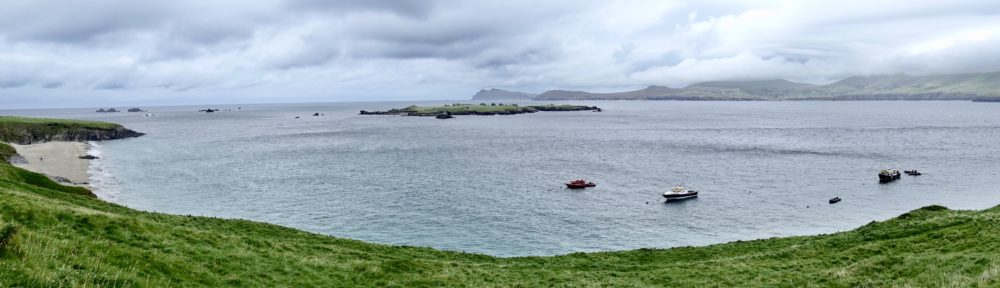
This may seem a strange image with which to illustrate a post on the Microsoft judgment, but bear with me. As my mother used to say when confiscating pocket-money for some misdemeanour, “it isn’t the money, it’s the principle”. I can’t imagine that even a $613 million fine will make much of a dent in a company that has a market cap of $300 billion and is sitting on nearly $50 billion in cash and marketable securities.

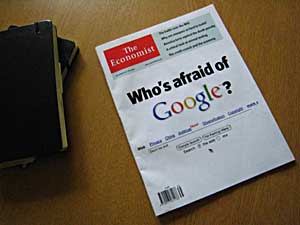
I can’t even get worked up about seeing Microsoft finally coming unstuck (though it couldn’t have happened to a nicer company), because in a way the caravan has moved on. The company’s monopoly hold on the PC desktop is still a reality, of course, but it’s a wasting asset in a networked world. The most interesting implication of the European court’s decision is what it might mean for other companies — Apple and Google, to name but two. Just as sharks are encouraged by the sight of blood, the sweeping legal success regulators have enjoyed in the Microsoft case may have whetted their appetite for more. Apple’s grip on the music-download market provides one obvious target (especially in view of the widespread European concern for ‘interoperability’). And Google’s stranglehold on “all the world’s information” will eventually put it squarely in the crosshairs of the European regulatory system. Stay tuned.

The text of the Court of First Instance judgment is here, btw.

More: I forgot to mention Intel as another possible target for Euro-regulators. And this week the European Commission is opening hearings on a complaint that the iTunes store violates competition rules by charging Britons more than other Europeans for downloads.
Tories plan supertax on SUVs

Now here’s an unexpected political development

Motorists who buy environmentally unfriendly “gas guzzling” cars would be hit by a new batch of green “supertaxes” that would add thousands of pounds to the final bill under plans announced by David Cameron’s advisers.

In a triple assault on high-emission vehicles, they have proposed a new “showroom tax” that would add 10 per cent to the cost of the biggest polluters, a new variable rate of VAT with the lowest charge for the greenest cars, and a new top band of vehicle excise duty that would add up to £200 to the annual cost of licensing “super polluters”.

The proposed taxes would act as an incentive for motorists to drive smaller, more environmentally friendly cars

As a result, a car costing £30,000 that was ranked in the most environmentally damaging category would have £3,000 added in tax to the ordinary cost as well as paying full VAT of 17.5 per cent and additional road tax…

Hmm…. Will this idea make it into the next Tory election manifesto?

150 years of the Irish Times to go online

Wow! This could be very useful to some of us who hail from that part of the world…

The Irish Times has created an online archive of nearly 150 years of content from the newspaper.

The digital catalogue contains every issue of the newspaper, from its first on March 29, 1859, to the present day and can be accessed through the paper’s website.

To create the archive, which will be officially launched in early October, the Irish Times digitised over 1,100 reels of microfilm – with each reel containing 700 page images.

Access to the reproduction newspaper pages, which are keyword searchable, will costs users from €10 for a 24-hour pass – though schools and libraries will have free access to the service…

Thanks to Bill Thompson for the link.

Do remember this

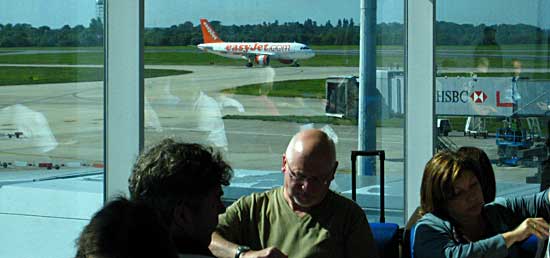
Easyjet employees lack the brusque ferocity of their RyanAir counterparts — which may explain why they are not quite as efficient at getting passengers on and off aircraft. But they certainly have a odd way with the English language which requires them to use the verb “do” in redundant ways. Samples from today’s flight:

  • We do hope you have a pleasant journey.
  • I do apologise: we don’t have any five-Euro notes.
  • We do thank you for flying with Easyjet.
  • We do hope to see you again soon.
  • It’s too systematic for it not to be company policy.

    Integrated transport systems

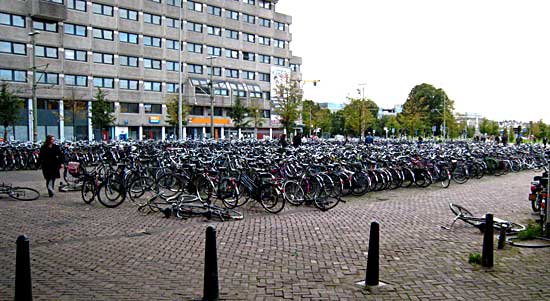
    I love Holland — have done ever since I lived and worked here in the 1970s. And every time I come back I’m always taken aback by the sheer density of bicycles. The photo shows the scene that greeted me on coming out of the Centraal Station in the Hague this afternoon. Our host at dinner tonight was a very senior corporate executive: he’d come to the restaurant by bike. Can’t imagine any of his British counterparts doing that.

    Layers

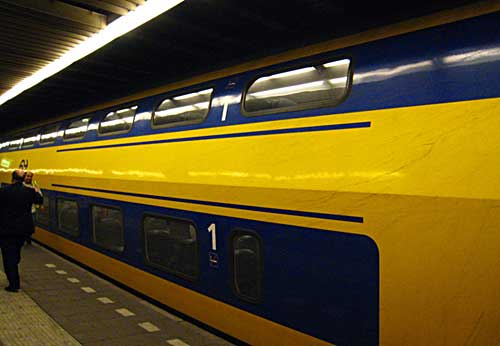
    Here’s a really good idea — double-decker trains. I caught one from Schiphol to the Hague. Just over 25 minutes. The Swiss are not the only people who know how to run a railway.

    Latest WMD revealed!

    Er, toothpaste. Going through security at Stansted today on my way to a symposium in the Hague, I was asked if I had any liquids in my hand luggage. I answered cheerfully “no” because I hadn’t. But then my carry-on bag was diverted for the full treatment and opened for examination. After a while, the nice lady doing this pounced on my tube of toothpaste and said “Ah! This is what triggered it”. “But”, I said politely, “that’s a paste, not a liquid”. “I know”, she replied, “but the rule is, if you can spread it with a knife it’s a liquid”.

    Afterwards, I wondered why this hadn’t happened before — and realised that generally toothpaste goes in the checked-in luggage. You learn something new every day.

    Curious, too, the symbolism in learning this on the anniversary of 9/11!

    Windows Live Translator Beta

    Hmmm… I fed the following text (from Die Zeit ) to Windows Live Translator Beta:

    Der Oberkommandierende der US-Armee im Irak, David Petraeus, hat einen Teilabzug der US-Soldaten in Aussicht gestellt. Der Einsatz der US-Streitkräfte im Irak habe die Sicherheitslage insoweit stabilisiert, dass die Zahl der Soldaten bis Mitte Juli 2008 von derzeit 168.000 auf dann etwa 130.000 zurückgeführt werden könne, sagte der General in seinem mit Spannung erwarteten Lagebericht vor dem US-Kongress. Bereits im Dezember könne eine erste Kampfbrigade von etwa 4000 Soldaten die Heimreise antreten. Einen Termin für einen vollständigen Rückzug aus dem Irak wollte Petraeus nicht nennen. Ein “voreiliger Abzug” könne “katastrophale” Folgen haben, warnte er.

    And this is what came out:

    The Commander-in-Chief of the US army in Iraq, David Petraeus, promised a partial withdrawal of the US soldiers. The employment of US armed forces in Iraq has the security situation stabilized that the number of the soldiers to in the middle of July 2008 from at present 168,000 can be attributed to then about 130,000, said the general in its with tension to expected report on the situation before the U.S. Congress to that extent. Already in December a first combat brigade of approximately 4000 soldiers can begin the home journey. Petraeus did not want to call a date for a complete retreat from Iraq. A “hasty departure” can have “catastrophic” consequences, warned it.

    I then fed it to BabelFish, which produced this:

    The Commander-in-Chief of the US army in the Iraq, David Petraeus, promised a partial departure of the US soldiers. The employment of US armed forces in the Iraq has the security situation stabilized that the number of the soldiers to in the middle of July 2008 from at present 168,000 can be attributed to then about 130,000, said the general in its with tension to expected report on the situation before congress of US to that extent. Already in December a first combat brigade of approximately 4000 soldiers can begin the home journey. Petraeus did not want to call a date for a complete retreat from the Iraq. A “hasty departure” can have “catastrophic” consequences, warned it.

    Very similar, I think you’ll agree. What a coincidence.