Roger’s gone
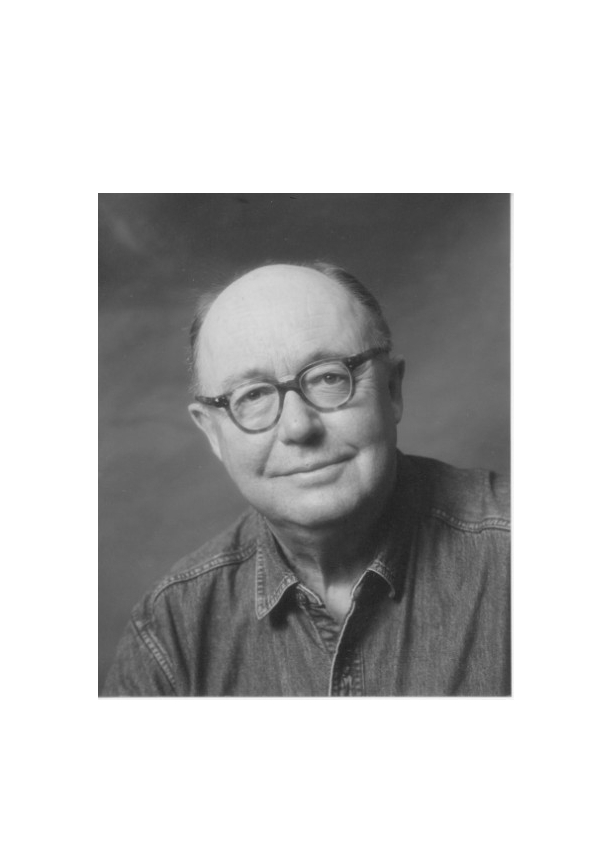
Roger Needham, founding Director of the Microsoft Cambridge Lab, died last Friday night. He was a wonderful man, for whom the term unimpeachable might have been invented: he always said what he thought, even when he knew it might prove unpalatable to his audience, or to his friends. He was one of the great pioneering computer scientists. When his friends and colleagues gathered to honour him on February 17, it was extraordinary to be reminded of how many of the most important areas of computer science had his fingerprints all over them. Two of the papers he wrote on authentication, for example, are among the most widely-cited papers of the field. And whenever you type in a password, the chances are that it will be encrypted using an algorithm he published in 1966.
I knew him mainly towards the end of his career, when I became a Fellow of the same college. It was always worth trying to sit next to him at formal dinners because his conversation was never conventional. We talked about the history of the subject, the absurdities of Cambridge, his experiences as a consultant in Silicon Valley, opera in San Francisco and the strange fact that in computer ‘science’, the science usually follows the technology. Attending meetings with him was also an unforgettable experience because he could never remain seated when talking; instead he would pace up and down like a caged leopard.
When I embarked on my history of the Net, the fact that he knew every major figure in the story opened innumerable doors for me. I shall always be grateful to him for introducing me to Bob Taylor, the man who conceived and funded the Arpanet, and with whom I wrote a piece on “Zen and the Art of Research Management” in homage to Roger in the collection of papers presented to him on February 17.
I wrote a tribute to him in my Observer column of February 16. I would like to have said much more, but space precluded a longer piece. The thing that struck me most about him in the end was his extraordinary ability to rise above the field and provide an account of the terrain — in plain English. It was always “the view from 90,000 feet”. He had that amazing confidence that great minds have which enables them to admit that problems are very difficult or even insoluble, rather than having to pretend that everything’s under intellectual control.
I feel privileged to have known him, and to have experienced his friendship. His wife, Karen Sparck-Jones (also a distinguished computer scientist) has written a lovely memoir of her man. There’s a nice photograph here. And Rick Rashid, head of Microsoft Research, has published this tribute.
Update: Just found an insightful piece that Karlin Lillington wrote for Salon when the Cambridge Lab was set up. The New York Times obituary is here.