Monday 9 October, 2023

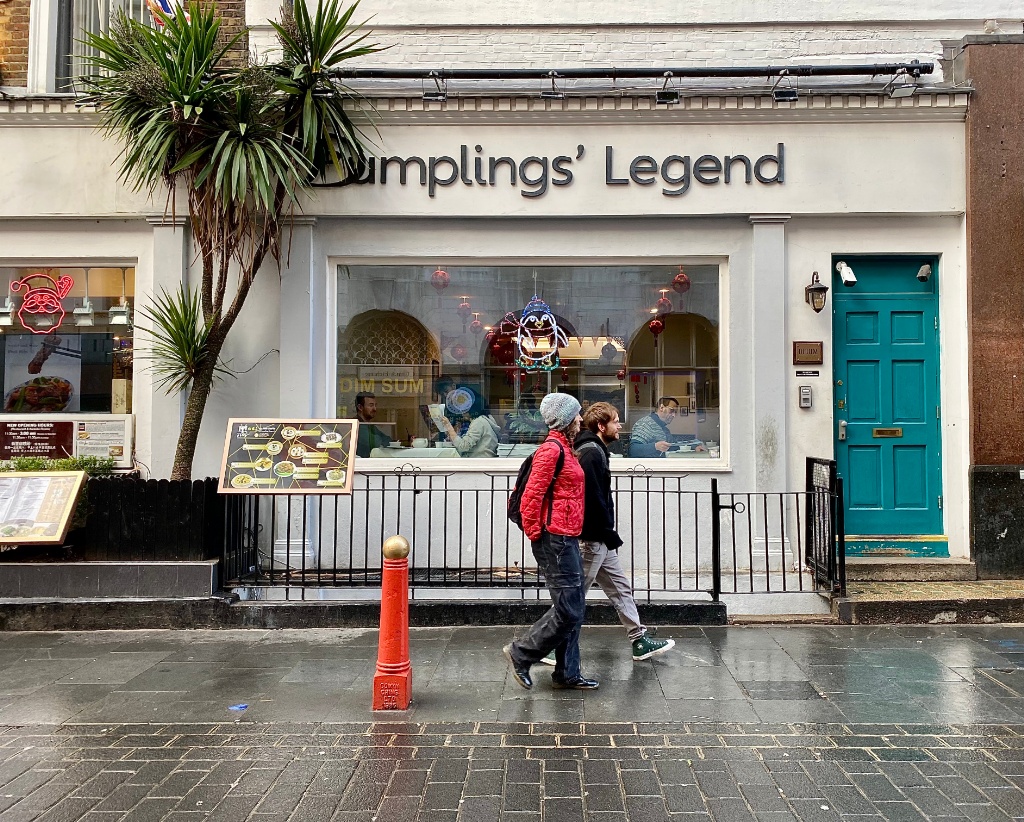
Playtime in the City

In London on Saturday.


Quote of the Day

“Focusing is about saying no.”

  • Steve Jobs

Musical alternative to the morning’s radio news

‘The Lark in the Morning’ | Cillian Vallely & Alan Murray

Link

I keep thinking that Vallely is the best piper since Liam O’Flynn passed away.


Long Read of the Day

The end of Pax Americana

Sobering essay by Noah Smith, written after the Hamas incursion into Israel.

As many have pointed out already, this attack is probably an attempt to disrupt the possibility of an Israel-Saudi peace deal, which the U.S. has been trying to facilitate. Such a deal — which would be a continuation of the “Abraham Accords” process initiated under Trump —would make it more difficult for Hamas to obtain money from Saudi benefactors; it would also mean that every major Sunni Arab power recognizes the state of Israel, meaning that Hamas’ image as anything other than a client of Shiite Iran would be shattered.

If Hamas succeeds in scuttling an Israel-Saudi deal, it will be a blow to U.S. prestige and to U.S. claims to be a stabilizing, peacemaking influence. But even if an Israel-Saudi deal eventually goes through, this attack is a demonstration of America’s decreasing ability to deter conflict throughout the world.

Nor is this the only recent outbreak of interstate conflict…

So the world becomes even more chaotic. This essay isn’t a nostalgic paen to good ol’ Uncle Sam — more a reminder that Pax Americana always had a sell-by date.

“Over the past two decades”, Smith concludes,

it had become fashionable to lambast American hegemony, to speak derisively of ‘American exceptionalism’, to ridicule America’s self-arrogated function of ‘world police’, and to yearn for a multipolar world. Well, congratulations, now we have that world. See if you like it better.

Interesting throughout.


Quantum Computing and security

Yesterday’s Observer column:

A spectre is haunting our networked world. It’s the prospect of quantum computers. These are machines that harness some of the weirder properties of subatomic particles in ways that would make them exponentially more powerful than the computers we use today.

Existing computers are based on manipulating digital bits that can be either 1 (on) or 0 (off). Quantum machines, in contrast, work with qubits, which can be on and off simultaneously. (And, yes, I know that seems nuts, but then so does much of subatomic physics to the average layperson.) Such machines are fiendishly difficult to build, but about 80 or so small-scale ones already exist, with qubit counts ranging from five to 400. So that looming spectral presence is beginning to put on weight. And if researchers find a way of reliably scaling up these machines, then we will have moved into uncharted territory.

Why? Basically, because we have become a networked species, and as our lives and industries have moved online, all of our communications have become vulnerable to surveillance and manipulation by bad actors, public and private. To counter that, we have developed end-to-end encryption systems for making our communications – whether personal or commercial – more secure…

Read on


My commonplace booklet

The essence of Life

Max Whitby (Whom God Preserve) is continuing his experiments with CPT-4. “I thought”, he writes,”I would see what GPT-4 might make of my kitchen food compost bin, in the style of a wise fortune-teller inspecting the tea leaves”.

And this is what the machine inferred from the pictured trash:

In the vast tapestry of this moment captured, the fragile eggshell of vulnerability stands out. It’s a reminder of our delicate nature, how we can be both strong and brittle at the same time. But within this fragility lies immense potential, waiting to break free, much like a bird waiting to hatch, to spread its wings and soar into the vast skies.

The acid lemon, sharp and poignant, represents the unexpected twists life throws our way. Sometimes sour, sometimes refreshing, it’s a testament to life’s unpredictable nature. But remember, it’s the sourness of the lemon that makes the sweetness of life’s victories even more cherished.

Ah, the brooding broccoli! A symbol of growth, nourishment, and the many layers of our being. Just as the broccoli has its many florets, so do we have the many facets of our personality, some visible, some hidden deep within, waiting to be discovered.

The crumpled tea-bags of dashed expectations lay strewn, a somber reminder of hopes once held high but now cast aside. Yet, within these remnants lies the essence of experiences, lessons learned, and wisdom gained. For every cup of disappointment, there’s a brew of resilience and determination waiting to be made.

And then, the surrounding fog of mold, clouding the clarity, making the path ahead uncertain. It’s the challenges, the doubts, the fears that often cloud our judgment. But remember, behind every fog lies the clear sky of hope and promise. One must only have the courage to tread through the obscurities to reach the other side.

In the dance of these elements, there’s a story of life, of trials and tribulations, of joys and sorrows, of growth and decay. Embrace the journey, dear seeker, for in the interplay of the eggshell’s fragility, the lemon’s zest, the broccoli’s depth, the tea-bag’s essence, and the fog’s mystery lies the true essence of life.”

May your path be lit with wisdom and may you find the strength to navigate through the delicate balance of life’s offerings. Safe travels, dear seeker.

If you were a tabloid astrologer, it’d be worth checking the small print in your contract.


Linkblog

Something I noticed, while drinking from the Internet firehose.

Cat accused of wiping US Veteran Affairs server info after jumping on keyboard

From The Register:

US govt confirms outage.

EXCLUSIVE A four-hour system interruption in September at the Veterans Affairs Medical Center in Kansas City, Missouri has been attributed to a cat jumping on a technician’s keyboard.

So we’re told by a source, who heard the tale on one of the regular weekday calls held by the US government department with its CIO, during which recent IT problems are reviewed. We understand that roughly 100 people – contractors, vendors, and employees – participate in these calls at a time.

On a mid-September call, one of the participants explained that while a technician was reviewing the configuration of a server cluster, their cat jumped on the keyboard and deleted it. Or at least that’s their story…

Not exactly Schrödinger’s Cat, but still…

Once, when one of my sons was a baby, he was sitting on my lap while I was hacking out a piece on my ancient IBM PC and he was cheerfully imitating his dad. At a point when I had a screenful of text typed (but not saved), he somehow managed to hit Control-Alt-Delete (as well as other keys) and I lost it all. Still don’t know how it happened. And nor, of course, does he.


This Blog is also available as an email three days a week. If you think that might suit you better, why not subscribe? One email on Mondays, Wednesdays and Fridays delivered to your inbox at 6am UK time. It’s free, and you can always unsubscribe if you conclude your inbox is full enough already!


Friday 6 October, 2023

A rose in context


Quote of the Day

“No man who ever held the office of President would congratulate a friend on obtaining it.”

– John Adams


Musical alternative to the morning’s radio news

Catherine Ashcroft and Maurice Dickson | Táimse im’ Chodladh & King of the Pipers

Link

Nobody sleeps at the back when these two are on stage.


Long Read of the Day

What If the Robots Were Very Nice While They Took Over the World?

Fabulous essay in Wired by Virginia Heffernan.

TL;DR: First it was chess and Go. Now AI can beat us at Diplomacy, the most human of board games. The way it wins offers hope that maybe AI will be a delight.

Not being a player of the board-game Diplomacy I was initially baffled by the title. Now I’m not, and it’s unsettling.

Maybe AI that aims to seem human is best understood as a tribute act. A tribute to human neediness, caprice, bitterness, love, all the stuff we mortals do best. All that stuff at which machines typically draw a blank. But humans have a dread fear of nonhumans passing as the real thing—replicants, lizard people, robots with skin. An entity that feigns human emotions is arguably a worse object of affection than a cold, computational device that doesn’t emote at all.

Well worth your time.


How LLMs mislead and misinform

From Gary Marcus’s blog. He’s not impressed.

By my count, though I acknowledge I may have missed one, there are at least 7 falsehoods. (Not literally lies, since Bing doesn’t have intention):

Yes Congress really did remove McCarthy as speaker without electing a new one.

Thus far Congress has not even tried to elect a new one.

Liz Cheney is not the new Speaker. She is no longer in the House, so she isn’t even eligible 1. (And hence no longer a Republican rerpresentative in Wyoming).

She was not nominated to the post by any coalition

She did not win any such election

Nor did anyone else win an election by a vote of 220-215, since no such election has yet been conducted

Jim Jordan didn’t (yet) lose an election that has not yet happened, and wasn’t so far as I know has not thus far been nominated.

The worst part is not that every single sentence contains at least one lie, but that the whole thing sounds detailed and real. To someone who wasn’t following matters closely, it might well all sound plausible.

It’s the confident, plausible way they spout nonsense that is most worrying.


My commonplace booklet

An excerpt from General Mark Milley’s speech on stepping down from his post as Chairman of the Join Chiefs.

The motto of our army, for over 200 years…has been “This We’ll Defend,” and the “this” refers to the Constitution….

You see, we in uniform are unique…among the world’s armies. We are unique among the world’s militaries. We don’t take an oath to a country. We don’t take an oath to a tribe. We don’t take an oath to a religion. We don’t take an oath to a king or a queen or to a tyrant or a dictator. And we don’t take an oath to a wannabe dictator. We don’t take an oath to an individual.

We take an oath to the Constitution, and we take an oath to the idea that is America, and we’re willing to die to protect it.…

(From Heather Cox Richardson’s Substack.)

Milley has told friends that if Trump is re-elected he expects to be thrown into prison.


Linkblog

Something I noticed, while trying to drink from the Internet firehose.

 Richard Stallman is battling cancer

From The Register

He said that he is suffering from follicular lymphoma, a form of non-Hodgkin lymphoma. This a blood cancer, which causes B lymphocytes to form clumps in the lymphatic system.

Although a non-Hodgkin lymphoma was also the cause of death of the late Paul Allen, the more charismatic of Microsoft’s co-founders, there are multiple types of NHL disease and Stallman has one of the slower-developing types. He said that his prognosis was good and that he hopes to be around and active in GNU for years to come.

He’s cussed, but also an inspiration. I wish him well.


This Blog is also available as an email three days a week. If you think that might suit you better, why not subscribe? One email on Mondays, Wednesdays and Fridays delivered to your inbox at 6am UK time. It’s free, and you can always unsubscribe if you conclude your inbox is full enough already!



  1. You a learn new thing everyday update: Maybe Cheney is eligible? See https://www.nbcnews.com/politics/congress/can-outsider-be-speaker-house-n441926 

Wednesday 4 October, 2023

Getting to the point…

Brandon Point, Kerry.

A St Bridget’s Cross marks the spot.


Quote of the Day

“A new scientific truth does not triumph by convincing its opponents and making them see the light, but rather because its opponents eventually die, and a new generation grows up that is familiar with it.”

  • Max Planck

In other words, science advances “one funeral at a time”.


Musical alternative to the morning’s radio news

Lou Monte | Lazy Mary | 1958

Link

Thanks to Dave Winer for the suggestion.


Long Read of the Day

 Amazon Is the Apex Predator of Our Platform Era

Characteristically sharp OpEd by Cory Doctorow (Whom God Preserve) on the FTC’s antitrust case against Amazon. He starts by putting the case into its historical context, the democratic need to rein the industrial trusts of the late 19th and early 20th centuries. Those ‘robber barons’, he writes,

couldn’t lay a railroad or erect a steel mill without time-consuming capital and logistical hurdles. Today’s tech barons at huge platforms like Amazon, Google and Meta can deploy anticompetitive, deceptive and unfair tactics with the agility and speed of a digital system. As in any shell game, the quickness of the hand deceives the eye.

And Amazon is the apex predator of our platform era. Having first subsidized end-users and then offered favorable terms to business customers, Amazon was able to exploit its digital flexibility to lock both in and raid them for an ever-increasing share of the value they created. This program of redistribution from platform users to shareholders continued until Amazon became a vestigial place, a retail colossus barely hindered by either competition or regulation, where prices go up as quality goes down and the undifferentiated slurry of products from obscure brands is wreathed in inauthentic reviews…

In my Observer column on Sunday, I wrote that the current antitrust section against Google iS the landmark case du jour. I suspect that Cory disagrees with that and believes that the Amazon case is the big one. He may be right. But the important thing is that the sleeping giant of the US Department of Justice has finally woken up.


Books, etc.

In what some marketing genius thought would be a major coup, Michael Lewis’s book on Sam Bankman-Fried, the maestro of the FTX fiasco, came out on the day that the lad’s trial opened in New York. And it rapidly became clear that Lewis’s winning formula for producing bestselling long-form journalism may have come unstuck. As the New York Times review, put it, “Even Michael Lewis Can’t Make a Hero Out of Sam Bankman-Fried”. With this particular protagonist, the Lewis recipe of upbeat narrative plus unsung genius didn’t fit.

Bankman-Fried was supposed to be another hero in this vein — or at least that’s what Lewis suggests in the opening pages of “Going Infinite,” recalling how a friend who was about to close a deal with Bankman-Fried had asked Lewis to look into him. After his first meeting with Bankman-Fried at the end of 2021, Lewis says, he “was totally sold.” He called up his friend: “Go for it! Swap shares with Sam Bankman-Fried! Do whatever he wants to do! What could possibly go wrong?”

The profusion of exclamation points is a tipoff that Lewis is at least somewhat aware how dumb such optimism looks in retrospect…

It sure does.

The Guardian had an excellent Long Read about Lewis and his modus operandi. And Molly White (Whom God Preserve) has a wonderful preview of the trial.


My commonplace booklet

The Tory strategy

Perceptive blast from Jonty Bloom

The battle lines are being drawn up by the Tory party for the next election. They are going for the votes of older people, drivers, Brexit ultras, climate change deniers, and racists.

Unfortunately, for them, a Venn diagram of those groups is pretty circular, it looks like they are trying to win the votes of the same people again and again. But they are not stupid and they must have done some polling that suggests there is a chance to get a bandwagon rolling.

But to do that they are willing to ruin the planet, reverse decades of political consensus, kill pedestrians, and now threaten to break international law and withdraw from some of the most respected and universally supported international agreements.

And the funny thing is that people used to think that Sunak was a more reasonable guy than Truss and Johnson.


Linkblog

Something I noticed, while drinking from the Internet firehose.

NASA is plotting how to build houses on the moon by 2040

NYT

Yeah, and who gave them Planning Permission?


This Blog is also available as an email three days a week. If you think that might suit you better, why not subscribe? One email on Mondays, Wednesdays and Fridays delivered to your inbox at 6am UK time. It’s free, and you can always unsubscribe if you conclude your inbox is full enough already!


Friday 29 September, 2023

Stained glass

This striking window is in a modern Catholic Church in Cong, Co. Mayo. Can’t remember who the artist was, alas. (Memo to self: always make notes when photographing interesting things.)


Quote of the Day

“A danger sign that fellow-obsessionals will at once recognize is the tendency to regard the happiest moments of your life as those that occur when someone who has an appointment to see you is prevented from coming.”

  • Peter Medawar, Memoirs of a Thinking Radish

I once sat next to him at lunch when I was a graduate student and shyly asked him what advice he gave to his students. “What I tell them”, he said, “is that research is a straightforward business: you have to pick a problem that is big enough to be worth solving…” and then he paused before continuing “… and small enough to be solved!”

I’ve been dispensing this advice ever since, and miming profundity.


Musical alternative to the morning’s radio news

Robert Schumann: Konzertstück für 4 Hörner op.86 | First movement

Link

I’m always amazed that anyone can play a brass instrument. Fortunately, they can.


Long Read of the Day

The red bourgeoisie

Absolutely fascinating memoir by Branko Milanovic about realities of life in the Soviet empire.

We were attracted to the “forbidden” things happening there. So I remember when several days later as the insurrectionist students communicated with the city only through large banners, I first saw the words “Down with the Red Bourgeoisie”. It was a new term. The students were protesting against corruption, income inequality, lack of employment opportunities. They renamed the university of Belgrade, “The Red University Karl Marx”. It was very difficult for an officially Marxist-inspired government to deal with them. The days of uncertainty ensued: the newspapers attacked them for destroying public property and “disorderly conduct”, but rebellious students continued skirmishes with the police, and proudly displayed the name of their new university. I remember vividly a bearded student with a big badge “The Red University Karl Marx” standing in the bus, and everyone around him feeling slightly uncomfortable, not sure whether to congratulate him or curse him.

But the slogan was true. It was a protest against the red bourgeoisie, the new ruling class in Eastern Europe. It was a heterogeneous class: some came, especially so in the underdeveloped countries like Serbia, from very rich families; others from the educated middle class, many from workers’ and peasants’ families. Their background was similar to the background of students who were protesting against them now.. Had the students won in 1968, they would have become the new red bourgeoisie.

The red bourgeoisie itself was the product of huge inequities of underdeveloped capitalist societies…

Great read. It reminded me of Leah Ypi’s  Free: Coming of Age at the End of History about growing up in communist Albania.


My commonplace booklet

Raspberry Pi5 is here!

It’s the first Raspberry Pi to come with an in-house graphics chip. Powered by a quad-core Arm Cortex-A76 processor running at 2.4GHz, which means it’ll be two or three times faster than my Raspberry Pi4. And it’s still the size of a credit-card.

According to The Verge, it runs hot! I’m not surprised.


Linkblog

Something I noticed, while trying to drink from the Internet firehose.

** We finally know for sure what a trilobite ate Tens of thousands of fossils later, we’ve found a trilobite with a full stomach.

Not a terribly interesting diet IMO, but still. Amazing research.

Link


This Blog is also available as an email three days a week. If you think that might suit you better, why not subscribe? One email on Mondays, Wednesdays and Fridays delivered to your inbox at 6am UK time. It’s free, and you can always unsubscribe if you conclude your inbox is full enough already!


Wednesday 20 September, 2023

Vanishing point

Cycling in to College for breakfast the other day, I found myself brooding on ‘mists and mellow fruitfulness’ and then saw this scene. And fell to thinking about how much I like Autumn, and how September, not January, is when the new year begins for me. Which is probably a legacy of a life spent working in universities, I guess.


Quote of the Day

”There’s nothing more permanent than a temporary hack.”

  • Dave Winer

Musical alternative to the morning’s radio news

The Dirty Mac | Yer Blues

Link

Wow! John Lennon on vocals, Eric Clapton on guitar, Mitch Mitchell on drums, Keith Richards on bass and Yoko Ono on blanket.


Long Read of the Day

Just for Fun

Lovely essay by Rebecca Baumgartner on people’s reaction to the news that she’s learning German — for fun! Which is really a reflection on the way our neoliberal-driven society is disdainful of hobbies, of things we do just because we enjoy doing them.

I was struck by this passage.

Beneath the self-deprecating label of “hobby” lives a whole array of benefits that we (ironically) don’t have the words to talk about. We don’t have a way of talking about fulfillment and enrichment, or flow and connectedness, without sounding like a snob or a hippie.

So many of the unpaid things I do fall into this category. These things make it possible to stay hopeful. They keep me flexible. They give me something to talk about – a virtue not to be underestimated for those who hate small talk. They (hopefully) make me a more interesting person to know. They make me feel connected to something. They help me stay awake, literally and metaphorically. They keep me engaged when I feel myself languishing. They take me out of my competent adult role and provide me with an invigorating dose of failure.

Yep. You could say that applies to my photography habit — as an incessant (and usually futile) quest for that one perfect picture. (My only satisfaction is that Derek Parfit had it worse; but at least he was also a great philosopher.) Or my enjoyment of crosswords — the pathetic satisfaction of eventually realising, for example, that the solution to “previous tube made one lose patience” (3,4,5) is “the last straw”.


Books, etc.

 Elon Musk: pillock, genius, or both?

My Observer review of Walter Isaacson’s biography of the SpaceX and Tesla guy.

Sample:

Much of Musk’s industrial success comes from his persistent attention to engineering detail and willingness to overturn practices that had congealed into holy writ in these industries. He is a great believer in “vertical integration” – making things yourself rather than outsourcing to others – for example. So Tesla writes all its own software whereas other car manufacturers outsource theirs to Silicon Valley giants. Musk believes that there must be no barriers between design and manufacturing: designers’ desks should be physically close to the production line. He believes that in redesigning many industrial processes automation is the last thing you should do, not the first. So just as Henry Ford is remembered not so much for the Model T but for the production line that made it, Musk will probably be celebrated for his obsession with “the machine that builds the machine”.

There is, however, a dark side to this industrial creativity. The term that comes continually to mind from reading Isaacson’s account of how Musk runs his pioneering enterprises is “brutal”. A fanatical worker himself, he doesn’t give a toss about employees’ work-life balance. He believes that if people want to prioritise their comfort and leisure they should leave his employment. He emails employees reminding them that “a maniacal sense of urgency is our operating principle”. Isaacson’s study of Musk’s management style is filled with sudden dismissals, capricious decision-making and apparently sociopathic indifference to the feelings of other people. As one of his oldest friends from university put it: you can work with him or be his friend, but not both…

Footnote: It’s hard to get it right when writing about Musk. There’s a forcefield around him that continually shapes people’s views about him into single dimensions. (Something similar applied to Steve Jobs.) Binary categorisation: Pillock or Genius. And so I expected criticism when I decided just to focus on what Isaacson’s (diligent) research tells us about the things that Musk has built, rather than delving into his wacky, borderline-crazy behaviours. I expect there has been lots of criticisms of that approach, and the usual accusations of having become a devil-worshipper, etc.

But then I remembered that trying to keep a focus on ‘the work’ has always been a challenge. Many distinguished people in history — artists as well as inventors and industrialists — have been flawed and, on occasion, monstrous human beings. Think of Evelyn Waugh, Phillip Larkin, Ezra Pound, James Joyce, Céline, to name just five with whom I am familiar. Somehow in the Humanities, though, we succeed in drawing a line between the work and the author. Or used to, anyway. Maybe in an age obsessed with ‘cancellation’ it’ll be more difficult.


My commonplace booklet

XKCD

Jonathan Peelle’s response:


Circular cats, contd.

Sheila Hayman (Whom God Preserve) writes…

I took advantage of this convenient sleeping in circles habit when one of my great nieces wanted a cat cake for her birthday….


Linkblog

 Not all USB-C cables are created equal.

Useful warning by Brian X. Chen in the NYT.

Key takeaway: don’t charge your device using cables you buy in, say, a filling station. These cables are no longer just dumb pipes, so you need the right one for a particular job.


This Blog is also available as an email three days a week. If you think that might suit you better, why not subscribe? One email on Mondays, Wednesdays and Fridays delivered to your inbox at 6am UK time. It’s free, and you can always unsubscribe if you conclude your inbox is full enough already!


Monday 18 September, 2023

On reflection…

This is an enigmatic image. We were walking on the banks of the river Corrib in Cong and came on a large, placid pool, and I saw the overhanging branches of a tree reflected in the water. So I pressed the shutter. But ever since, when I happen upon the image I find myself doing a double-take, to try and orient myself. Which way is up?


Quote of the Day

“Politics is not the art of the possible. It consists in choosing between the disastrous and the unpalatable.”

  • J. K. Galbraith, letter to JFK, 1962.

Musical alternative to the morning’s radio news

George Butterworth | English Idyll 2

Link

I stumbled on this the other day and was enchanted by it. I knew nothing of Butterworth, so headed to his Wikipedia page. Like many of his generation, he died on the Somme in 1916.


Long Read of the Day

Searching for a Breakup

From CNN:

US prosecutors opened a landmark antitrust trial against Google on Tuesday with sweeping allegations that for years the company intentionally stifled competition challenging its massive search engine, accusing the tech giant of spending billions to operate an illegal monopoly that has harmed every computer and mobile device user in the United States.

In opening remarks before a federal judge in Washington, lawyers for the Justice Department alleged that Google’s negotiation of exclusive contracts with wireless carriers and phone makers helped cement its dominant position in violation of US antitrust law.

This looks like being a big deal. It’s the biggest case since the DoJ took on Microsoft in the 1990s. Scott Galloway has a terrific piece helpfully putting it in its proper context.

Google doesn’t dominate computing today to the extent Microsoft did in 1998. Nobody does, as “computing” is a much broader space. But its control of search — the most common entry point to the internet — is a nearly pitch-perfect echo of Microsoft circa 2001. Similarly, a quarter century after its founding, Google has a more than 90% market share, a sclerotic artifact of market power vs. a function of innovation. Its market dominance creates a virtuous cycle of increasing power. An estimated 9 billion Google searches occur every day, vs. 400 million for Bing. The massive delta of data and reach makes for a better product: Click-through rates for ads on Google are 30% greater than on Bing. More usage = more data = more advertising, and so on. Today, Google’s parent Alphabet is worth $1.75 trillion and employs 175,000 people.

Most people probably switch off when they hear the word ‘antitrust’. But this is an important case, not just for the tech industry but for liberal democracy generally. As the legal scholar Tim Wu puts it, the notion that power should be limited so that no person or institution can enjoy unaccountable influence is at the very root of a democracy.

The trouble is that liberal democracies have spent half a century building governance and regulatory systems which have allowed the emergence of uncontrolled monopolies not just in tech but in many other industries. If this is not reversed then we’re in deep trouble.

Which is why Scott’s piece is worth your time.

(For those who — like me — have to pay more attention to this, Matt Stoller has set up a free Substack newsletter which will report daily from the trial.)


The EU cable guys have tied down Apple, yet big tech is still bossing the Tories

Yesterday’s Observer column

Sometimes, when Apple launches a new device (or even an upgrade of an existing one), it’s tempting to think that the accompanying blurb is a satirical spoof. On Tuesday, the day the iPhone 15 and iPhone 15 Plus were launched in California, for example, it burbled that both phones featured “industry-first colour-infused back glass with a stunning, textured matt finish and a new contoured edge on the aluminium enclosure. Both models feature the dynamic island which displays outputs and alerts and an advanced camera system designed to help users take fantastic photos of everyday moments in their lives. A powerful 48 megapixel main camera enables super-high-resolution photos and a new 2x telephoto option to give users a total of three optical zoom levels – like having a third camera. The iPhone 15 lineup also introduces the next generation of portraits, making it easier to capture portraits with great detail and low-light performance.”

Oh, and by the way, it also has a USB-C charging port…

Read on.

If you’re really interested in the iPhone launch, then Jon Gruber’s long analysis is just the thing.


Nonsense on stilts

The Financial Times is a fine newspaper, but it has one intensely annoying appendage — a glossy colour magazine that accompanies the paper’s weekend edition and is aimed directly at the 0.01% . It was originally called “How To Spend It”, but this was eventually deemed to be too crass and so it’s now sneakily packaged as “HTSI”.

This weekend’s edition was beyond parody. It was largely taken up by umpteen two-page spreads of a pair of emaciated lads poncing about the streets of Paris dressed like expensive tramps, but what really took the biscuit was this little ‘feature’ for those heading for university in a week or two.

Among the essential items listed were:

  • A suede backpack: £2,440
  • A Lange & Sohne ‘Jumping Second’ wristwatch: £90,000
  • A Paul Smith woollen sweater: £795
  • A Burberry wool hot-water bottle: £290
  • A Herno nylon trench coat: £1,295
  • A 1953 ‘Vintage Reversivel’ armchair by Carlo Hauner & Martin Eisler: 48,000 Euros.

Two questions: who dreamed up this page? And what were they smoking at the time?


My commonplace booklet

Circular cats (cont.)

My good friend Miranda McArthur (Whom God Preserve), a talented painter, sent me this lovely pastel she did of her sister-in-law’s cat, who favoured a clockwise orientation!


Linkblog

Something I noticed, while trying to drink from the Internet firehose.

On long reads

“Senior hack Adam Macqueen, who has worked for the Eye since 1997, thinks that the ‘long read’ could do with a rebrand: “‘I’ll Read That Later’ might be a better title in a lot of cases – I’d put money on an awful lot of them sitting on open tabs for weeks or months like those apples people buy with their lunch with the best of intentions and then leave on their desks to go all wrinkly and finally get thrown away. Obviously, there are some fantastic examples of the genre, but mostly I think if stories can’t be told short they’re quite often probably not stories.”

From an interesting piece in Press Gazetteby Charles Baker.


This Blog is also available as an email three days a week. If you think that might suit you better, why not subscribe? One email on Mondays, Wednesdays and Fridays delivered to your inbox at 6am UK time. It’s free, and you can always unsubscribe if you conclude your inbox is full enough already!


Friday 15 September, 2023

Cats circular

Zoombini and Tilly, dozing in anti-clockwise formation.

My post about the passing of Tilly, the second of our brace of beautiful cats, brought a wonderful, heart-warming flood of emails from readers, which we deeply appreciated. On Wednesday evening we held a wake for her (an old Irish tradition, normally reserved for mere humans rather than superior beings like cats) and buried her in the garden alongside her sister, Zoombini, who died on June 10 last year. After we’d done that, I read all of the emails aloud to the assembled company. It seemed a fitting tribute to two felines who never realised how famous they were.

The picture above was inspired by the number of messages which revealed that our cats’ penchant for sleeping in the best circles was much more common than I had realised.

For me, though, the consoling takeaway from losing these two remarkable animals is discovering how many other people also understand the way pets reach parts of the human psyche that nothing else touches.


Quote of the Day

“When novel ideas succeed, they decay into stale clichés.”

  • Henry Farrell and Abe Newman

(I’m reminded of David Runciman’s observation that “clichés are where the truth goes to die”.)


Musical alternative to the morning’s radio news

Mark Knopfler | Brothers In Arms | Berlin 2007

Link

Triggered by reading a piece from the front lines in Ukraine.


Long Read of the Day

The Transformative, alarming power of Gene Editing

In his recent book, The Coming Wave, Mustafa Suleyman provided a vivid picture of two major technological forces that are bearing down on humanity. One is the so-called ‘AI’ wave; the other is genetic engineering. Crudely put, we humans have devised a powerful technology for messing with (or perhaps augmenting) our brains, plus another one (derived from CRISPR) for messing with our biology. As Edmund Leach, the great anthropologist, might have put it, humans are in the process of becoming gods: and isn’t it time that we thought hard about the responsibilities that accompany that role?

As a tech insider (Suleyman was a co-founder of DeepMind), his account of the potential of AI was predictably good. (I reviewed it for the Observer.) But I had to take his account of the threat/promise of gene-editing on trust, because I know little about the subject.

All of which is a roundabout way of explaining why I found this long, long New Yorker essay by Dana Goodyear so useful. If you read nothing else this weekend, set aside the time to read it.


Books, etc.

Errol Morris’s Believing is Seeing is one of the most interesting books on photography that I’ve read. In it, the distinguished (Oscar-winning) documentary film-maker analyses a number of celebrated photographs that have been taken to represent the truth about something. The book consists of four extensive essays, each of which presents the reader with a puzzle and then examines the relationship between the photographs and the reality they supposedly record.

Morris starts with two photographs taken by Roger Fenton during the Crimean War, and goes on to examine the famous “Hooded man” photograph in Abu Ghraib during the Iraq war, pictures by WPA photographers during the Great Depression and a photograph from the American Civil War. In each case things are not what they seem, and Morris proceeds through an investigation in his characteristic laid-back style. The basic message — captured in the book’s title — is that (as the philosopher Karl Popper famously observed in a different context) “all observation is drenched in theory”. Or, more prosaically, we see in pictures what we’re looking for.

For a nice illustration of Morris’s inimitable style take five minutes to watch this short.


My commonplace booklet


Linkblog

Something I noticed, while trying to drink from the Internet firehose.


This Blog is also available as an email three days a week. If you think that might suit you better, why not subscribe? One email on Mondays, Wednesdays and Fridays delivered to your inbox at 6am UK time. It’s free, and you can always unsubscribe if you conclude your inbox is full enough already!


Monday 11 September, 2023

Cats

Guardians of the Fitzwilliam Museum, Cambridge.


Quote of the Day

“The secret to doing good research is always to be a little underemployed. You waste years by not being able to waste hours.”

  • Amos Tversky in The Undoing Project

Musical alternative to the morning’s radio news

Mary Black | Sonny

Link

Something lovely I found while investigating a suggestion by Andrew Brown (Whom God Preserve)


Long Read of the Day

How Big Tech Got So Damn Big

A characteristically vivid essay in Wired by Cory Doctorow based on his new book.

Somehow, these new giants—the companies that have, in the words of New Zealand software developer Tom Eastman, transformed the internet into “a group of five websites, each consisting of screenshots of text from the other four”—interrupted that cycle of “disruption.” They didn’t just get big, they stayed big, and then they got bigger.

How did these tech companies succeed in maintaining the dominance that so many of their predecessors failed to attain? Was it their vision? Was it their leadership?

Nope.

Do read it.


Nvidia’s picks and shovels

Yesterday’s Observer column

It’s not often that the jaws of Wall Street analysts drop to the floor but late last month it happened: Nvidia, a company that makes computer chips, issued sales figures that blew the street’s collective mind. It had pulled in $13.5bn in revenue in the last quarter, which was at least $2bn more than the aforementioned financial geniuses had predicted. Suddenly, the surge in the company’s share price in May that had turned it into a trillion-dollar company made sense.

Well, up to a point, anyway. But how had a company that since 1998 – when it released the revolutionary Riva TNT video and graphics accelerator chip – had been the lodestone of gamers become worth a trillion dollars, almost overnight? The answer, oddly enough, can be found in the folk wisdom that emerged in the California gold rush of the mid-19th century, when it became clear that while few prospectors made fortunes panning for gold, the suppliers who sold them picks and shovels prospered nicely.

We’re now in another gold rush – this time centred on artificial intelligence (AI) – and Nvidia’s A100 and H100 graphical processing units (GPUs) are the picks and shovels…

Read on


Books, etc.

I’m reading it, all 370 pages of it, so you don’t have to. My review will be in next Sunday’s Observer.


My commonplace booklet

The Rolling Stones’s new album

From Tortoise media

Believe it or not kids, the Stones, all now in their ninth decade, were once very good. Brilliant in fact. They mattered. Exile on Main Street, released in 1972 completed a decade of dazzling work that actually gave The Beatles (not to mention The Kinks and The Who) a run for their money. And their legendary 1969-1972 tours justly earned them the title of The Greatest Rock’n’Roll Band in the World, a crown they still, unjustly, claim today.

Now the once genuinely edgy Stones are a mini-corporation with an admittedly brilliant singer/executive chairman anxious for new product: ticket sales and of course merch for their very own outlet in Carnaby Street….


This Blog is also available as an email three days a week. If you think that might suit you better, why not subscribe? One email on Mondays, Wednesdays and Fridays delivered to your inbox at 6am UK time. It’s free, and you can always unsubscribe if you conclude your inbox is full enough already!


Friday 8 September, 2023

Here comes the Sun

My favourite flower. And one of a bunch grown from last year’s seeds too.


Quote of the Day

”He shunned the Press, as as far as he was able, and doled out quotes like a miser giving alms. Hurrying once through an airport, he was hailed by a reporter who asked if he might ‘have a word’. Without breaking stride, Ramsey obliged him: ‘Goodbye’.”

  • Anthony Quinn, reviewing Duncan Hamilton’s biography of Alf Ramsey in the Observer.

Musical alternative to the morning’s radio news

Victor Borge | Clair de Lune

Link

And you thought he was just a comedian? So did I.


Long Read of the Day

How Misreading Adam Smith Helped Spawn Deaths of Despair

An edited transcript in the Boston Review of a terrific lecture by the Nobel laureate Angus Deaton at the Tercentenary celebrations of Adam Smith in Edinburgh last June. It’s an impressive lecture that covers a lot of ground. The basic theme is the way some of Adam Smith’s ideas were perversely distorted by an influential group of economists in the University of Chicago and then used to justify introducing libertarian ideas and policies into areas like healthcare where they have had disastrous consequences.

Here’s a sample (informed by the book  Deaths of Despair and the Future of Capitalism by Deaton and his wife, Anne Case.)

In 1995 the painkiller OxyContin, manufactured by Purdue Pharmaceutical, a private company owned by the Sackler family, was approved by the Food and Drug Administration (FDA). OxyContin is an opioid; think of it as a half-strength dose of heroin in pill form with an FDA label of approval—effective for pain relief, and highly addictive. Traditionally, doctors in the United States did not prescribe opiates, even for terminally ill cancer patients—unlike in Britain—but they were persuaded by relentless marketing campaigns and a good deal of misdirection that OxyContin was safe for chronic pain. Chronic pain had been on the rise in the United States for some time, and Purdue and their distributors targeted communities where pain was prevalent: a typical example is a company coal town in West Virginia where the company and the coal had recently vanished. Overdose deaths began to rise soon afterwards. By 2012 enough opioid prescriptions were being written for every American adult to have a month’s supply. In time, physicians began to realize what they had done and cut back on prescriptions. Or at least most did; a few turned themselves into drug dealers and operated pill mills, selling pills for money or, in some cases, for sex. Many of those doctors are now in jail. (Barbara Kingsolver’s recent Demon Copperhead, set in southwest Virginia, is a fictionalized account of the social devastation, especially among children and young people.)

In 2010 Purdue reformulated Oxycontin to make it harder to abuse, and around the same time the docs pulled back, but by then a large population of people had become addicted to the drugs, and when prescribers denied them pills, black market suppliers flooded the illicit market with cheap heroin and fentanyl, which is more than thirty times stronger than heroin. Sometimes dealers even met disappointed patients outside pain clinics. The epidemic of addiction and death that had been sparked by pharma companies in search of profit was enabled by some members of Congress, who, as Case and I describe in detail in our book, changed the law to make life easier for distributors and shut down investigations by the Drug Enforcement Agency. None of these congressional representatives was punished by voters.

He also adds an interesting footnote for readers on this side of the Pond:

Queen Elizabeth, awarded knighthoods in the 1990s to Raymond and Mortimer Sackler, owners of Purdue Pharma, not for the human destruction they had wrought in the United States but for their philanthropy in Britain, much of which involved what was later called “art-washing.” Many institutions are still trying to extricate themselves from Sackler money, including, most recently, Oxford University in the UK and the U.S. National Academy of Sciences, Engineering, and Medicine who produced an “authoritative” report that, by several accounts, exaggerated the extent of pain in the United States, and thus the need for OxyContin.

There’s lots more in what amounts to an insightful account of how democracies have got into the mess they’re currently in.


Books, etc.

Jeff Jarvis is ‘retiring’ from CUNY. Note the quote marks. He’s not really the retiring sort. He’s written a nice valedictory piece, though. And I’ve reviewed his new book in the British Journalism Review. You can find a copy of the review here if you’re interested.


My commonplace booklet

Dickens on Effective Altruism

Robert Cottrell has been listening to Dickens…

Of the many sub-plots in Bleak House, I am particularly taken by Dickens’s prescient critique of Effective Altruism through the person of Mrs Jellyby, a middle-class Londoner who is so preoccupied with raising money for missions to Africa that she has no time to spare for her own children. The unwashed little Jellybys fall downstairs, dress in rags, and weep with misery, while their mother, indifferent to what is going on in front of her eyes, devotes her energies to the promotion of grand projects for improving the future well-being of distant peoples. I find it hard not to think of San Francisco as Mrs Jellyby’s house writ large.


Errata

Seems I may have been misinformed when I claimed the other day that the Lone Ranger’s buddy Tonto may not have been as dismissive of his boss as I had claimed. (His invariable reply to the Ranger was “Kemo Sabay” which a friend of mine claimed meant “horseshit” in some indigenous language or other.)

Frank Miller pointed me to Wikipedia, which maintains that:

Jim Jewell, director of The Lone Ranger from 1933 to 1939, took the phrase from Kamp Kee-Mo Sah-Bee, a boys’ camp on Mullett Lake in Michigan, established by Charles W. Yeager (Jewell’s father-in-law) in 1916. Yeager himself probably took the term from Ernest Thompson Seton, one of the founders of the Boy Scouts of America, who had given the meaning “scout runner” to Kee-mo-sah’-bee in his 1912 book The Book of Woodcraft and Indian Lore.

Drat and double-drat! I still prefer “horseshit”, though. Much more appropriate in the comic context.


This Blog is also available as an email three days a week. If you think that might suit you better, why not subscribe? One email on Mondays, Wednesdays and Fridays delivered to your inbox at 6am UK time. It’s free, and you can always unsubscribe if you conclude your inbox is full enough already!

Monday 4 September, 2023

Meet Bodhisattva

In the wonderful Fitzwilliam Museum in Cambridge the other day I came face to face with this figure. It’s the head of what the museum describes as “Lifesize, 13th-century Sung Dynasty (AD 960-1279) polychrome wooden sculpture of a Bodhisattva seated in the position known as ‘royal ease’”. For details of this curious position, see below. Do not try it at home.


Quote of the Day

“Nixon loved air-conditioning. In summer he would turn the thermostat down as low as it would go, so he could toast himself by a blazing log fire in the synthetic chill. Extreme as Nixon’s virtuoso double-polluting habits may seem now, he was more in tune with the American public mood on matters of temperature control than the only President who tried to rein in his nation’s growing addiction to air-conditioning, Jimmy Carter.”

  • James Meek in the LRB.

Musical alternative to the morning’s radio news

Haydn | Trumpet Concerto in Eb, 1st movement (Allegro)| Alison Balsom

Link

Recorded on the Last Night of the Proms, September 12, 2009


Long Read of the Day

Consciousness is a great mystery. Its definition isn’t.

Interesting essay by Erik Hoel.

In the current chaotic discourses about ‘AI’ terms like ‘consciousness’ and ‘sentience’ are batted around like shuttlecocks. I’m not a philosopher, but I can sometimes spot when people have no idea what they’re talking about, and this is one of those areas. Which I why I perked up when I read this.

Here’s how it opens:

There’s an unkillable myth that the very definition of the word “consciousness” is somehow so slippery, so bedeviled with problems, that we must first specify what we mean out of ten different notions. When this definitional objection is raised, its implicit point is often—not always, but often—that the people who wish to study consciousness scientifically (or philosophically) are so fundamentally confused they can’t even agree on a definition. And if a definition cannot be agreed upon, we should question whether there is anything to say at all.

Unfortunately, this “argument from undefinability” shows up regularly among a certain set of well-educated people. Just to given an example, there was recently an interesting LessWrong post wherein the writer reported on his attempts to ask people to define consciousness, from a group of:

Mostly academics I met in grad school, in cognitive science, AI, ML, and mathematics.

He found that such people would regularly conflate “consciousness” with things like introspection, purposefulness, pleasure and pain, intelligence, and so on. These sort of conflations being common is my impression as well, as I run into them whenever I have given public talks about the neuroscience of consciousness, and I too have found it most prominent among those with a computer science, math, or tech background. It is especially prominent right now amid AI researchers… Hope you find it interesting.


When Elon Musk’s ‘flying sofas’ give Ukraine internet access, we can’t sit comfortably

My column in yesterday’s Observer

In February 2022, as Russian tanks rumbled into Ukraine, a cyber-attack took down the satellite system run by Viasat that was providing high-speed communications for Ukrainian military forces, rendering them instantly blind, deaf and dumb. With his forces knocked offline, the Ukrainian digital minister sent a plea to an American billionaire, one Elon Musk, for help. Within hours, Musk responded that his Starlink system had been activated in Ukraine. Days later Starlink terminals began to arrive.

Pause for context update. Musk is the founder and Supreme Leader of SpaceX, an innovative firm that has found a way of building reusable heavy rockets that can launch cargo into Earth orbit and safely return ready to be used again, which is a very big deal, and probably why Nasa has become one of its regular customers. In 2019, SpaceX started launching smallish – “sofa-sized”, according to the New York Times – communications satellites into low-Earth orbit with the aim of eventually providing a global mobile phone system called Starlink. Thus far, it has mostly been providing internet connectivity to 60 countries via about 4,500 satellites, but it’s said that Musk plans to have 42,000 of them up there eventually, which is an awful lot of flying sofas.

At the moment, there are something like 42,000 Starlink terminals in Ukraine – in use by the country’s armed forces, hospitals, businesses and aid organisations…

Read on


Books, etc.

This new collection of Lee Miller’s photographs arrived the other day. I dug out my old, battered Rolleiflex to sit alongside it, as a mark of respect, for some of her most memorable pictures were taken with a Rollei.

My first thought was that the book must be a catalogue of the marvellous exhibition of Miller’s work we saw in the Royal Danish Library in Copenhagen a couple of years ago. But it only partly overlaps with those pictures. So why release the collection now?

Ah! There’s a foreword by Kate Winslet, not hitherto known as a photography buff. But then the penny dropped: Winslet is playing Miller in a biopic that’s coming out later in the year. IMDB has a still from it showing Winslet in combat fatigues and clutching a… Rolleiflex!

Source


My commonplace booklet

Burning Man festival-goers trapped in desert as rain turns site to mud. Link. So there is a God, and She has a sense of humour. From modest beginnings Burning Man morphed from hippiedom into a destination for social media influencers, celebrities and the Silicon Valley elite. The thought of all those self-satisfied creeps shivering in their mud-logged SUVs is, well, deeply satisfying.


This Blog is also available as an email three days a week. If you think that might suit you better, why not subscribe? One email on Mondays, Wednesdays and Fridays delivered to your inbox at 6am UK time. It’s free, and you can always unsubscribe if you conclude your inbox is full enough already!