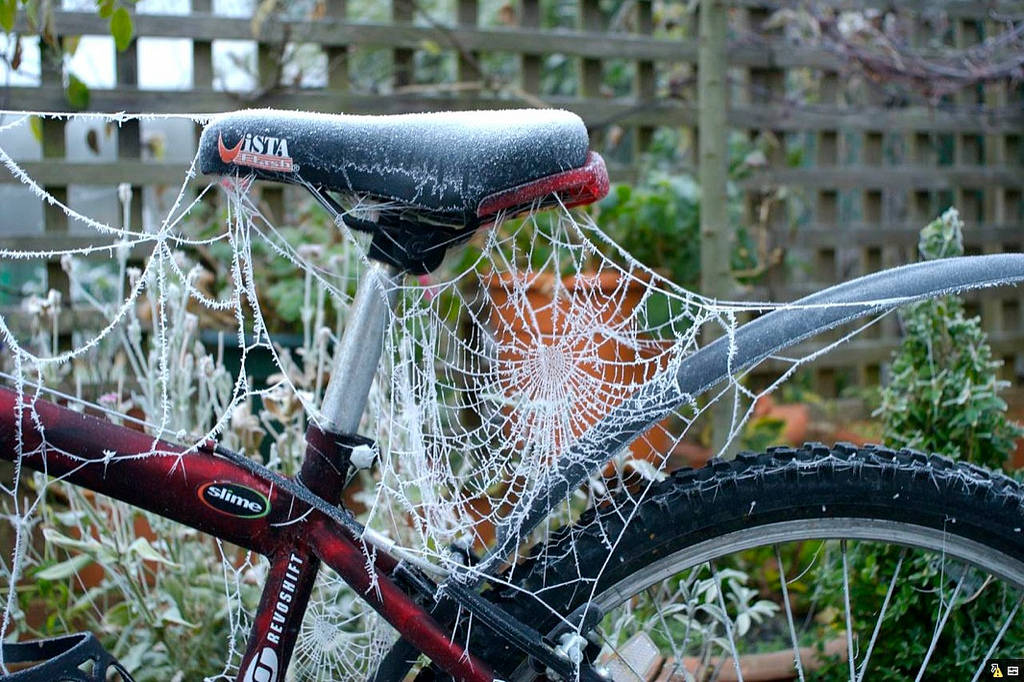
Frozen
Quote of the Day
”The conductor is a peculiar person. He turns his back on his friends in the audience, shakes a stick at his players in the orchestra, and then wonders why nobody loves him.”
- Viktor Borge
Musical alternative to the morning’s radio news
Martin Hayes and Dennis Cahill | John Naughton’s Green Mountain
I wish I could claim the credit for this reel, but, alas it was another JN. It’s sometimes known as Eddie Maloney’s.
Thanks to Andrew Curry for reminding me of it.
Long Read of the Day
Philip Roth E-Mails on Trump
In 2004, Roth published The Plot Against America, a clever alternative history of the US in which an Aryan supremacist hero, Charles Lindbergh, unseats Franklin Roosevelt in the 1940 presidential election with catastrophic consequences for America’s Jews. The novel is narrated by a fictional character named Philip Roth, who describes the impact of Lindbergh’s presidency on a Newark insurance salesman, Herman Roth and his (Jewish) family.
On January 22, 2017, just after Trump had been inaugurated for the first time, the New Yorker writer Judith Thurman had the great idea of emailing Roth about whether the alternative reality articulated in his novel might actually have happened.
Here is how he replied.
It is easier to comprehend the election of an imaginary President like Charles Lindbergh than an actual President like Donald Trump. Lindbergh, despite his Nazi sympathies and racist proclivities, was a great aviation hero who had displayed tremendous physical courage and aeronautical genius in crossing the Atlantic in 1927. He had character and he had substance and, along with Henry Ford, was, worldwide, the most famous American of his day. Trump is just a con artist. The relevant book about Trump’s American forebear is Herman Melville’s ‘The Confidence-Man,’ the darkly pessimistic, daringly inventive novel…
Do read on.
My commonplace booklet
In February 2022 after Russia launched its full-scale invasion of Ukraine and video footage of what was happening began to appear I had an eerie epiphany: the thought that Europe’s ‘holiday from history’ is over. The footage reminded me of newsreel footage of WW2. The only difference was that now it was in colour.
It was quite a holiday. A supposedly civilised continent which had been responsible for the two biggest and most destructive wars in history had lived in peace for 76 years. The collective memory of the horrors of warfare had more or less been erased and with that amnesia came a strange complacency — the feeling that such things as shelling of civilian apartment blocks on the European continent were unthinkable.
And here we are and the complacency continues despite the certainty that if Ukraine falls then Poland and the Baltic states will be next. And after that…? Fill in the blanks. The idea that a dictator with romantic fantasies of a Russian empire to rival the old Soviet one might stop at the Oder is magical thinking.
The strange thing is that Putin can be stopped in his tracks — as the Ukrainians have done a pretty good job of demonstrating. The idea that a country with an economy only the size of Italy’s could manage warfare on this scale against serious opposition is implausible. But at the moment most of Europe doesn’t seem to be thinking about how to provide that kind of opposition, and only a few (led by the countries most immediately at risk — Poland and the Baltic States) are seriously contemplating the steps needed to start building the capability that is needed.
This week’s Economist has a sobering article about this — particularly the worrying growing divide in Europe over military preparedness for potential conflict with Russia. It’s probably behind a paywall, so here’s a summary, courtesy of Claude.ai
The central tension: Western European countries are struggling to accept what their security chiefs are warning —that they exist “in a space between peace and war.” While countries near Russia (Baltics, Poland, Nordics) take war readiness seriously, those farther away like France and Spain remain skeptical.
Two main responses are emerging:
-
Military service reforms: Germany is creating a database for potential mobilization starting in 2026. France announced voluntary paid service for young adults. These follow Nordic models–Finland and Norway have long had conscription, while Sweden reintroduced it in 2018 as part of “total defence.”
-
Civilian preparedness: Nordic and Baltic countries actively prepare their populations–Sweden sends households detailed survival guides and holds annual “preparedness weeks.” Lithuania does similar. Most Western European nations have nothing comparable, with Spain and Italy barely discussing the issue publicly.
The gap: A December poll showed 77% of Poles saw high war risk versus only 34% of Italians. Yet across Europe, 69% on average believed their country couldn’t defend itself against Russia — including majorities in every nation surveyed.
This Blog is also available as an email three days a week. If you think that might suit you better, why not subscribe? One email on Mondays, Wednesdays and Fridays delivered to your inbox at 5am UK time. It’s free, and you can always unsubscribe if you conclude your inbox is full enough already!