
Monday 27 September, 2021

Quote of the Day

“Among the unvaccinated, the virus travels unhindered on a highway with multiple off-ramps and refueling stations. In the vaccinated, it gets lost in a maze of dead-end streets and cul-de-sacs.”

  • Craig Spencer, writing in The Atlantic

Musical alternative to the morning’s radio news
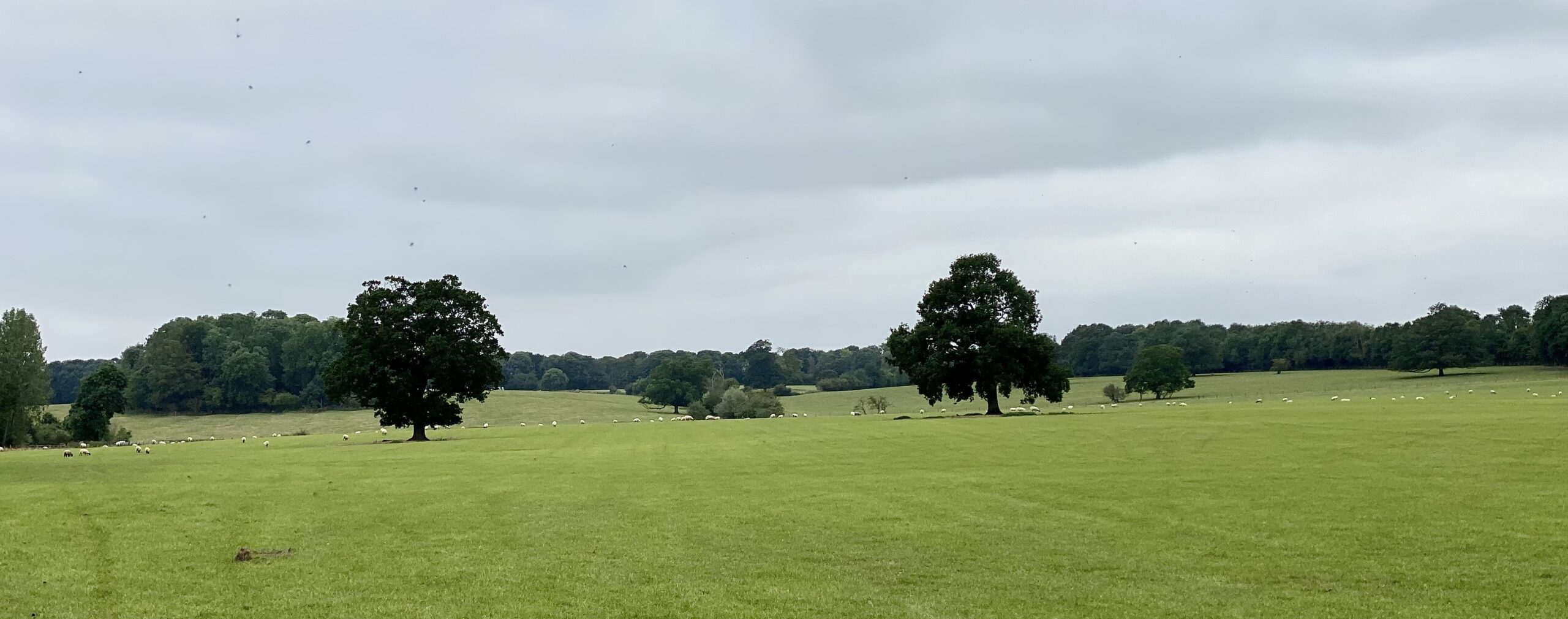
I never see a pastoral scene with sheep grazing (like this, seen last Saturday on a cycle ride) without thinking of a particular Bach cantata.

J.S.Bach | “Sheep may safely graze” | Cantata 208 | Susanne Rydén & Voices of Music

Link

If you prefer a purely orchestral version, there’s this recording by the Academy of St Martin’s-in-the-Fields and Neville Marriner.


Long Read of the Day

The Glass Box And The Commonplace Book

Lovely essay by Steven Johnson, in which this passage struck a chord:

Scholars, amateur scientists, aspiring men of letters — just about anyone with intellectual ambition in the seventeenth and eighteenth centuries was likely to keep a commonplace book. In its most customary form, “commonplacing,” as it was called, involved transcribing interesting or inspirational passages from one’s reading, assembling a personalized encyclopedia of quotations. It was a kind of solitary version of the original web logs: an archive of interesting tidbits that one encountered during one’s textual browsing. The great minds of the period — Milton, Bacon, Locke — were zealous believers in the memory-enhancing powers of the commonplace book. There is a distinct self-help quality to the early descriptions of commonplacing’s virtues: in the words of one advocate, maintaining the books enabled one to “lay up a fund of knowledge, from which we may at all times select what is useful in the several pursuits of life.”

In some ways, this is why I started blogging in the mid-1990s. I saw it as a way of keeping a kind of lab notebook. And then I found that one could put a search engine on it and I was off to the races.

But the thing about commonplacing is that you’re not pretending that what goes into your book makes sense to anyone except yourself. It’s just a place for half-formed ideas that you write down in the hope of not losing them. So I thought of resurrecting the idea in this blog — which is why there will be occasional ‘commonplace’ observations at the end from now on.


Zuckerberg’s total control of Facebook is part of the problem.

Yesterday’s Observer column:

Facebook is one of the most toxic corporations on the planet. Its toxicity has two roots. The first is its business model: intrusive and comprehensive surveillance of its users in order to compile profiles that enable advertisers to target messages at them. This business model is powered by the machine-learning algorithms that construct those profiles and determine what appears in the news feeds of the company’s 2.85 billion users. In large measure, it is the output of these algorithms that constitutes the focus of congressional anger and inquiry.

The other source of the company’s toxicity is its governance. Essentially, Facebook is a dictatorship entirely controlled by its founder, Mark Zuckerberg.

Do read the whole thing.


Is Biden as unTrumpian as people think?

Frank Bruni is beginning to have doubts about Joe Biden.

France’s foreign minister described himself as “angry and bitter.” He called what President Biden had done “brutal.”

But those harsh adjectives (in their English translation) meant nothing next to something else that the diplomat, Jean-Yves Le Drian, uttered late last week. He said that Biden’s decision to negotiate a secret submarine deal with Australia that nullified a lucrative French arrangement reminded him “a lot of what Mr. Trump used to do.”

And nothing about Biden is ever supposed to remind anyone of Donald Trump.

Biden was elected president primarily because he held himself up as the antithesis of Trump.


Commonplace booklet

Food for thought

This from a lovely New Yorker piece by Adam Gopnik in 2007 about literary recipes…

The recipes in these books are not, of course, meant to be cooked; they have literary purposes, and one of them is to represent the background of thought. Every age finds an activity that can take place while a character is meditating; the activity surrounds and halos the meditation. In Victorian fiction, it is walking; the character takes a long walk from Little Tipping to Old Stornsbury and, on the way, decides to propose, convert, escape, or run for office. But the walk as meditational setting and backdrop came to an end with Joyce and Woolf, who made whole walking books. In recent American fiction, driving was recessive enough to do the job; in Updike and Ann Beattie, characters in cars are always doing the kind of thinking that Pip and Phineas Finn used to do on walks. Driving and walking, however, do seem to be natural “background” actions. But you cannot have characters thinking while cooking; the activity is not a place for thought but in place of thought.

We need these devices in books, because we do not, in life, think our thoughts over time. Since our real mental life is made in tiny flashes in the midst of our routines, we have to stretch it out, taffy-like, in literature to cover a span of time worthy of it. If we accurately represented our mental life as it takes place—sudden impulses on the way to the washroom, a spasm of neurons unleashed over coffee—no one would believe it. Consciousness is not a stream but a still lock that suddenly drops into little waterfalls. The lengthy descriptions of cooking that we find in modern literature are a way of artfully representing, rather than actually reproducing, our mental life—a modelled illusion, rather than a snapshot of the thing.

That last paragraph rings a bell. Much of what I am pleased to call my ‘thinking’ happens when I’m in the shower, or washing up. I once had the idea of keeping a notebook in the bathroom, but gave up because the paper always got wet.


This blog is also available as a daily newsletter. If you think this might suit you better why not sign up? One email a day, Monday through Friday, delivered to your inbox at 7am UK time. It’s free, and there’s a one-button unsubscribe if you conclude that your inbox is full enough already!


Friday 24 September, 2021

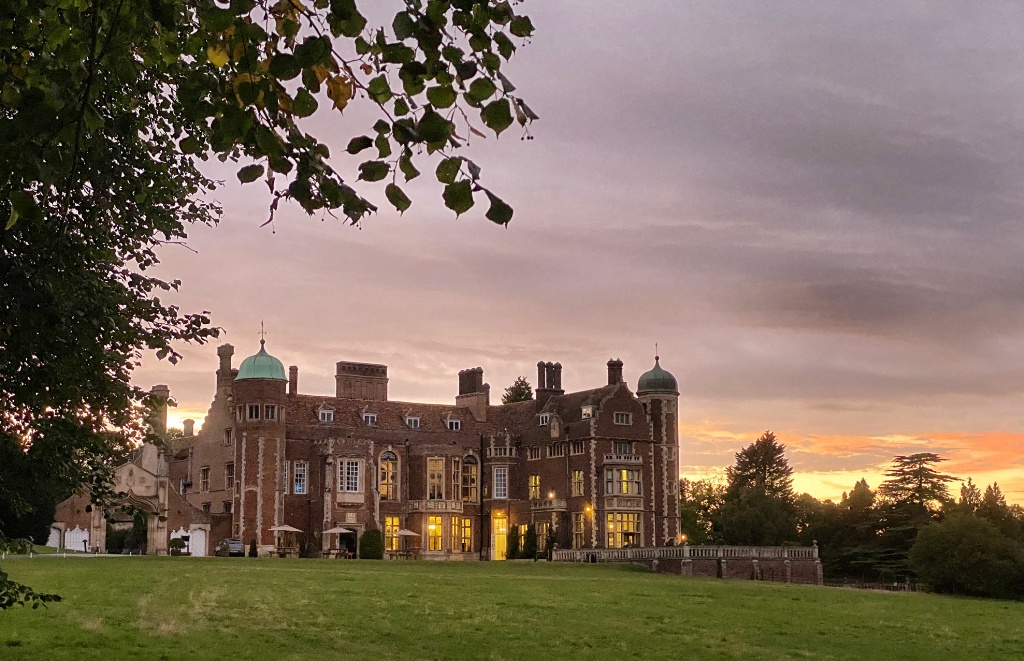
The Hall at sunset

Seen on our walk the other evening.


Quote of the Day

”I am reading Henry James and feel myself entombed in a block of smooth amber.”

  • Virginia Woolf

Musical alternative to the morning’s radio news

The Dubliners | Barney’s Banjo Solo

Link

Something you’re unlikely to ever hear in the Royal Festival Hall.

And if you’re feeling exhausted by the end, then welcome to the club.


Long Read of the Day

A manifesto for the future

Lovely critical review by Andy Beckett of Aaron Bastani’s manifesto,  Fully Automated Luxury Communism — a rare example of a lefty thinking like someone from Silicon Valley.

Andy sums it up thus:

Some readers will finish this book exhilarated and energised. Others will be unconvinced, or utterly baffled. There are more ideas crammed in here than in a whole shelf of standard politics books. And in today’s fraught world, the time to read whole shelves of politics books may have passed.

This review convinced me I should, perhaps, read the book.


Our Faculty Success Initiative Redefines Everything You Thought You Knew About “Faculty” and “Success”

Wonderful spoof by Andrew Berish. But if you think it’s off target, maybe you ought to check in at your Alma Mater.

Thank you, everyone, for completing the Faculty Success Survey. During these challenging times, we understand that many of you are feeling great stress managing your classes during a global pandemic and financial crisis. We have collected and analyzed your thoughtful responses.

As your Provost, I have spent several careful minutes thinking about the results. But before I present the findings, along with our new Faculty Success Initiative, I want to emphasize how important every part of our university family is to our continued growth: our students, our doctors, our corporate partners, our generous alumni donors, our pets, our lovely campus flora and fauna, our golf carts, and you, our faculty. You do so much—you meet, you talk, some of you exercise at the recreation center, and a lot of you teach. There are rumors that you also write things, although the library has no books, so who really knows.

The survey results show a faculty that is dedicated and happy to have employment at this university. The data is pretty conclusive: 46 percent of you are not actively looking for work, 30 percent of you feel confident your academic unit will survive the upcoming budget cuts, and 24 percent of you report feeling only slightly panicked most of the day. That means an impressive 100 percent of you are happy with the university and working hard every day to help students graduate as quickly as possible.

Yet, I still believe there are ways to improve faculty productivity and my standing as an Academic Leader at the Forefront of Success and Innovation in Higher Education. That is why I am announcing the following initiatives. Although we cannot pay you more, we believe we can transform what it means to be a successful faculty member:

And yes — you guessed it — the first ‘initiative’ is…

An e-Dashboard Tracking Faculty Best Practices.


This blog is also available as a daily newsletter. If you think this might suit you better why not sign up? One email a day, Monday through Friday, delivered to your inbox at 7am UK time. It’s free, and there’s a one-button unsubscribe if you conclude that your inbox is full enough already!

Wednesday 22 September, 2021

Quote of the Day

”Criticism can be instructive in the sense that it gives readers, including the author of the book, some information about the critic’s intelligence, or honesty, or both.”

  • Vladimir Nabokov

Musical alternative to the morning’s radio news

Richard Strauss | Morgen | Renée Fleming | Prague Symphony Orchestra conducted by Christian Benda.

Link

A peaceful way to start the day. I don’t much like Strauss (except for the Four Last Songs), but this is really lovely.


Long Read of the Day

C.S. Lewis’s 1937 review of The Hobbit

From the Times Literary Supplement, October 2, 1937 courtesy of Literary Hub:

“The publishers claim that The Hobbit, though very unlike Alice, resembles it in being the work of a professor at play. A more important truth is that both belong to a very small class of books which have nothing in common save that each admits us to a world of its own—a world that seems to have been going on long before we stumbled into it but which, once found by the right reader, becomes indispensable to him. Its place is with Alice, Flatland, Phantastes, The Wind in the Willows.

“To define the world of The Hobbit is, of course, impossible, because it is new. You cannot anticipate it before you go there, as you cannot forget it once you have gone. The author’s admirable illustrations and maps of Mirkwood and Goblingate and Esgaroth give one an inkling—and so do the names of the dwarf and dragon that catch our eyes as we first ruffle the pages. But there are dwarfs and dwarfs, and no common recipe for children’s stories will give you creatures so rooted in their own soil and history as those of Professor Tolkien—who obviously knows much more about them than he needs for this tale. Still less will the common recipe prepare us for the curious shift from the matter-of-fact beginnings of his story (‘hobbits are small people, smaller than dwarfs—and they have no beards—but very much larger than Lilliputians’) to the saga-like tone of the later chapters (‘It is in my mind to ask what share of their inheritance you would have paid to our kindred had you found the hoard unguarded and us slain’).

“You must read for yourself to find out how inevitable the change is and how it keeps pace with the hero’s journey. Though all is marvellous, nothing is arbitrary: all the inhabitants of Wilderland seem to have the same unquestionable right to their existence as those of our own world, though the fortunate child who meets them will have no notion—and his unlearned elders not much more—of the deep sources in our blood and tradition from which they spring.

“For it must be understood that this is a children’s book only in the sense that the first of many readings can be undertaken in the nursery. Alice is read gravely by children and with laughter by grown ups; The Hobbit, on the other hand, will be funnier to its youngest readers, and only years later, at a tenth or a twentieth reading, will they begin to realise what deft scholarship and profound reflection have gone to make everything in it so ripe, so friendly, and in its own way so true. Prediction is dangerous: but The Hobbit may well prove a classic.”

I bet Tolkien had no idea how big this book of his would be.


Asteroids, dinosaurs, volcanoes and extinction

We’ve been reading Robert Harris’s marvellous thriller Pompeii which is remarkable not only for the depth of understanding of Roman hydraulic engineering that it evinces, but also for its compelling evocation of what it might have been like to have experienced the immediate aftermath of the eruption of Vesuvius in 79ad.

One of the characters, sheltering from the hail of pumice unleashed by the eruption, muses at one point about whether this is what the end of the world will be like. This started me musing about the asteroid collision that supposedly led to the extinction of dinosaurs 65-66 million years ago.

Coincidentally, Charles Arthur (Whom God Preserve) pointed to an interesting piece in Mashable about how we’ll know if a large asteroid is likely to strike Earth (TL;DR — it’s all done by NASA), but it doesn’t deal with the likely aftermath of such a collision. So I went looking for a plausible account of the asteroid impact that did for the dinosaurs.

One of the things that came up is this piece by Professor Paul Barrett of the UK Natural History museum. The extinction theory dates from 1980 when Nobel Prize-winning physicist Luis Walter Alvarez and his geologist son Walter published an hypothesis that a historic layer of iridium-rich clay that they had found had been caused by a large asteroid colliding with Earth. The instantaneous devastation in the immediate vicinity of the impact and its widespread secondary effects were, they argued, why the dinosaurs died out so suddenly.

The Alvarez hypothesis was, Barrett says, initially controversial, but is now the most widely-accepted explanation for the disappearance of every child’s favourite monster.

‘An asteroid impact is supported by really good evidence because we’ve identified the crater. It’s now largely buried on the seafloor off the coast of Mexico. It is exactly the same age as the extinction of the non-bird dinosaurs, which can be tracked in the rock record all around the world.’

The impact site, known as the Chicxulub crater, is centred on the Yucatán Peninsula in Mexico. The asteroid is thought to have been between 10 and 15 kilometres wide, but the velocity of its collision caused the creation of a much larger crater, 150 kilometres in diameter – the second-largest crater on the planet.

So it was a Big Bang. But how is it linked to the disappearance of 75% of the planet’s then-living animals?

Barrett’s explanation is that

The asteroid hit at high velocity and effectively vaporised. It made a huge crater, so in the immediate area there was total devastation. A huge blast wave and heatwave went out and it threw vast amounts of material up into the atmosphere.

It sent soot travelling all around the world. It didn’t completely block out the Sun, but it reduced the amount of light that reached the Earth’s surface. So it had an impact on plant growth.’

This reduction in plant growth then worked its way up the food chain, causing the global ecosystem to collapse. It obviously had a huge impact on herbivores’ ability to survive, which in turn meant that carnivores would also have suffered from having less food available.

In that sense, it looks as though the impact of the asteroid had a result analogous to the ‘volcanic winters’ that the planet has experienced over many centuries. An explosive eruption like that of Vesuvius send up colossal quantities of pulverized rock (like the pumice that submerged Pompeii, Herculaneum and other towns on the coast) as well as sulphur dioxide (SO2) and hydrogen sulphide (H2S) into the stratosphere. The short-term impact is the darkness that the characters in Harris’s novel experience immediately, but it’s the sulphur aerosols that form in the stratosphere that reflect incoming sunlight for a longer period (maybe years).

Harris’s book is terrific, btw.


Video of the Day

If you’re interested in Ludwig Wittgenstein (and who isn’t?), then set aside 50 minutes for this intriguing ‘Horizon’ documentary about him that was screened in 1989 and is now on YouTube. My late wife is buried in Ascension Churchyard — where Wittgenstein and Frank Ramsey are also interred — and I sometimes call by his gravestone to see what messages have been left for him by visitors.


This blog is also available as a daily newsletter. If you think this might suit you better why not sign up? One email a day, Monday through Friday, delivered to your inbox at 7am UK time. It’s free, and there’s a one-button unsubscribe if you conclude that your inbox is full enough already!

Tuesday 21 September, 2021

Quote of the Day

“This continuing edition of the letters has been praised for its detailed scholarship, and indeed its thickets of footnotes tell us more and more about less and less. When the present instalment ends, Eliot still has 23 years left to live: at the current rate of progress, should we anticipate eight more equally onerous volumes? The unexamined life may not be worth living, but the over-annotated life can be hard going.”

I love that phrase “thickets of footnotes”.


Musical alternative to the morning’s radio news

Eric Clapton | This Has Gotta Stop

Link


Long Read of the Day

Writing in medias res 

Long, thoughtful blog post by Adam Tooze about the challenge for an historian writing about (and trying to make sense of) ongoing events.

In medias res is, according The Cambridge Dictionary, “a Latin expression that refers to a story, or the action of a play, etc. starting without any introduction”, which you’d think is hostile territory for an historian. Tooze faces the problem head-on:

Whatever thinking or writing we do, however we choose to couch it and whatever our explanatory ambition, we do it from the midst of things, not from above or beyond the fray. There are different ways of articulating that relationship – more remote or more immediate – but no way out of that situatedness.

We are thrown into situations. Most of the time they don’t come with instructions.

Shutdown: How Covid Shook the World’s Economy, his new book (just out), is based on a bet that

we can frame an understanding of the crisis in terms of two clusters of forces: on the one hand the crisis-ridden development of financial capitalism, politics and geopolitics, what you might call the old familiars (the crisis of neoliberalism for short) and on the other the shock of the anthropocene – the virus and climate.

Which explains why I’ve ordered the book. I think this essay is quite profound — and therefore worth your time.


Clive Sinclair RIP – contd.

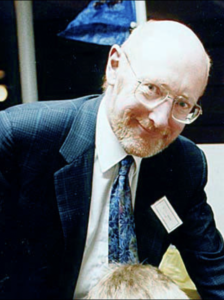
Yesterday’s FT had an astute piece about him — and that rather nice picture.

While Sinclair knew how to inspire demand, however, he often seemed not to be able to manage it. It is a business truism that leaders should under-promise and over-deliver. Sinclair sometimes found it hard to ride the wave of publicity he was so good at generating. The Spectrum took months to reach some customers, contrary to guarantees of rapid dispatch. A personal computer for business, the QL, which stood for “quantum leap”, fell flat, despite a much-hyped launch in 1984. The C5 might even have received the unlikely celebrity endorsement of Laurie Lee, who wanted one to ride around the village immortalised in his bucolic memoir Cider with Rosie, but his order was never fulfilled, the FT once reported.

Lots of us remember his erratic record on delivering. One of my more cynical friends used to argue that the Sinclair business model involved announcing (and taking orders for) intriguing products and then using the flood of orders to provide the revenue needed to make them!


Westphalia Rules OK

Apple and Google Remove ‘Navalny’ Voting App in Russia

This New York Times story provides a useful reminder that while the Internet is supposedly global, in the world of sovereign states created by the Treaty of Westphalia, power is still local.

Apple and Google removed an app meant to coordinate protest voting in this weekend’s Russian elections from the country on Friday, a blow to the opponents of President Vladimir V. Putin and a display of Silicon Valley’s limits when it comes to resisting crackdowns on dissent around the world.

The decisions came after Russian authorities, who claim the app is illegal, threatened to prosecute local employees of Apple and Google — a sharp escalation in the Kremlin’s campaign to rein in the country’s largely uncensored internet. A person familiar with Google’s decision said the authorities had named specific individuals who would face prosecution, prompting it to remove the app.

The person declined to be identified for fear of angering the Russian government. Google has more than 100 employees in the country.

Apple did not respond to phone calls, emails or text messages seeking comment.

The app was created and promoted by allies of the opposition leader Aleksei A. Navalny, who were hoping to use it to consolidate the protest vote in each of Russia’s 225 electoral districts.

As Charles Arthur observed yesterday:

For all the promise of the internet, there are only a few chokepoints at any time. App? Force its takedown. Website? Block it, by name or DNS. VPN users? Again, ban the apps. Even Tor can be stymied by blocking access to the entrance servers, or setting up your own honeypot entrance.


This blog is also available as a daily newsletter. If you think this might suit you better why not sign up? One email a day, Monday through Friday, delivered to your inbox at 7am UK time. It’s free, and there’s a one-button unsubscribe if you conclude that your inbox is full enough already!

Monday 20 September, 2021

Quote of the Day

”Only two rules of drama criticism matter. One. Decide what the playwright was trying to do, and pronounce well he has done it. Two. Determine whether the well-done thing was worth doing at all.”

  • James Agate

Musical alternative to the morning’s radio news

Beethoven | Romance for Violin and Orchestra No. 2 in F major, Op. 50 | Kurt Masur & Renaud Capuçon

Link

Lovely at any time and place, but this is a special performance. It took place in the Church of St. Nicolai in Leipzig to mark the city’s commemoration of the 20th anniversary of the fall of the Berlin Wall.


Long Read of the Day

Winning the Game You Didn’t Even Want to Play: On Sally Rooney and the Literature of the Pose

Stephen Marche on the slow abandonment of ‘Literary Voice’.

Link

Thanks to Chris Cantrell for alerting me to it.


Want to save the Earth? Then don’t buy that shiny new iPhone

Yesterday’s Observer column:

On Tuesday, Apple released its latest phone – the iPhone 13. Naturally, it was presented with the customary breathless excitement. It has a smaller notch (eh?), a redesigned camera, Apple’s latest A15 “bionic” chipset and a brighter, sharper screen. And, since we’re surfing the superlative wave, the A15 has nearly 15bn transistors and a “six-core CPU design with two high-performance and four high-efficiency cores”.

Wow! But just one question: why would I buy this Wundermaschine? After all, two years ago I got an iPhone 11, which has been more than adequate for my purposes. That replaced the iPhone 6 I bought in 2014 and that replaced the iPhone 4 I got in 2010. And all of those phones are still working fine. The oldest one serves as a family backup in case someone loses or breaks a phone, the iPhone 6 has become a hardworking video camera and my present phone may well see me out.

That’s three phones in 11.5 years, so my “upgrade cycle” is roughly one iPhone every four years. From the viewpoint of the smartphone industry, which until now has worked on a cycle of two-yearly upgrades, I’m a dead loss…

Do read the whole thing.


Clive Sinclair RIP

He was easy to laugh at, and sometimes not easy to like, but his ZX Spectrum was the first personal computer that many of us bought, and it was one of the devices that sparked the extraordinary growth of the computer games industry in the UK.

The Guardian had a nice obituary of him which, I think, got it right. He was, it said, “one part visionary, one part dotty uncle and one part marketing genius”.

Sinclair had achieved his ambition of producing a computer for less than £100 but it was very basic, needing to be plugged into the television to provide a screen and with a cassette to store data. A year later came the ZX81 and then, marginally more sophisticated, and costing £125, the ZX Spectrum, which was made under licence in the US by Timex.

With no commercial rivals initially, the machines sold in their thousands – a quarter of a million of the 1981 model in the first year – and the company’s profits soared. By 1982 it was making £8.55m on a turnover of £27m; a year later the company was valued at £136m and the profits had reached nearly £20m. If many owners and their children used their computers to play new sorts of games such as Monster Maze, they were also taught about programming and other technological skills.

The BBC made a documentary — Micro Men — which nicely captures the atmosphere of the age nicely — and is available on YouTube.

And it’s worth remembering that he accurately foresaw the advent of the EV.


How to review a book, #245

Lovely essay by Scott Alexander on Martin Gurri’s excitable book — The Revolt of the Public and the Crisis of Authority in the New Millennium — the first edition of which I read in 2014 and promptly forgot about.

But Scott Alexander picked it up recently and did a sardonic demolition job on its second edition. This is how it begins:

Martin Gurri’s The Revolt Of The Public is from 2014, which means you might as well read the Epic of Gilgamesh. It has a second-edition-update-chapter from 2017, which means it might as well be Beowulf. The book is about how social-media-connected masses are revolting against elites, but the revolt has moved forward so quickly that a lot of what Gurri considers wild speculation is now obvious fact. I picked up the book on its “accurately predicted the present moment” cred, but it predicted the present moment so accurately that it’s barely worth reading anymore. It might as well just say “open your eyes and look around”.

And this is how it concludes:

The one exception to my disrecommendation is that you might enjoy the book as a physical object. The cover, text, and photographs are exceptionally beautiful; the cover image – of some sort of classical-goddess-looking person (possibly Democracy? I expect if I were more cultured I would know this) holding a cell phone – is spectacularly well done. I understand that Gurri self-published the first edition, and that this second edition is from not-quite-traditional publisher Stripe Press. I appreciate the kabbalistic implications of a book on the effects of democratization of information flow making it big after getting self-published, and I appreciate the irony of a book about the increasing instability of history getting left behind by events within a few years. So buy this beautiful book to put on your coffee table, but don’t worry about the content – you are already living in it.

Delicious!


Books really do furnish a Zoom

During the first Covid lockdown I kept a daily audio diary for the first 100 days and on May 12, 2020 (which was Day 52) I talked about the conversations I’d had with colleagues about the wall of books in my study that was the background to all of my online encounters.

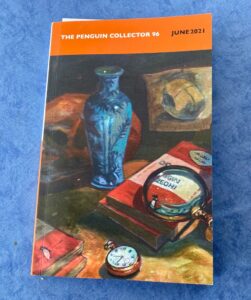
Shortly afterwards I had a nice email from James Mackay, who edits The Penguin Collector, a lovely twice-yearly journal of the Penguin Collectors Society, asking for permission to reproduce the transcript of the audio — which I was happy to give. The June 2021 issue has now arrived, and very nice it is too. If you’re interested, here’s the audio:

Link

And if you’re busy, here’s the transcript:

May 12: Day 52

Like many people, I’m spending too much time on Zoom. I’ve even set up a Zoom station in my study, so that when a meeting is due I just go to that part of the room, log into to the Mac that sits there with Zoom running, and start. No fiddling with laptops or microphones for me. Straight down to business. I’m lucky enough to have a very large study. The guy from whom we bought the house many years ago was an architect, and he ran a successful practice from this room. So it’s big and airy. And it’s lined with books for the very simple reason that I have a book habit. So my background for the purposes of Zoom is a wall of books. This often gives rise to comment in the smalltalk that goes on while people are waiting for others to join the call. Have I read all those books, I am asked?

I’m about to respond indignantly, and then I think of Flann O’Brien, one of the funniest Irish writers of the 20th century. His actual name was Brian O’Nolan, but he wrote under pen names because in real life he was a fairly senior civil servant in the government of the Irish Free State, as the Republic was then known. His other pen-name was Myles na Gopaleen, under which moniker he had a regular column in the Irish Times — a “black protestant newspaper,” as my devoutly Catholic mother used to call it — a column that was so surreal that it made Salvador Dali look like Spinoza. Flann used the column for many purposes, but one of them was to publish prospectuses for the numerous wacky businesses he had dreamed up. And one of these involved books. It all started with a visit he made to the new house of a friend of “great wealth and vulgarity”.

After kitting out the house, his friend decided that it needed books — because, as is well known, books really do furnish a room. “Whether he can read or not, I do not know,” wrote Flann, “but some savage faculty for observation told him that most respectable and estimable people usually had a lot of books in their houses. So he bought several bookcases and paid some rascally middleman to stuff them with all manner of new books, some of them very costly volumes on the subject of French landscape painting.” “I noticed,” Flann continued, “that not one of them had ever been opened or touched, and remarked on the fact.” “When I get settled down properly,” said his friend, “I’ll have to catch up on my reading”.

At this point Flann had an epiphany. “Why should a wealthy person like this be put to the trouble of pretending to read at all? Why not have a professional book handler to go through and maul his library for so-much per shelf? Such a person, if properly qualified, could make a fortune.”

Thus was born the concept of a book handling service. Its founder envisaged four levels of handling. The lowest was ‘Popular Handling’: “each volume to be well and truly handled, four leaves in each to be dog-eared, and a tram ticket, cloakroom docket or other comparable item inserted in each as a forgotten bookmark. Say £1 7s 6d. Five percent discount for civil servants.”

Next level up was ‘Premier handling’: “Each volume to be thoroughly handled, eight leaves in each to be dog-eared, a suitable passage in not less than 25 volumes to be underlined in red pencil, and a leaflet in French on the works of Victor Hugo to be inserted as a forgotten bookmark in each. Say, £2 17s 6d. Five per cent discount for literary university students, civil servants and lady social workers.”

Two — even more sophisticated — levels of service were envisaged: ‘De Luxe’ (which included five volumes to be inscribed with the forged signatures of their authors). And then there was the ‘Handling Superb’ service. You can imagine what that involved.

So perhaps you can see why I think of Flann whenever I look at my background during an online meeting. Those books have been well and truly handled. And he would have known that books really do furnish a Zoom.

Btw, the whole diary is available as a Kindle book.


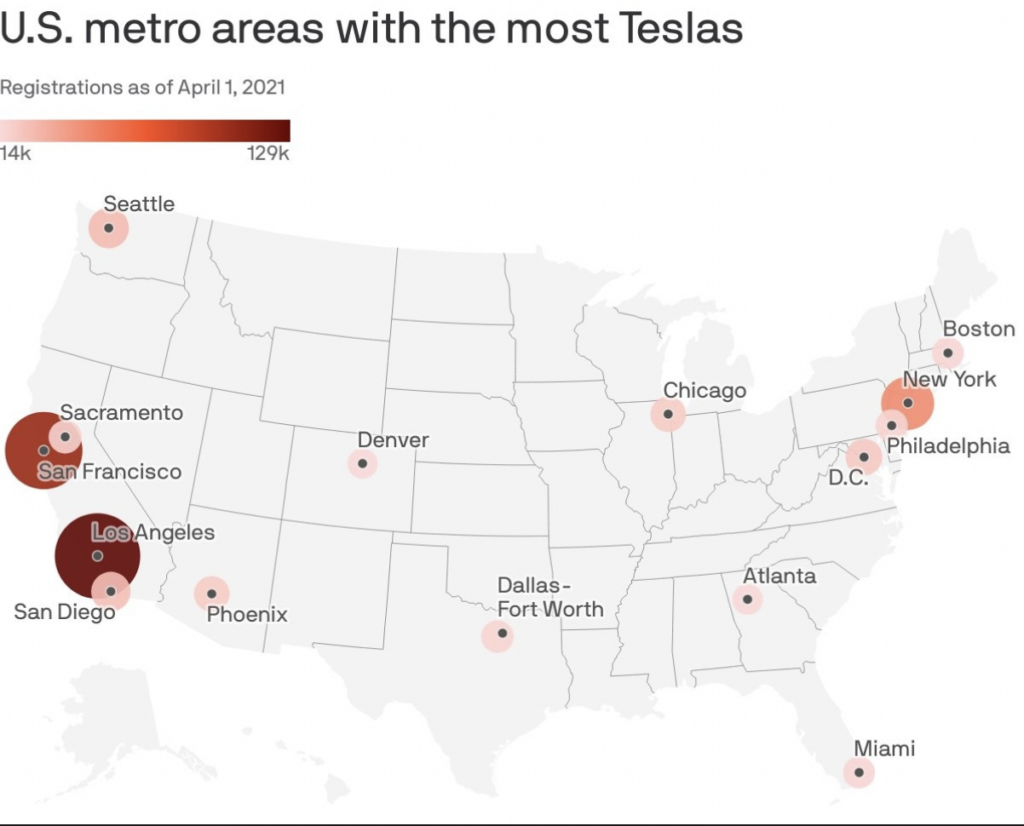
Chart of the Day

Interesting (and predictable) map. Suggests that the fly-over states are all waiting for the Ford F-150 Lightning!


  This blog is also available as a daily newsletter. If you think this might suit you better why not sign up? One email a day, Monday through Friday, delivered to your inbox at 7am UK time. It’s free, and there’s a one-button unsubscribe if you conclude that your inbox is full enough already!


Thursday 16 September, 2021

Worried about going back to the Office?

Watch this nice reassuring Dutch film. (And don’t forget to turn on the sound.)

There, that wasn’t too bad, was it?


Quote of the Day

“It is said the pandemic pulled forward a decade or more of “digital transformation”. Yes. But what it really is going to be is the equivalent of what WWII did to the corporation or the microprocessor to mainframe.”

  • Steven Sinofsky (see below)

Musical alternative to the morning’s radio news

Paul Brady & Arty McGlynn | The Humours of Ballyloughlin

Link

And old recording of two of the best guitarists in Ireland.


Long Read of the Day

 Disruption at Work: It’s More than just WFH

Marvellous essay, constructed as a Tweetstorm, by Steven Sinofsky, one of the most perceptive (and experienced) observers of the tech industry.

Here’s a sample:

17/ The line from Walmart to Amazon is not straight or predictable, but it was exponential. And most of the entire time, “everyone” assumed that Walmart would just catch up. How did Walmart not do same day delivery when the “warehouse” is 2 miles away from me?

18/ That is what disruption looks like — it is not linear or predictable, and most importantly, when it is happening no one knows it. The one thing we know is entities being disrupted claim to be doing the new thing everyone is talking about — BUT THEY ARE DOING IT THE OLD WAY.

19/ Second is a tendency to view disruption as a single variable — Amazon has a web site so Walmart needs one. But Amazon had warehouses, custom software, its own last mile shipping, and on and on. Disruption is never one variable, but a wholesale revisiting of all the variables.

20/ That is why the debate over remote work vs hybrid vs HQ is only part of the picture. It is very interesting and will forever change to something, but that is not where the focus should be. It is, however, why the large companies are the first to start looking to the old ways.

21/ In other words, the incumbent in this disruption is not the headquarters or office, but the full list of structures and approaches of the company.

Do read the whole thing.


Apple seems to be persisting with its car project, but nobody knows what it’s planning

Interesting note from Ben Evans’s weekly newsletter:

The Apple Car, still The head of Apple’s car project moved to Ford, and Kevin Lynch, the head of the watch (a huge hit) took over. I sometimes wonder if Apple has worked out what, exactly, it would do in cars. Making a ‘better Tesla’ seems obvious but unambitious. Yet full autonomy (even if possible) isn’t an Apple sweet spot either. The iPhone was not a Nokia with a nicer case, nor a Blackberry done better. It was a completely new concept. What would an Apple car do that wasn’t just a Tesla with a better interior? It’s clearly working on autonomy, but it’s unlikely to do that better than anyone else – though it might work out how to explain whether the car is driving or not, which may be a big deal. I’m not sure that Apple knows.

Somehow, I don’t think it’s a Tesla with a better interior.


Musings On The Anthropocene

Excerpt from an interesting essay (last of 12) by Usha Alexander…

Whatever the geologists decide about the formal definition, it is useful to think about the start of the Anthropocene. It is useful to focus a question on what so fundamentally changed in human behavior that we went from being just one creature among many, to a becoming a dangerous entity on a scale unlike any other life form in billions of years, drastically upsetting the balance of life on our planet with such force that it’s crashing the biosphere. When did our species cross that threshold? If we can understand what changed in our ways of being, then we might be able to figure out what can be set right and how we might restore human societies to their useful place within the living world. Returning to the popular metaphor of humans as a cancer, what if we instead liken the human community to an organ that—just like every other community of life—plays a part in the regulation of the Earth as an organism, imagined as Gaia? It might then be fair to say that something in our tissues, or social fabric, has become diseased. This is to say human beings are not _a disease; rather, human societies are _infected by disease. If that metaphor holds, then our societies can also be restored to health. With proper diagnosis and treatment, why couldn’t we return to our salutary functioning in Earth’s web of life?

Readers of this series will know that I’ve come to think the present disease was caused by an idea — a meme, if you prefer — contracted by societies in the Fertile Crescent during the early to mid-Holocene, an idea that humans are essentially different from all other living creatures and are entitled to destroy or co-opt other lives without regard in the service of human paramountcy. Early Mesopotamian societies at least provide the first textual evidence in which people were beginning to compare themselves favorably with their gods.

Human exceptionalism is at the root of our environmental crisis.


This blog is also available as a daily newsletter. If you think this might suit you better why not sign up? One email a day, Monday through Friday, delivered to your inbox at 7am UK time. It’s free, and there’s a one-button unsubscribe if you conclude that your inbox is full enough already!

Wednesday 15 September, 2021

Quote of the Day

“The Metaverse: virtual reality with unskippable ads.”


Musical alternative to the morning’s radio news

Telemann | Flute Concerto in G major | Emmanuel Pahud

Link


Long Read of the Day

Notes From the Metaverse

You may have noticed a new obsession of the tech industry with something called the ‘Metaverse’ and dismissed it as just another passing fad of half-educated billionaires who dropped out of college and read (but obviously didn’t understand) Neal Stephenson’s Snow Crash.

If that’s what you thought, then can I respectfully suggest you think again? The Metaverse concept is the most audacious plan for cognitive ‘colonialisation’ since the invention of surveillance capitalism, and this essay by by L. M. Sacasas is the most insightful piece about it that I’ve come across so far. So it’s worth your attention.

It’s terrific. Here’s a taster:

According to NVIDIA’s vice president of simulation technology Rev Lebaredian, “Ultimately we’re talking about creating another reality, another world, that’s as rich as the real world.”

“As rich as the real world” almost comes off as a magnanimous concession given that the so-called “real world” is sometimes characterized as a tedious and impoverished realm compared to the wonders of the Digital City. In a recent installment, I cited Marc Andreessen’s claim that a preference for non-digitally mediated “reality” was an expression of “reality privilege.” In his view, “the vast majority of humanity, lacks Reality Privilege — their online world is, or will be, immeasurably richer and more fulfilling than most of the physical and social environment around them in the quote-unquote real world.” Andreessen knows that some will reasonably say we should then get busy making sure that we improve the “real world” experience for everyone. But times up for reality, Andreessen argues: “Reality has had 5,000 years to get good, and is clearly still woefully lacking for most people.” “We should build — and we are building –” he adds, “online worlds that make life and work and love wonderful for everyone, no matter what level of reality deprivation they find themselves in.”

Do read it.


V2G: Electric vehicles and the grid

When you look at an EV critically, what you see is basically a big skateboard. The ‘board’ is a huge (and I mean huge) battery, with four independently powered wheels at the corners. And so one is basically driving round with a great deal of stored electrical energy at your disposal, which is very satisfying, given the accelerative torque that electric motors can generate.

But of course most of the time the car is parked in a driveway or garage and all that stored energy is just sitting there, unused. And there are currently over half a million EVs doing just that most of the time.

Now switch your gaze to the future envisaged by the UK government of 14m EVs on British roads by 2030. Keeping them charged would notionally require massive upgrading of the national grid, with a massive price tag attached.

For a long time people have been pointing out that it doesn’t have to be like that. After all, the key to managing the grid is to have spare power available to cope with surges of demand. At the moment that rapid-response power comes from gas-powered generating stations, which can get up to speed quickly but emit a lot of CO2. If EVs were connected to the grid in a way that turned them into sources of rapidly-available stored power, then maybe all those gas-turbine generators could be pensioned off.

This penny has finally dropped, it seems. At any rate the energy regulator Ofgem has come up with plans to make it easier for drivers to sell the spare energy stored in their battery back to the grid. It’s a bit like the way households with solar panels can sell some of the electricity they generate back to the grid.

Ofgem will also encourage “smart” car charging to make better use of electricity when demand is low and power is cheap before releasing the cheap energy back to the grid using vehicle-to-grid technology when demand rises.

Neil Kenward, a director at Ofgem, said the regulator would take a “three-prong approach” by increasing the use of electric vehicles, “smart” car charging and vehicle-to-grid technology “which together can help drive down costs for all GB bill payers”.

He said: “Electric vehicles will revolutionise the way we use energy and provide consumers with new opportunities, through smart products, to engage in the energy market to keep their costs as low as possible.”

There’s a nice diagram of how this would work here.

One day that EV of yours could be “a nice little earner”, as Arthur Daley might have put it.


This blog is also available as a daily newsletter. If you think this might suit you better why not sign up? One email a day, Monday through Friday, delivered to your inbox at 7am UK time. It’s free, and there’s a one-button unsubscribe if you conclude that your inbox is full enough already!

Tuesday 14 September, 2021

Norfolk in August

You can perhaps see why I love it there.


Quote of the Day

”The media. It sounds like a convention of spiritualists.”

  • Tom Stoppard in his play Jumpers

Musical alternative to the morning’s radio news

Crosby, Stills, & Nash – Suite Judy Blue Eyes

Link


Long Read of the Day

9/11 Was a Warning for of What Was to Come

Characteristically thoughtful reflection on the attack by George Packer. It was, he argues, the first sign that the 21st century would be a period of shock and disaster.

September 11 dissolved this dream of being exempt from history. It had been a childish dream, and its end forced many Americans, perhaps for the first time, to consider the rest of the world. That morning, an investment banker escaped Ground Zero and staggered uptown into a church in Greenwich Village, where he began to shake and sob. A policeman put a hand on his shoulder and said, “Don’t worry, you’re in shock.” The banker replied, “I’m not in shock. I like this state. I’ve never been more cognizant in my life.”

We had not been thinking about the hijackers, but they had been thinking about us…

Great piece.


The Messy Truth About Carbon Footprints

By Sami Grover in Undark:

How much attention should each of us be paying to our individual carbon footprint? That question is the subject of a contentious debate that’s been raging in climate circles for quite some time.

In one camp stand folks like author Rebecca Solnit, whose recent op-ed for The Guardian argued that Big Oil invented carbon footprints as a deliberate attempt to “blame us for their greed.” The goal, she wrote, was to use relatively ineffectual calls for voluntary abstinence to distract the public from demanding systems-level interventions — like new taxes or the phasing out of gas-powered cars — that might meaningfully reduce society’s reliance on fossil fuels as a whole.

In the other camp are people like Polish researcher Michał Czepkiewicz, who assert that the concept of carbon footprints was simply co-opted by fossil fuel interests, and that it still has value in illuminating the vast inequality that exists between low- and high-carbon lifestyles. (A recent report from the anti-poverty organization Oxfam found that the wealthiest 10 percent of the global population — which includes the vast majority of people reading this op-ed — were responsible for more than 50 percent of global emissions between 1990 and 2015.)

The real truth, as is so often the case, is that more than one thing can be true at once.

Really good piece. Carbon footprints are useful in providing a metric for both measuring which individual actions are significant enough to meaningfully reduce emissions, and also for identifying where policy-level interventions might be most needed.


This blog is also available as a daily newsletter. If you think this might suit you better why not sign up? One email a day, Monday through Friday, delivered to your inbox at 7am UK time. It’s free, and there’s a one-button unsubscribe if you conclude that your inbox is full enough already!


Monday 13 September, 2021

Memories of 9/11

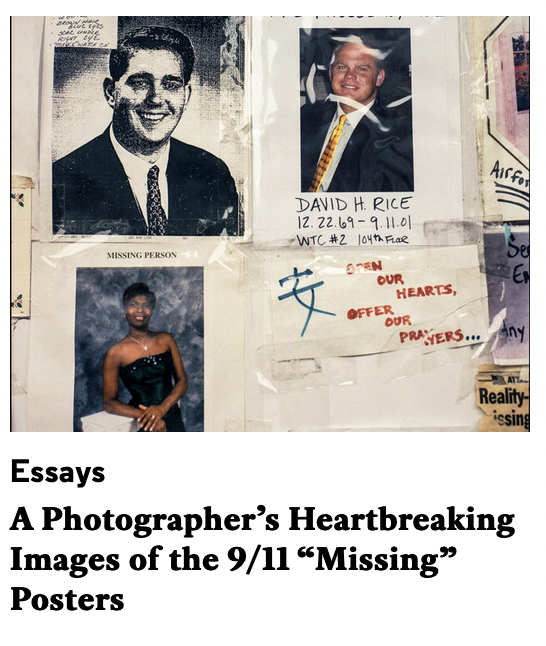
Amid the torrent of stuff triggered by the 20th anniversary of the attach, some things stood out, One was this Aperture essay by Lynne Gilman.

In the weeks after 9/11, Steve Pyke photographed posters of the missing from the Twin Towers. Published for the first time twenty years later, they remain instant memorials to an incalculable loss…

And then this Diary piece by Sukhdev Sandhu in the London Review of Books published on 4 October 2001. It may be back behind the paywall by the time you read this, but here’s how it opens…

At first I’m sure it’s going to be a great day. Sun out. Bright blue skies. The end of summer. Even the sirens and engines that have been wailing outside my apartment window for the last hour don’t seem that unusual. Just, I assume, part of the hysteric clangour taken for granted by those who live in Manhattan. Only when I step out onto First Avenue to head downtown do things begin to seem strange. Hundreds of people are heading in my direction. Some are running. Mums are clutching young kids and looking over their shoulders fearfully. No cars or cabs, but police are everywhere. In the distance I see a huge black blob disfiguring the sky. Maybe a thunderstorm’s brewing? I step in front of a fleeing office worker: ‘Excuse me, but has something happened?’ His answer comes out as barely comprehensible comic-book babble: ‘The World Trade Center has been hit – it was a plane – enemies – terrorists – hijackers – the Pentagon too – the White House – Pittsburgh.’

By the time I reach my department at NYU everyone is ripped with panic. There was a bomb threat earlier and security has only just left. Phones ring non-stop but go dead as soon as they’re picked up. E-mail is down. The BBC and CNN websites are overloaded. A few people huddle round a radio trying to get more news. Each time Pearl Harbor is mentioned they turn their backs in fear: here at the Asian American Studies program where I teach, everyone is acutely aware that the 1941 bombings led to tens of thousands of Japanese Americans being scapegoated and interned. We yell out the names of people we knew who work at the Twin Towers and rummage around in drawers and diaries looking for their cellphone numbers, which we dial frantically, and often in vain. Do any of our students live near the financial district? Where can we go to give blood? Somebody mentions the date – 911; someone else Nostradamus. But, for once, no one has the heart or the detachment to think up sick jokes. Support staff want to go home. Many have a long journey ahead, commuting back to Jersey and Queens and Brooklyn. They’re scared that they might be trapped in Manhattan, cut off from their families. ‘My mom and me, we ain’t too close,’ says one secretary, ‘but …’

Then there’s this from the Introduction to Scott Rosenberg’s lovely 2010 book on blogging.

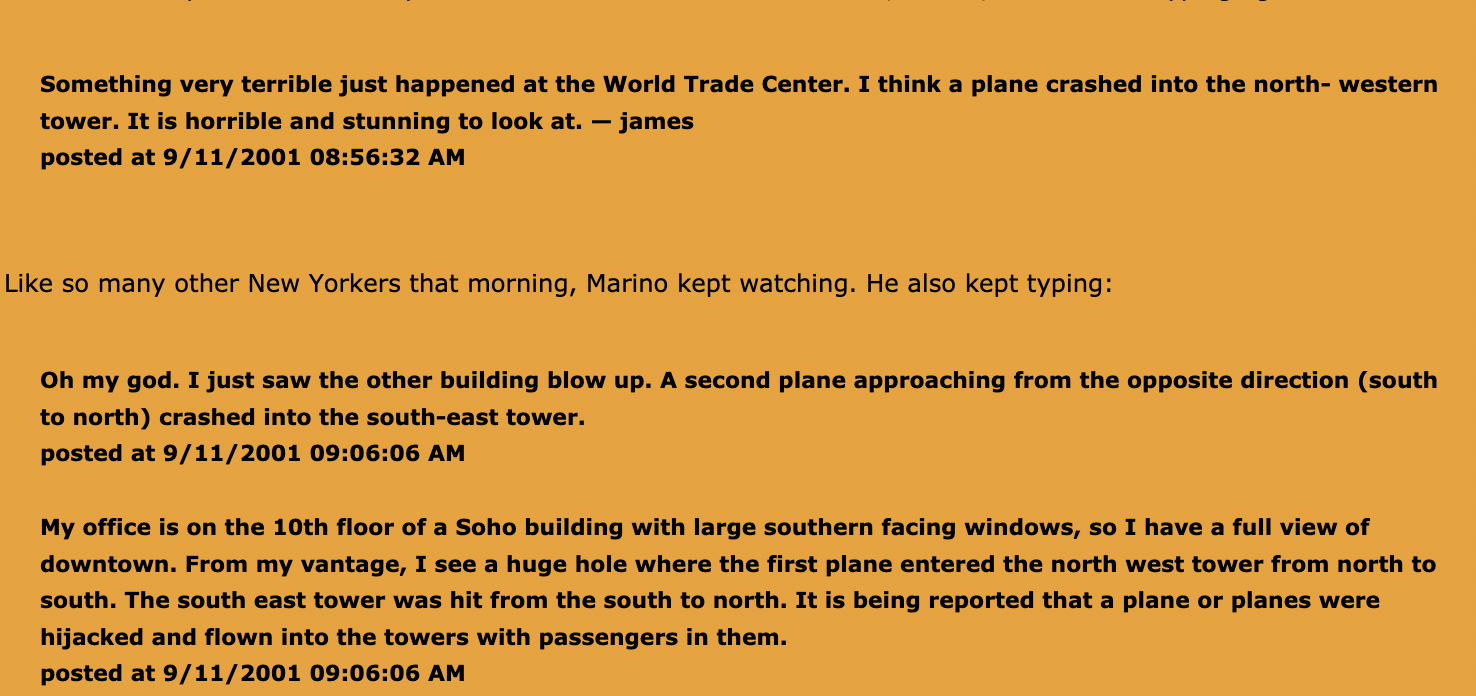
On the morning of September 11, 2001, James Marino sat at his desk at 568 Broadway, looking out a tall window that revealed a panorama of the lower Manhattan skyline. He’d come to the office early to work on his side business — a website called Broadwaystars.com. The site collected tidbits of news and gossip about the New York theater scene and served them up blog-style, time-stamped, with new items at the top. At 8:49 a.m. he’d posted a passel of links: an AIDS benefit recap. Declining box office numbers from Variety. The impending release of a cast album for a show by Rent’s Jonathan Larson titled tick, tick . . . BOOM!

Marino clicked post and looked up from his monitor. He froze a moment, stared, then started typing again:

Finally, here is the first of Jeff Jarvis’s unparalleled audio recollections of his experiences that day.

Link

There are five more. Each one unforgettable.


Quote of the Day

”Most rock journalism is people who can’t write interviewing people who can’t talk for people who can’t read.”

  • Frank Zappa

Musical alternative to the morning’s radio news

Samuel Barber | Agnus Dei | Laurens Symfonisch

Link

Came to mind thinking about 9/11 over the weekend.


Long Read of the Day

When every car is electric, what happens to fuel duty and the electricity grid?

A terrific piece by Charles Arthur on what few people talk or think about: what happens when the UK government’s stated policy of banning the sale of new petrol or diesel cars by 2030 comes into force? This policy will cause immense upheaval in UK tax revenues and in the infrastructure for electricity generation and supply. For starters: it means billions and billions in in lost tax revenues, and a requirement of up to 20% more electricity generation.

The switch to EVs is a good idea, but — as Charles points out — it has major implications.

Read on to see what they are…


What’s the next big technological epoch?

My column in yesterday’s Observer:

One of the challenges of writing about technology is how to escape from what the sociologist Michael Mann memorably called “the sociology of the last five minutes”. This is especially difficult when covering the digital tech industry because one is continually deluged with ‘new’ stuff – viral memes, shiny new products or services, Facebook scandals (a weekly staple), security breaches etc. It is remarkably easy to forget that beneath this frothy surface of daily controversies, massive sectors of established digital consumption are quietly maturing. We tend to obsess over the latest Silicon Valley vaporware, while entirely ignoring the complex global infrastructures currently supporting enterprise cloud architectures, facilitating high-frequency algorithmic trading, or hosting millions playing poker online on any given evening. Recent weeks, for example, have brought the industry’s enthusiasm for the idea of a “metaverse” (neatly dissected here by Alex Hern), El Salvador’s flirtation with bitcoin, endless stories about central banks and governments beginning to worry about regulating cryptocurrencies, Apple’s possible rethink of its plans to scan phones and iCloud accounts for child abuse images, umpteen ransomware attacks, antitrust suits against app stores, the Theranos trial and so on, apparently ad infinitum.

So how to break out of the fruitless syndrome identified by Prof Mann? One way is to borrow an idea from Ben Thompson, a veteran tech commentator who doesn’t suffer from it, and whose (paid) newsletter should be a mandatory daily email for any serious observer of the tech industry. Way back in 2014, he suggested that we think of the industry in terms of “epochs” – important periods or eras in the history of a field. At that point he saw three epochs in the evolution of our networked world, each defined in terms of its core technology and its “killer app”.

Epoch one in this framework was the PC era, opened in August 1981 when IBM launched its personal computer…

Read on


How Mushroom Time Lapses Are Filmed

This is utterly riveting — at least if you’re a photographer, or a fan of nature film-making.

Link

H/T to Jason Kottke.


This blog is also available as a daily newsletter. If you think this might suit you better why not sign up? One email a day, Monday through Friday, delivered to your inbox at 7am UK time. It’s free, and there’s a one-button unsubscribe if you conclude that your inbox is full enough already!


Friday 10 September, 2021

Fancy wheels

A recovering petrolhead writes…

This is an absolutely pristine Bristol 400 spotted the other day in a supermarket car park. The 400 was the first car produced by a spinoff from the British Aeroplane Company (BAC) after the war, with a design inspired by two pre-war BMW cars. It was IMO the only beautiful car that Bristol produced.


Quote of the Day

“In newspaper work you have to learn to forget every day what happened the day before. Newspaper work is valuable up to the point it begins to destroy your memory.

  • Ernest Hemingway (quoted in Mick Fealty’s fine piece which is today’s Long Read).

Musical alternative to the morning’s radio news

Joan Baez and Jackson Brown | Before the deluge | Live at the Beacon Theatre, New York

Link

Many thanks to Ian Clark for the suggestion.


Long Read of the Day

If Populism is a rational response to how we chose to structure our political debates, we need to slow things down…

Great blog post by Mick Fealty about the implications of a loss of accountability in politics (and the reporting of it). It’s happening, he says,

partly because it (politics) has become more performative and much less informational and communicative. Autocratic politicians always do performance much better than pure democrats.

It’s key to their appeal. But in doing so they fuel a flight from the world as it is (with all its impossible and inconsumable complexity). Infinitude scares us, tires us, wears us down making us vulnerable to performative demagogic charlatans.

The dominance of polling in political reporting doesn’t help either. If popularity has become the new single currency why are we surprised that those who front load that quality come to dominate political debate?


Business air-travel:‘Forever changed’?

Bloomberg report (via Charles Arthur)

A Bloomberg survey of 45 large businesses in the U.S., Europe and Asia shows that 84 per cent plan to spend less on travel post-pandemic. A majority of the respondents cutting travel budgets see reductions of between 20 per cent and 40 per cent, with about two in three slashing both internal and external in-person meetings.

The ease and efficiency of virtual software, cost savings and lower carbon emissions were the primary reasons cited for the cutbacks. According to the Global Business Travel Association, spending on corporate trips could slide to as low as US$1.24 trillion by 2024 from a pre-pandemic peak in 2019 of US$1.43 trillion.

Business travel has “forever changed,” Greg Hayes, CEO of jet-engine maker Raytheon Technologies Corp., said in a Bloomberg Radio interview in July. About 30 per cent of normal commercial air traffic is corporate-related but only half of that is likely mandatory, he said. While the market may eventually recover, sophisticated communication technologies have “really changed our thinking in terms of productivity,” Hayes said.

Having saved billions from slashed travel budgets during the pandemic with only a marginal impact on operations, companies, banks, consulting firms and government offices will be hard pressed to explain why they’d return to their old ways.

They sure will. About time too. One of the (few) gratifying things about the pandemic was its revelation of how inessential (and frivolous) a lot of intercontinental business travel was.


This blog is also available as a daily newsletter. If you think this might suit you better why not sign up? One email a day, Monday through Friday, delivered to your inbox at 7am UK time. It’s free, and there’s a one-button unsubscribe if you conclude that your inbox is full enough already!