Thursday 18 November, 2021

Self-portrait with Leica

I love this self-portrait by Ilse Bing. She was one of the leading European photographers of the interwar period — as this V&A summary demonstrates.


Quote of the Day

“What you think is the point is not the point at all but only the beginning of the sharpness”

  • Flann O’Brien

Musical alternative to the morning’s radio news

Alison Krauss | When You Say Nothing At All

Link

Magical!


Long Read of the Day

AI-tocracy

By Martin Beraja, Andrew Kao, David Y. Yang and Noam Yuchtman

An NBER working paper that is both fascinating and depressing. The authors argue that the conventional wisdom which holds that autocracies are generally bad for innovation is wrong, or at least not universally the case. Their conclusion is that some advanced technologies can be sustained under autocracy when the tech and the authoritarian leadership mutually reinforce each other.

There’s a free pdf download if you’re a newcomer to NBER. And if you’re too busy, here’s the Abstract:

Can frontier innovation be sustained under autocracy? We argue that innovation and autocracy can be mutually reinforcing when: (i) the new technology bolsters the autocrat’s power; and (ii) the autocrat’s demand for the technology stimulates further innovation in applications beyond those benefiting it directly. We test for such a mutually reinforcing relationship in the context of facial recognition AI in China. To do so, we gather comprehensive data on AI firms and government procurement contracts, as well as on social unrest across China during the last decade. We first show that autocrats benefit from AI: local unrest leads to greater government procurement of facial recognition AI, and increased AI procurement suppresses subsequent unrest. We then show that AI innovation benefits from autocrats’ suppression of unrest: the contracted AI firms innovate more both for the government and commercial markets. Taken together, these results suggest the possibility of sustained AI innovation under the Chinese regime: AI innovation entrenches the regime, control stimulates further frontier innovation.

If you wanted an argument for why facial recognition is a toxic technology, then this is a pretty good one.


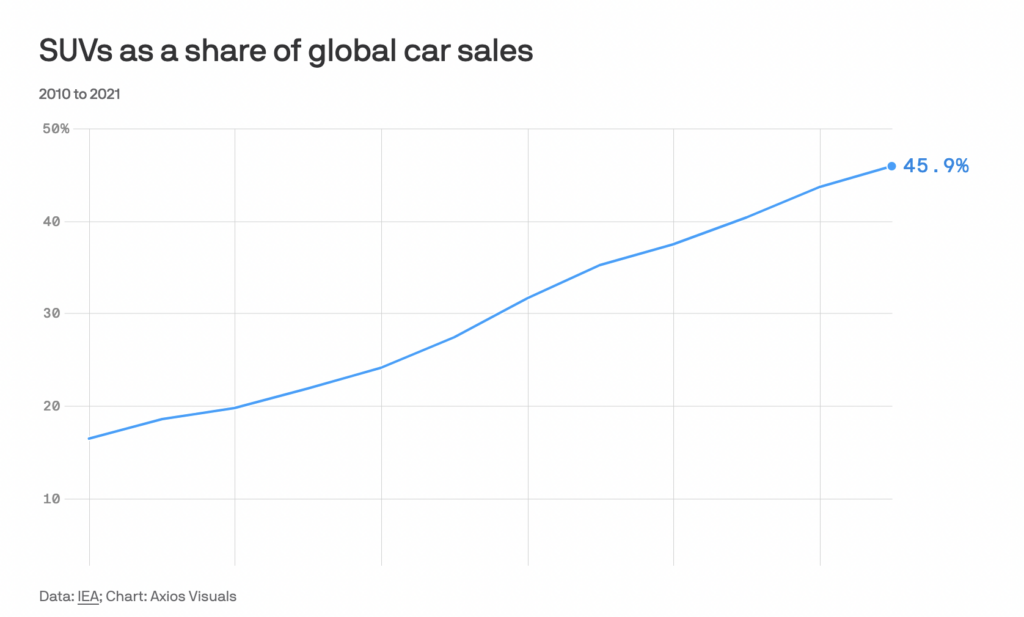
Tech can’t fix the car problem

Good piece by Shira Ovide with interesting references. She’s been reading Peter Norton’s  Autonorama: The Illusory Promise of High-Tech Driving.

Our health and that of the planet will significantly improve if we switch to electric cars. They are one focus of the global climate summit underway in Glasgow. And taking error-prone drivers out of the equation could make our roads much safer. But making better cars isn’t a cure-all.

Popularizing electric vehicles comes with the risk of entrenching car dependency, as my New York Times Opinion colleague Farhad Manjoo wrote. Driverless cars may encourage more miles on the road, which could make traffic and sprawl worse. (Uber and similar services once also promised that they would reduce congestion and cut back on how many miles Americans drove. They did the opposite.)

The future of transportation needs to include more energy efficient and safer cars. But Dr. Norton also said that it would be useful to redirect money and attention to make walking, cycling and using shared transportation more affordable and appealing choices.

EVs are wonderful in their way. But they’re still cars. They’re so good, in fact, that they might make us even more infatuated with the automobile.


My commonplace booklet

Eh? (See here)

Are AirPods Out? Why Cool Kids Are Wearing Wired Headphones

The Wall Street Journal confirms that I am not cool. But then, I never was.

Also, none of my current Apple mobile devices has a headphone port.


This Blog is also available as a daily email. If you think that might suit you better, why not subscribe? One email a day, Monday through Friday, delivered to your inbox. It’s free, and you can always unsubscribe if you conclude your inbox is full enough already! 


Wednesday 17 November, 2021

Quote of the Day

”Poor Henry James! He’s spending eternity walking round and round a stately park and the fence is just too high for him to peep over and he’s just too far away to hear what the countess is saying.”

  • Somerset Maugham

Musical alternative to the morning’s radio news

Liam O’Flynn | The Fox Chase

Link

Extraordinary piece which captures the dynamics of a fox-hunt.


Long Read of the Day

 We have privatised our cyber security. The winners are the hackers

Stark warning in Prospect magazine from Ciaran Martin, the ex-GCHQ guy who set up the UK’s National Cyber Security Centre. He uses as a case-study the successful hacking of the Colonial pipeline in the US.

Colonial, it should be said, broke no rules. And that’s the point. Insufficient protection of its pipeline—a critical national asset—caused social disruption that clearly met the threshold of a national security threat. But there is nothing—yet—in the regulations governing this critical sector that requires firms to do better (and Republicans in Washington are starting to push back against suggestions for tighter controls). The unspoken message behind the Colonial case is that businesses can choose how to respond, whatever the consequences, and the government will pick up the tab.

It’s a neoliberal wet-dream, in other words — just like the 2008 banking crisis. An unregulated private sector is allowed to run risks which eventually come to threaten the security of the rest of us. And then the taxpayer (in the shape of the government) comes to the rescue and no corporate executive goes to gaol.

Good piece, worth reading in full.


The erosion of the American republic (contd.)

Joe Biden achieved what many people thought would be impossible — the passing of a huge bi-partisan Bill to renew the country’s crumbling infrastructure. And guess what? Heather Cox Richardson takes up the story:

It is a historic bill, not least because it recalled times when the government just…functioned, with members of both parties backing the passage of a popular bill that reflected a lot of hard work to hammer out a compromise.

And yet, Trump loyalists have attacked the bill as “Joe Biden’s Communist takeover of America” and have attacked any Republican who supported it as “a traitor to our party, a traitor to their voters and a traitor to our donors.” Some of the Republicans voting for it have gotten death threats.


This Blog is also available as a daily email. If you think that might suit you better, why not subscribe? One email a day, Monday through Friday, delivered to your inbox. It’s free, and you can always unsubscribe if you conclude your inbox is full enough already! 

Monday 15 November, 2021

Fuchsia

My favourite plant. Still going strong in the front garden.


Quote of the Day

Dominic Cummings on working with Boris Johnson:

“One morning in mid-January he called me into his study.

Johnson: Dom, I want to run something by you.

Do you think it’s OK if I spend a lot of time writing my Shakespeare book?

Cummings: What do you mean?

Johnson: This fucking divorce, very expensive. And this job. It’s like getting up every morning pulling a 747 down the runway. (Pause) I love writing, I love it, I want to write my Shakespeare book.

Cummings: I think people expect you to be doing the PM’s job, I wouldn’t talk to people about this if I were you…

You get the idea. Within a month of the election he was bored with the PM job and wanted to get back to what he loves while shaking down the publishers for some extra cash.”


Musical alternative to the morning’s radio news

The Wailin’ Jennys | The Parting Glass

Link

A favourite end-of-the-evening song in my part of the world. And if you want to hear what it sounds like at the end of a really big evening, try this.


Long Read of the Day The pandemic and the chronic erosion of trust

A fascinating Tweetstream by Michael Bank Petersen.

Public support for governments is decreasing across the democratic world. This is driven by voter fatigue with restrictions that drag on and on. Such fatigue is a major explanation of increasing radicalisation…

And so the argument builds.

This is an adroit use of Twitter to outline a complicated argument. The end-point is that if countries try to compel vaccination or to quarantine the unvaccinated (as, say, Austria is apparently doing now) then the political backlash could turn really nasty.

Not such a long read. But it gives one a different perspective on things..


DeepMind crunches the numbers – but is it really a magic bullet?

My column in yesterday’s Observer:

The most interesting development of the week had nothing to do with Facebook or even Google losing its appeal against a €2.4bn fine from the European commission for abusing its monopoly of search to the detriment of competitors to its shopping service. The bigger deal was that DeepMind, a London-based offshoot of Google (or, to be precise, its holding company, Alphabet) was moving into the pharmaceutical business via a new company called Isomorphic Labs, the goal of which is grandly described as “reimagining the entire drug discovery process from first principles with an AI-first approach”.

Since they’re interested in first principles, let us first clarify that reference to AI. What it means in this context is not anything that is artificially intelligent, but simply machine learning, a technology of which DeepMind is an acknowledged master. AI has become a classic example of Orwellian newspeak adopted by the tech industry to sanitise a data-gobbling, energy-intensive technology that, like most things digital, has both socially useful and dystopian applications.

That said, this new venture by DeepMind seems more on the socially useful side of the equation. This is because its researchers have discovered that its technology might play an important role in solving a central problem in biology, that of protein folding.

Proteins are large, complex molecules that do most of the heavy lifting in living organisms…

Read on


My commonplace booklet

Eh? (See here)

Think Robots can’t dance? Boston Dynamics taught its robodogs to mimic the Rolling Stones on stage.

Video


This Blog is also available as a daily email. If you think that might suit you better, why not subscribe? One email a day, Monday through Friday, delivered to your inbox. It’s free, and you can always unsubscribe if you conclude your inbox is full enough already! 
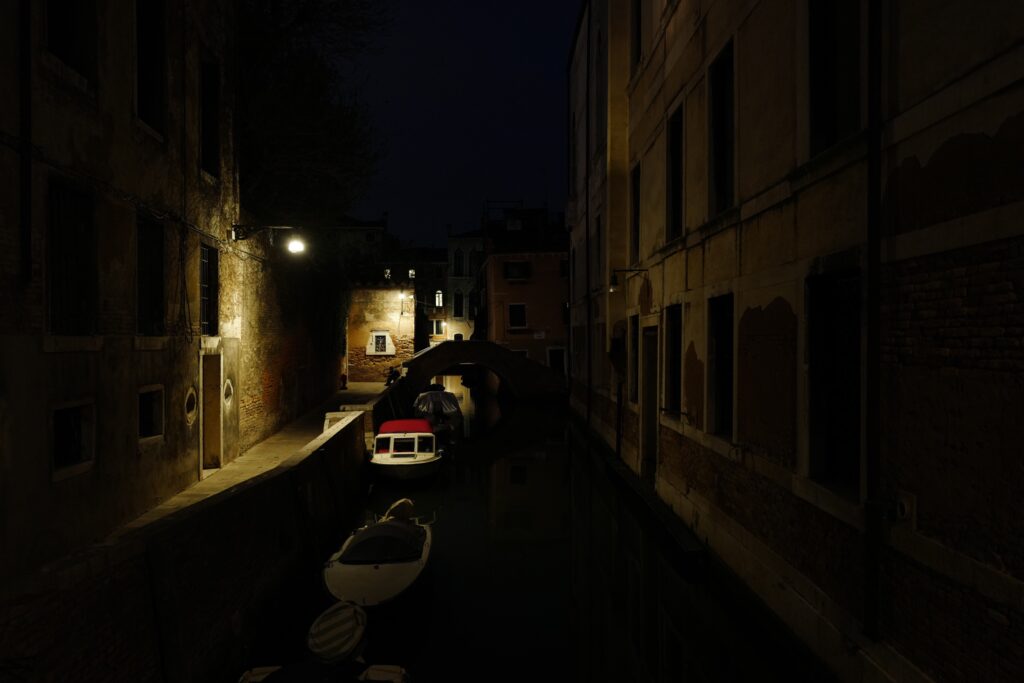

Friday 12 November, 2021

Cafe society


Quote of the Day

”He only feels life through his brain, or through sex, and there is a gulf between these two separate departments.”

  • Ottoline Morrell on Bertrand Russell (she would know, since she had a long affair with him)

She was an interesting, generous woman and quite a good photographer. Some of her pictures are on her Wikipedia page.


Musical alternative to the morning’s radio news

J.S. Bach | French Suite No.2 in C minor BWV813 | András Schiff

Link


Long Read of the Day

The Internet’s Unkillable App

Well, of course I was bound to enjoy this paean of praise by Dave Pell in which he argues that the noisier our digital lives get, the more popular the humble newsletter becomes. I’m hoping that you might like it too.

Cave paintings. Petroglyphs. Smoke signals. Carrier pigeons. Telegraphs. The Pony Express. Airmail. Blogs. Myspace. Human modes of communication come and go, each replaced by a new technology and a faster method of delivery. But somehow, the humble newsletter survives. In an era with countless ways to reach out and bombard someone, newsletters have not only endured; they’re more popular than ever (and not only as some artisanal relic kept alive by the same people who keep buying vinyl LPs). More and more writers—including, ahem, some excellent ones right here at The Atlantic—are competing to entice us with the perfect subject line and the most sublime greeting…

Read on.


Mario Vargas Llosa: How I Lost My Fear of Flying

A lovely little essay by a great writer:

There are certain naïve people who believe that a fear of flying is, or can be explained by, a fear of death. They are wrong: fear of flying is fear of flying, not of death, a fear as particular and specific as a fear of spiders, or of the void, or of cats, three common examples among the thousands that make up the panoply of human fears. Fear of flying wells up suddenly, when people not lacking in imagination and sensitivity realise that they are thirty thousand feet in the air, travelling through clouds at eight hundred miles an hour, and ask, ‘What the hell am I doing here?’ And begin to tremble.

It happened to me, after many years getting on and off aircraft as often as I change my shirts…


Frank Pasquale on digital capitalism

Frank Pasquale is one of the geniuses in my line of business and this 16-minute Keynote is a paradigm of a perfect Keynote talk: just the right length and profundity. And memorable because you come away with the central message he wanted to get across.

Try it.


This Blog is also available as a daily email. If you think that might suit you better, why not subscribe? One email a day, Monday through Friday, delivered to your inbox. It’s free, and you can always unsubscribe if you conclude your inbox is full enough already! 


Thursday 11 November, 2021

Quote of the Day

”My face looks like a wedding cake that has been left out in the rain.”

  • W.H. Auden

He was right, as you can see here! But good for him.


Musical alternative to the morning’s radio news

Ry Cooder | My Girl Josephine

Link


Long Read of the Day

 Shortage nation: why the UK is braced for a grim Christmas

Nice explainer by Tim Harford on why we run out of petrol when supplies are constrained rather than just putting up the price of a gallon (as economists would recommend).

In the textbooks, a “shortage” doesn’t mean dry pumps or empty shelves: it means that prices spike. They might double or triple. Some will find it impossibly expensive to drive, and others might find their finances ruined because they have no choice but to buy fuel they cannot really afford. But there are no queues; there is always petrol available to those who are willing and able to pay.

Ah, those dreamworld textbooks. The real world is a different place.

An instructive read.


More on Alexis Madrigal’s experience of Covid

Andrew Brown (Whom God Preserve) was not impressed by Madrigal’s experience (mentioned in yesterday’s edition). He writes:

Madrigal’s piece gave off such an extraordinary vibe of terrified Eloi wandering too close to the Morlocks. He and his entire family are vaccinated. He caught something that affected him no worse than a bad cold as the price of a fun fancy weekend in New Orleans. And yet we get paragraph after paragraph of freakouts, and the whole family panicking, because of this enormous catastrophe which disrupted his life for a whole week. Right at the end, he asks the only interesting question, which is how will society cope when Covid becomes low-level and endemic: the only possible answer is “better than you did, chum.”

Someone I know who lives in Hong Kong has just sent me pictures of the building opposite where he lives cordoned off by police, and everyone in it tested because someone who lives there tested positive. That’s the price of zero covid and Chinese societies can pay it, for the moment. But there is no way in hell America could be run like that. Poor people just aren’t part of their health planning. So the Eloi are going to remain in a state of ineffective terror while the disease, presumably, slowly loses virulence as it spreads through the Morlocks.


An honest government ad

Link

Nice surprise appearance by Greta Thunberg at the end.

H/T to Andrew Curry — who, incidentally, warns that it’s “not safe for work”. Can’t think why. Readers of this Blog are hardened viewers, surely.


Chart of the Day

Every year, Knight Frank releases data on what it takes to join the 1 per cent in different countries. I always find this data and the disparity between countries to be fascinating. In the UK, $1.8m gets you into the top 1 per cent. Compare that with $280,000 in Brazil or $60,000 in Indonesia.


My commonplace booklet

Eh? (See here)

Hand-build wooden Apple 1 goes on sale

Anyone interested in an Apple I hand built by Steve Jobs and Steve Wozniak circa 1976 has until 11:30 am PST today to make a bid as the rare computer goes up for auction at John Moran Auctioneers outside Los Angeles, California.

The vintage machine is one of the few Apple-I versions encased in koa wood, from the Acacia koa tree that is endemic to Hawaii and was fashionable in the 1970s. The computer was made during the company’s garage start-up days and is only one of six known remaining Koa wood case Apple-I machines in existence.

Link

Oddly enough, my maternal grandfather was a John Moran. And he was also an auctioneer, among other things. He never sold anything like this, though.


This Blog is also available as a daily email. If you think that might suit you better, why not subscribe? One email a day, Monday through Friday, delivered to your inbox. It’s free, and you can always unsubscribe if you conclude your inbox is full enough already! 


Wednesday 10 November, 2021

Quote of the Day

”Why are women so much more interesting to men than men are to women?”

  • Virginia Woolf

Good question.


Musical alternative to the morning’s radio news

Cannonball Adderley | One for Daddy-O

Link


Long Read of the Day

‘Politics-as-Sports’: Why It Matters

This long essay by James Fallows is terrific. In part, it’s a reprise of an idea he first put forward in the book Breaking The News: How the Media Undermine American Democracy, which I first read avidly when it came out in 1997 (and still have on my shelves).

This is how the essay begins:

This post has a simple purpose. It is to clarify and illustrate an important point about journalism of this moment. Once you start noticing the pattern I’m talking about, I predict you’ll see it everywhere.

Read on to see why.


How one ratings agency assesses corporations’ preparations for, and risks from, climate change

Moody’s, one of the big ratings agencies has just published an assessment of how prepared various industrial sectors are for the proposed transition to a zero-carbon future. The report

assesses the outlook in a scenario of rapid emissions reduction for carbon-intensive sectors – the ones whose transformation will be vital to the world’s ability to halve emissions by 2030 and achieve a net zero economy by 2050. Incorporating insights from across Moody’s, it analyzes these sectors’ exposure to climate risk and their relative ‘transition readiness’, and models the likely impacts on their default risk.

It’s an 18-page document, but here are the overall conclusions:

  1. Progress: Momentum in automotive and utilities demonstrates that rapid improvement in companies’ positioning for a rapid transition is possible in some of the most carbon-intensive sectors.

  2. Challenges: Many carbon-intensive sectors and companies are less well-positioned for a rapid transition – leaving the world off track for 1.5 degrees C.

  3. Risk: Variations in disclosure within and between sectors mask hidden climate- related financial risks. In some key instances company-level disclosures do not fully reflect the true level of exposure.

  4. Pressure: Sectors that are least prepared overall for rapid transition also have the widest range of potential default risk outcomes for individual companies. Competitiveness is set to intensify within sectors as some companies position themselves to prosper in a zero-carbon future.

  5. Opportunities: Early action by companies during the 2020s can halve their probability of default compared to delayed action, while enabling the global economy to chart a smoother path to net zero. By contrast, delayed action in the 2030s increases default risk as less progress this decade is likely to lead to higher degrees of intervention and a less orderly transition later.

TL;DR version: Lots of bankruptcies ahead. On the other hand, given the abysmal failure of Moody’s and their peers to spot the 2008 banking catastrophe, I’m not sure we can take this seriously either.


Johnson nailed

Sam Knight has a nice piece in the New Yorker about Boris Johnson’s, er, performance at COP26. Knight gets him bang to rights:

He is, more than anything, a facile student in a perpetual essay crisis: staying up late, scribbling unwieldy, fancy-sounding analogies to get through another assignment. Something something Sophocles. It’s mostly wordplay and bullshit.

Bingo! Got him in one.


Getting Back to Normal Is Only Possible Until You Test Positive

Alexis Madrigal (a writer I’ve been following for years) is a co-founder of the COVID Tracking Project. He was ultra-careful for 18 months. Then he got COVID at a wedding.

He’s written a compelling piece about the experience. He was double-vaccinated and is ok. But it was the impact on his family that was the killer punch. His conclusion:

Right now most policies appear designed to make life seem normal. Masks are coming off. Restaurants are dining in. Planes are full. Offices are calling. But don’t be fooled: The world’s normal only until you test positive.

Yep.


My commonplace booklet

Eh? (See here)

This catalogue dropped through the letterbox the other day. At first I thought it was a spoof, because it was beyond parody. But it’s genuine.

Here, for instance, is one of the items women can order for their semi-house-trained male companions:


  This Blog is also available as a daily email. If you think that might suit you better, why not subscribe? One email a day, Monday through Friday, delivered to your inbox. It’s free, and you can always unsubscribe if you conclude your inbox is full enough already! 


Tuesday 9 November, 2021

Ely Cathedral

Seen on a November afternoon.


Quote of the Day

”The illegitimate child of Karl Marx and Catherine the Great.”

  • Clement Attlee’s description of communism.

Musical alternative to the morning’s radio news

Elgar | Elegy for String Orchestra, Op 58 | Roger Norrington

Link


Long Read of the Day

Ecological Leninism ·

Long review essay on Andreas Malm’s post-pandemic climate politics by historian Adam Tooze in the London Review of Books the other day. Sobering stuff, especially when one realises that even if all the 132 nations which signed up to the Paris Accords kept their promises, the world is still on track for warming of 2.7 degrees Centigrade. Given that most of them haven’t, that figure of 2.7 is now a lower bound. Which is leading many thinkers to wonder what the politics of approaching catastrophe might be like. Not pretty is the answer, and Malm is pretty bleak about that, which is why Tooze’s take on his views is interesting.

The carbon clock is ticking. Governments and official agencies assure us that all will be well, that they can balance the risks. Some insist that technology will save us. We have achieved the impossible before, we will do it again. But why believe them? Progress towards decarbonisation has been limited. Fossil fuel interests remain stitched into global networks of power directly descended from the age of imperialism. Their political outriders may be cynical hacks, but public support for the fossil fuel status quo is all too real. The carbon coalition seems death-driven, defiant of expert advice. Centrist liberals are loud in expressing outrage, but shrink away when push comes to shove. There are periodic waves of protest. Children boycott school. There are demands for a new social contract and a just transition. A minority, tiny as yet, calls for rebellion.

With only minor alterations, this could be the portrait of a nation sliding towards defeat in a major war: relentless time pressure; limited resources rapidly running down; over-confident technocrats; promises of wonder weapons; pro and anti-war factions at loggerheads; desperate young people calling for a halt to the madness…


Felicity Allen on portraits and portraiture

As part of the ‘People Like You’ research project artist Felicity Allen was offered a residency in which to develop a new series in her Dialogic Portraits work, to consider with her sitters questions of traditional representation (such as portraiture) and ideas of the self associated with digital culture. She produced a series of portraits, shown here in Rooms, and made audio recordings with the sitters, both of which form the basis for a mesmerising 12-minute film, Figure to Ground – a site losing its system. She does portraits in watercolour, which in itself is interesting, because as a medium it somehow lacks the ‘authority’ of oils. She sent me the link out of the blue yesterday (we met once, ages ago, at a mutual friend’s party), and suddenly a busy morning was deliciously interrupted. Hope yours is too.


We Can’t Wait for Universities to Fix Themselves. So We’re Starting a New One

Hmmm… This could be interesting.

On our quads, faculty are being treated like thought criminals. Dorian Abbot, a University of Chicago scientist who has objected to aspects of affirmative action, was recently disinvited from delivering a prominent public lecture on planetary climate at MIT. Peter Boghossian, a philosophy professor at Portland State University, finally quit in September after years of harassment by faculty and administrators. Kathleen Stock, a professor at University of Sussex, just resigned after mobs threatened her over her research on sex and gender.

We had thought such censoriousness was possible only under oppressive regimes in distant lands. But it turns out that fear can become endemic in a free society. It can become most acute in the one place—the university—that is supposed to defend “the right to think the unthinkable, discuss the unmentionable, and challenge the unchallengeable.”

The reality is that many universities no longer have an incentive to create an environment where intellectual dissent is protected and fashionable opinions are scrutinized. At our most prestigious schools, the primary incentive is to function as finishing school for the national and global elite.

Among the luminaries involved are Niall Ferguson, Kathleen Stock, Dorian Abbot, Peter Boghossian, Robert Zimmer, Larry Summers, John Nunes, Gordon Gee, Steven Pinker, Deirdre McCloskey, Leon Kass, Jonathan Haidt, Glenn Loury, Joshua Katz, Vickie Sullivan, Geoffrey Stone, Bill McClay, and Tyler Cowen. They also claim as supporters a motley crew of journalists, artists, philanthropists, researchers, and public intellectuals, including Lex Fridman, Andrew Sullivan, Rob Henderson, Caitlin Flanagan, David Mamet, Ayaan Hirsi Ali, Sohrab Ahmari, Stacy Hock, Jonathan Rauch, and Nadine Strossen.

I guess that most of these elegant dudes (and they are, interestingly, mostly dudes) will not be giving up their comfortable perches in conventional institutions to sample the delights of Austin. They’ll be more like visiting profs, presumably.

Still, there’s something quaint about a group of dissidents from elite universities setting up another elite institution. My hunch, though, is that they’ll get plenty of funding from wealthy libertarians (Peter Thiel?) so maybe this academic bird will fly.

It’s also reminiscent of the New College of the Humanities which was founded by the philosopher A.C. Grayling in 2011 and is still in business, though now owned by a subsidiary of Northeastern University.

My hunch is that Harvard, that hedge fund with a nice university attached, won’t be too bothered by this University of Austin.


This Blog is also available as a daily email. If you think that might suit you better, why not subscribe? One email a day, Monday through Friday, delivered to your inbox. It’s free, and you can always unsubscribe if you conclude your inbox is full enough already! 


Monday 8 November, 2021

What we did on November 5

Instead of burning effigies, we toasted marshmallows and roasted chestnuts.


Quote of the Day

The Sunday Times had a big scoop yesterday saying that the sure-fire way to become a Lord under the current Tory government is to donate at least £3m to the party. We’re back to Lloyd-George’s cash-for-titles days; the only difference is that the price has gone up.

The story reminded me of a conversation I had some years ago with a friend who is a life peer. He’s an intensely serious, academically-distinguished and dedicated individual who takes his role seriously and never misses a Lords debate for which his experience and knowledge are relevant.

One night, on the train back to Cambridge after a dinner we’d both attended in London, I asked him what it was like being a Lord.

“Well”, he replied, “it’s a privilege, but…” (pause) “it’s no longer an honour, given some of the people who are now in the House.”

Spot on.


Musical alternative to the morning’s radio news

Neil Young, Simon & Garfunkel – Helpless / Only Love Can Break Your Heart

Link


Long Read of the Day

The Singularity Is Here: Artificially intelligent advertising technology is poisoning our societies.

Eloquent essay by Ayad Akhtar on what surveillance capitalism is doing to us.

Embedded in this scheme of endless distraction is a deeper logic. The system has come to understand the fundamental value of always reaffirming our points of view back to us, delivering to us a world in our image, confirmation bias as the default setting. This is the real meaning of contemporary virtuality. In the virtual space, the technology combats and corrects our frustrations with reality itself—which defies expectation and understanding, by definition.

Thoughtful and worth your time.


How can we tame the tech giants now that they control society’s infrastructure?

Yesterday’s Observer column

Pardon me for a moment while I shed a few crocodile tears. The proximate cause of this grief is the news that the revenues of Snap, Facebook, Twitter and YouTube are down by an estimated $9.85bn in the second half of this year. Just to put that in context, as I write, the stock market valuations of the first three of these behemoths are $86.9bn, $930.36bn and $44.07bn respectively. YouTube is harder to estimate because it’s part of Alphabet, its holding company, but since that’s valued at $1.93tn (that’s trillion, by the way) we may safely assume that YouTube’s revenue decline was, as engineers say, “in the noise”.

And yet all these outfits were complaining loudly at the injustice that had been done to them by one of their peers – Apple. Why so? Well, back in April, the iPhone manufacturer introduced its grandly named app-tracking transparency policy via a tweak to its mobile operating system, which forced iPhone apps to ask for permission before they tracked the behaviour of users to serve them personalised ads.

Predictably, most users declined to be tracked, which meant that those who had hoped to target them were left floundering. ..

Do read the whole thing.


Is There a Method Behind China’s Tech Crackdown Madness?

Really fascinating article which sheds some light on something that’s been puzzling me for ages, namely the question of why the Chinese Communist Party is cracking down on the country’s social media companies. Was this triggered by the hubris of these outfits’ founders (who had forgotten that nothing, but nothing, is more important than the Party)? Or was there something more fundamental and perceptive at work — namely the strategic insight that these companies are, ultimately, not important and may be disposable in the long run. After all, basically they’re just doing tricks on the back of an old technology (the Internet) developed long ago in the US, whereas the Party realises that what China needs is the capability to develop the infrastructural technologies that will underpin the longer-term future.

This piece by Ruihan Huang and Joshua Henderson examined the 500 most valuable private companies on China’s Hurun list — about half of which are in the tech sector in the hope of identifying what companies were targeted and then speculating on the reasons why.

They concluded that:

  • regulators almost exclusively targeted “bits” (software) companies rather than “atoms” (hardware) companies — which mean, essentially, what I call ‘platform’ owners in yesterday’s Observer column;
  • crackdowns appear to be correlated with firm size; and,
  • ‘regulatory’ actions were not always ‘political’ in nature but were vigorously pursued because of the available window of opportunity.

This chart just about sums it up:


My commonplace booklet

Eh? (See here)

This picture, showing Boris Johnson dozing his way through the opening speech of COP26, headed an interesting article in the Guardian about how Johnson was perceived by other major politicians at the conference. Apparently he couldn’t resist trotting out his usual jokes and antics — and even left gaps in his speech for laughter — but the laughs never came.

I’m not surprised. Johnson is basically a provincial, little-Britain act, which plays well to some audiences in a country where toffee-nosed clowns like Johnson and Jacob Rees-Mogg are understood by people who read the Beano and the ‘Greyfriars’stories when they were kids.

But foreigners never read this stuff and so they don’t get it. In fact they are almost as amazed that a hitherto sensible and stable polity called the UK elected this clown as the rest of us were when the Americans plumped for Trump.


This Blog is also available as a daily email. If you think that might suit you better, why not subscribe? One email a day, Monday through Friday, delivered to your inbox. It’s free, and you can always unsubscribe if you conclude your inbox is full enough already! 


Friday 5 November, 2021

Many thanks to those kind readers who enlightened me about this lovely photograph. Euan Williamson identified both the bird (a rose-ringed parakeet) and the photographer, Petr Sochman, and thought that the parrot appears to be saying “Social distance, please!”

And John Burke found the source of the picture — the Comedy Wildlife Photography Awards. Their current finalists for the 2021 awards are a hoot (or an hoot, if you’re as pedantic as I am).

The great thing about being a blogger is that your readers know more than you do.


Quote of the Day

”Mrs Woolf’s complaint should be addressed to her creator, who made her, rather than me.”

*  Cecil Beaton, replying to Virginia’s dislike of a drawing he did of her.


Musical alternative to the morning’s radio news

Thomas Tallis | If Ye Love Me | The Cambridge singers

Link


Long Read of the Day

Much of what you’ve heard about Carter and Reagan is wrong

Great blog post by Noah Smith.

Revisionism at its best. Made me think again about both Jimmy Carter and Ronald Reagan.


OpenLearn’s triumph

For many years I worked happily and productively at the Open University, one of the best ideas of Harold Wilson’s Labour government which evolved into a global pioneer of what used to be called ‘distance learning’. It was an astonishingly creative and lively place to work, and I was lucky to be part of it. The only British institution even remotely like the OU is the BBC.

Towards the end of my time there, some of my colleagues created OpenLearn, an online service which now offers over a thousand free courses and learning resources. This has been a Godsend to thousands of people who were locked down during the pandemic. This creative response to the pandemic has just been recognised by the Open Resilience Award by OE Global, Open Education Global is an international non-profit organisation that supports the development and use of open education around the world. I know that virtue is supposed to be its own reward, but sometimes it’s nice when the world recognises it too.


US blacklists NSO

The FT reports that

The US has added NSO Group, the Israeli military-grade spyware manufacturer that created software traced to the phones of journalists and human rights activists around the world, to a trade blacklist as it targets the growing surveillance threat posed by hacking-for-hire companies.

NSO and a competitor, Tel Aviv-based Candiru, were among four companies added by the commerce department on Wednesday to its so-called entity list, which would restrict exports of US hardware and software to the companies.

This is big news and long overdue. It’s also a massive endorsement of the work that Ron Deibert and his colleagues in the Citizen Lab at the University of Toronto have been doing for years. They have been tireless in the front line of the battle against the spyware industry. The Lab is one of the few examples of academic institutions which are having a real impact on the tech industry rather than just engaging in virtue-signalling. Ron and his colleagues marshal formidable technical expertise in the public — rather than the private — interest. You could call the Citizen Lab the NSA for civil society.


My commonplace booklet

Eh? (See here)

Two things…

  • ”All this talk about Metaverse is an excellent way to refocus the attention to the future and away from its present problems. A video that essentially uses a video-game-like interface, Facebook can wash its hands off reality and whatever toxicity of the reality. After all, it is all just a game. You can’t be any angrier about fake information being shared in the metaverse than you can be angry about running over someone in grand theft auto.” (Om Malik on his blog)

  • Steven Johnson: Where good ideas come from. Nice video.


This Blog is also available as a daily email. If you think that might suit you better, why not subscribe? One email a day, Monday through Friday, delivered to your inbox. It’s free, and you can always unsubscribe if you conclude your inbox is full enough already! 


Thursday 4 November, 2021

No Way!

I love this picture and wish it were mine. I think it was (deservedly) a prize-winner in a nature photography contest some years ago, but I can’t find any details and so can’t credit the photographer. At the beginning of the pandemic, I had the idea of using it as my Zoom placeholder, but it gave the wrong impression to my colleagues, so I abandoned it. It’s always reminded me of that wonderful New Yorker cartoon which shows a male peacock, in full regalia, staring in astonishment at a distinctly unimpressed female and saying: “What do you mean — No?”


Quote of the Day

Fifty years ago, at a harp recital in Gloucester­shire, a retired British military officer with a clipped aristo accent came across a brown-skinned teenager. “I say, old chap, do you speak English?” the officer said.

As a story in Yale’s New Journal recounted, the young man —Kwame Anthony Akroma-Ampim Kusi Appiah—replied, “Why don’t you ask my grandmother?”.

“Who, may I ask, is your grandmother?” the retired officer said.

“Lady Cripps.”

Lady Cripps was Isobel Cripps, the widow of Sir Stafford Cripps, a Christian socialist and Labour politician who had been chancellor of the exchequer and the Crown’s ambassador to the Soviet Union; he was known for his stalwart desire to relinquish Britain’s imperial possessions, from Calcutta to Accra.

I love this story, which comes from a Paris Review interview by David Remnick, Editor of the  New Yorker .


Musical alternative to the morning’s radio news

James Galway and The Chieftains | Over the Sea to Skye

Link

Nice arrangement of a familiar tune and an interesting combination of musical talent. For a gentle alternative try this recording by the Corries.


Long Read of the Day

Memory lanes: Google’s map of our lives

This is really charming — an essay about memories triggered by seeing people from one’s past when browsing Google Streetview.

Rather than offering a facsimile of the world we live in, Street View offers something more profound: the opportunity to spot loved ones on familiar streets, unaware that their errand or commute would be captured for posterity by the all-seeing eye of a camera-mounted Street View car.

Worth your time.


Chart of the Day

Source: The Lancet


More on that Zuckerberg video about the Metaverse

You may have been wondering where Nick Clegg stands in all this. Well, this video has the beginnings of an answer.

Many thanks to the readers who suggested it.


A message from Will Shakespeare

Via Michelle Cohn in McSweeney’s:

Greetings, fair countrymen. It is I, William Shakespeare, sending word from beyond the grave. I have seen the influence of my canon, and I’ve relished watching many fine actors and theaters put on productions of my plays that have stirred hearts and minds alike. But I come to you from the afterlife with one humble request.

Please stop letting high schoolers put on Macbeth.

Macbeth is about status, it’s about ambition, it’s about the corruption of the human soul once it gives in to the spoils of evil. Nothing a bunch of pimply teens living in suburban Westchester have ever come in contact with. I mean, seriously, do you think a seventeen-year-old can realistically go from eating a pack of Flamin’ Hot Cheetos to being one of the fiercest protagonists in literary history? Are you kidding me? The poor kid is probably wearing Calvin Klein underwear from Target, and he’s supposed to portray a tyrant? A murderous tyrant? I’ve seen these kids—they freak out if they see a cockroach. They come to rehearsal in basketball shorts, and then recite my immortal “tomorrow and tomorrow and tomorrow” speech. God, it makes me want to cry.

Furthermore, I didn’t write the role of Lady Macbeth, one of the most iconic in the history of the theater, so that it could be played by a high school senior who sees this as her big chance to show the school her acting chops. I simply can’t watch another performance of my esteemed work where my villainous queen is clearly half thinking about getting high with the three witches at the cast party. I refuse to be witness to another “unsex me here” speech performed by a young waif who unironically reads Cosmopolitan for advice.

He is, though, keen on more teenage productions of A Midsummer Night’s Dream. “That play”, he thinks, “works much better, as high schoolers are a bunch of horny freaks anyway”.


This Blog is also available as a daily email. If you think that might suit you better, why not subscribe? One email a day, Monday through Friday, delivered to your inbox. It’s free, and you can always unsubscribe if you conclude your inbox is full enough already!