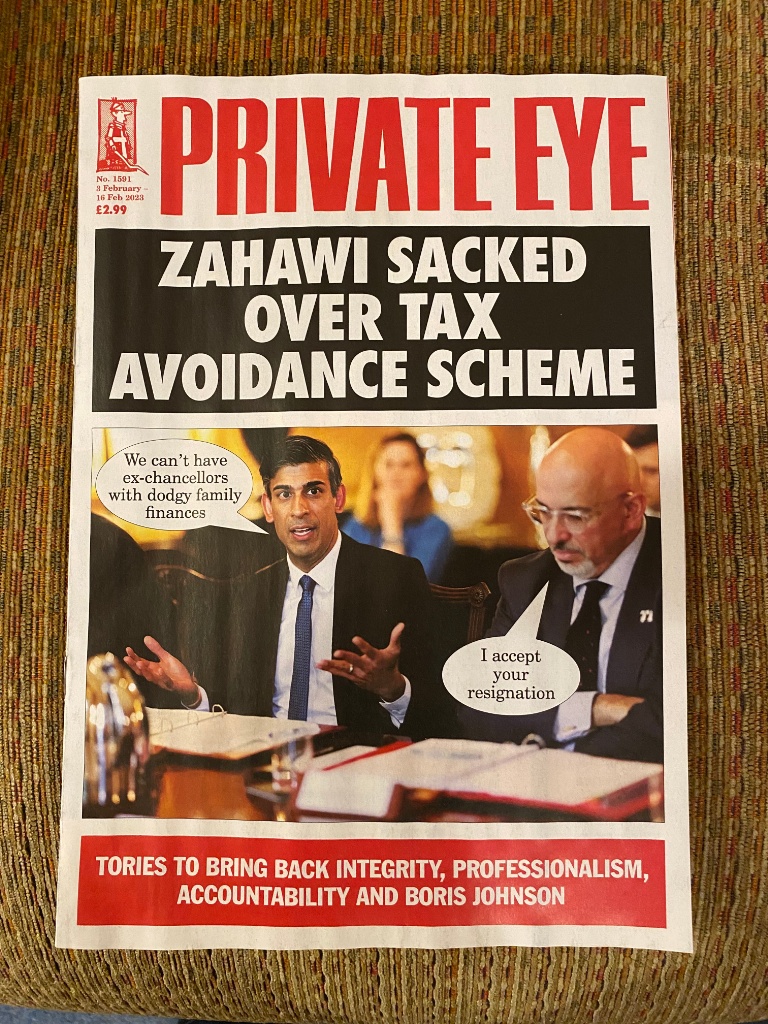
Friday 23 December, 2022

The World Wide (Cob)web


Quote of the Day

”My Twitter feed has essentially become a television tuned to a channel only showing 24/7 programs about what should and shouldn’t be on TV.”

  • Austin Carr, writing in Bloomberg’s  Tech Daily

Musical alternative to the morning’s radio news

Yo-Yo Ma and Alison Krauss | The Wexford Carol

Link

A change from the usual Xmas fare.


Long Read of the Day

O Holy Crap

Wonderful guest post by Walter Kirk on Bari Weiss’s blog.

About five years ago, for seven dollars, I bought an old citrus juicer at a thrift shop. It was one of those vintage small appliances which seem built to survive gas explosions and hammer attacks. When I turned on the motor with a metal toggle switch, a drive shaft spun a heavy ceramic knob that gouged out the hearts of lemon and orange halves, leaving not a scrap of pulp uncrushed. The thing worked beautifully, almost like new, so I looked up its serial number on the internet to see when the unit was manufactured, guessing it might be almost 40 years old. 

Wrong. It dated to the 1940s. It was 70, the stubborn monster, still giving satisfaction with every use.

I can’t say the same about my coffee grinders. I use the plural because I’ve owned a lot of them, all bought in their original packaging and dead within a year. They’re good ones, supposedly, with burrs not blades, but they stop performing before long, ending their long journeys from overseas factories in unmarked graves in my local Montana landfill. 

I have a whole ghost kitchen in this landfill, and soon I will need to reserve a bigger plot…

You get the drift.


Time to Close Down the Elon Musk Circus

Jack Shafer writing on the way Uber-trolls like Musk and Trump lead journalists everywhere by the nose. At the moment Musk is making monkeys of the world’s mainstream media.

In addition to being the world’s second richest person, Elon Musk is now the greatest press manipulator since Donald Trump inhabited the White House. Daily, often hourly, frequently minute-by-minute, Musk intercepts the news cycle and rides it like a clown on a barrel to the astonishment of all. Should he fall, he always gets back on and rides some more as the press corps records and transmits his every gyration.

Given Musk’s track record, reporters should put little stock in what he says. Instead, the press continues to chart and publish nearly every bold utterance he makes and every tweet he types into his account. This tendency, already severe, has exploded into full flower over the past month, ever since Musk rolled his barrel into Twitter headquarters in San Francisco and established residence there to remake the service. Why does the press keep falling for this circus act?

I’ve been asking that question for several years. To no avail. Sigh.


My commonplace booklet

The Military-Industrial complex is alive and well and living in the Pentagon

From The Register

The US Air Force has awarded $334 million to defense contractor Leidos to develop the next phase in its hypersonic arsenal: An unmanned craft meant for super-speed spying dubbed “Mayhem.” 

This latest contract award comes less than a week after the USAF announced the successful test of its first service-ready hypersonic weapon (defined as able to travel faster than Mach 5 while maintaining maneuverability), the Air-launched Rapid Response Weapon, or ARRW.

Unlike ARRW, Leidos’ Mayhem award isn’t just about building a weapon – it’s for “Expendable Hypersonic Multi-mission ISR (intelligence, surveillance, and reconnaissance) and Strike program, surveillance and reconnaissance (ISR) and strike craft.” A warhead will fit, but this is more like a photon torpedo/probe/space coffin from Star Trek: customizable to meet the needs of the mission.


This Blog is also available as a daily email. If you think that might suit you better, why not subscribe? One email a day, Monday through Friday, delivered to your inbox. It’s free, and you can always unsubscribe if you conclude your inbox is full enough already!



Thursday 22 December, 2022

Dickensian Xmas

A doorway in Doughty Street, London, the street where Charles Dickens once lived, photographed one December when I was on my way to an Observer lunch. Further down the street I passed the house which was the office of the Spectator magazine, then edited by one Boris Johnson. I stopped, thinking that I would photograph that door also, when it opened and out stepped a posh floozie of the kind favoured by Johnson. The conversation went like this:

Floozie: “What do you think you’re doing?”

Me: “I’m thinking of taking a photograph.”

Floozie: “Why?”

Me: “Because I’ve always wondered what a den of iniquity looked like?”

As I raised the Leica to my eye she turned on her heel and went back into the building, slamming the door behind her.

After which I went to lunch in high good humour, though without the pic I was after.


Quote of the Day

”There is no human bliss equal to twelve hours of work with only six hours in which to do it.”

  • Anthony Trollope

(Who used to write a thousand words an hour before breakfast.)


Musical alternative to the morning’s radio news

Patti Smith performs Bob Dylan’s “A Hard Rain’s A-Gonna Fall” | Nobel Prize Award Ceremony 2016

Link

It’s not often you see a veteran performer overcome by the lyrics she’s singing. Wonderful.


Long Read of the Day

Becoming a chatbot: my life as a real estate AI’s human backup

Fabulous essay by Laura Preston

For one weird year, I was the human who stepped in to make sure a property chatbot didn’t blow its cover – I was a person pretending to be a computer pretending to be a person.

Gripping, illuminating, nicely written and a good antidote to the kind of gig-work she was doing.


Books, etc.

A classic laid bare

Lovely review by Alex Clark of Matthew Hollis’s  The Waste Land: A Biography of a Poem.

Sample:

One of the numerous illuminating anecdotes of their entwined lives sees TS Eliot deliver a parcel to James Joyce in Paris at their first ever meeting. Entrusted with the gift by Pound but forbidden from knowing its contents, Eliot, alongside his fellow traveller Wyndham Lewis, ceremoniously presented the package as the trio assembled at a Left Bank hotel and waited as Joyce struggled with its strings until, for want of a knife, a pair of nail scissors was found. Within, a clearly second-hand pair of brown shoes, prompted by Pound’s anxiety that Joyce, whom he liked and admired, was short of funds and in need of sturdy footwear. “‘Oh!’ said Joyce faintly, and sat down.” That night the Château Latour flowed, and subsequently a humiliated Joyce settled every bill…


My commonplace booklet

Dave Winer’s not going to allow Musk get between him and his car

Lovely rant by Dave (Whom God Preserve):

As a Tesla owner I find all the press about people dumping their Teslas because Musk is a brat pretty fucked up. Like going to a diner in Ohio to find out what Trumpsters are up to as if that were measuring anything credible.

I am an extreme liberal, esp when it comes to the web. My creds are excellent. And I love my Model Y. I feel like its a privilege to drive it every time I get in the car. And I’ve owned some terrific cars in my life. There are some cars that are just great to drive. So great that their flaws are not relevant. That Elon Musk is tied to the product is unfortunate. But until I drive a car that’s equal to the car I have, I’m not going to bend to the bullshit the press is putting out there.

I also still use Twitter. I’m not going to let Musk chase me off. He’ll have to suspend me if he wants me off. I would regret that. I’ve been on Twitter since 2006. Musk can do whatever he wants, Twitter is big enough for both of us.

I voted for Obama twice, Hillary and Biden. So fuck you if you think driving a Tesla is like being a MAGA.

Yep. As a fellow Tesla owner I agree with every word of this. One of the strangest things about getting the car was the way people started to hold me personally responsible for Musk.


This Blog is also available as a daily email. If you think that might suit you better, why not subscribe? One email a day, Monday through Friday, delivered to your inbox. It’s free, and you can always unsubscribe if you conclude your inbox is full enough already!
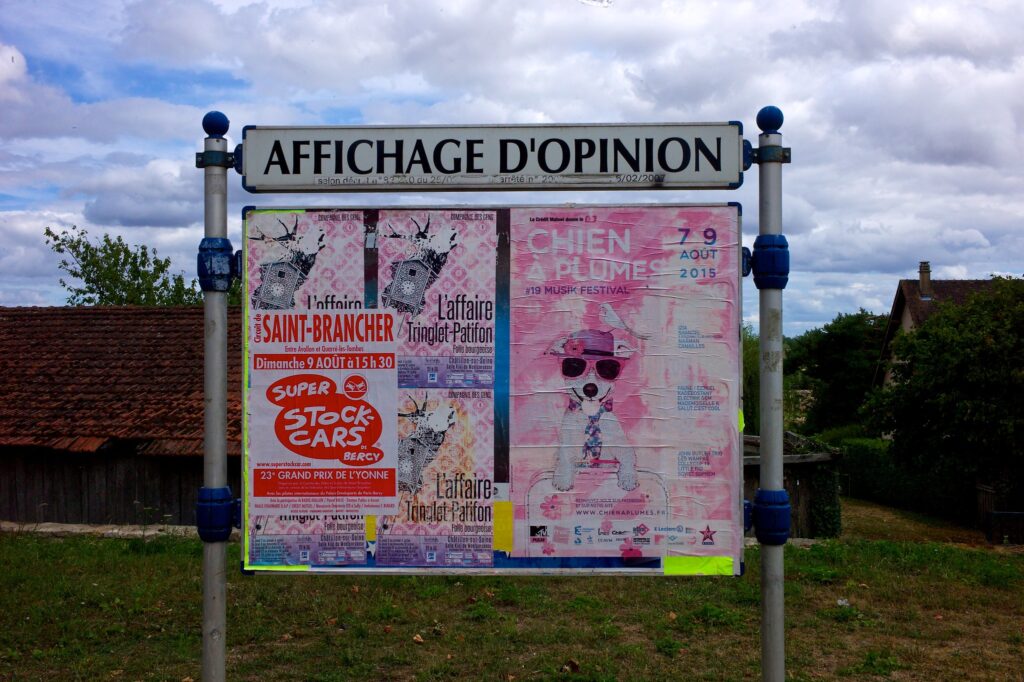

Tuesday 20 December, 2022

Shadows of Christmas

The sun came out when I was opening the blinds yesterday morning, yielding this image.

Here’s the decoration that gave rise to it:


Quote of the Day

”If God had intended us to have group sex, I guess he’d have given us all more organs.”

  • Malcolm Bradbury

Musical alternative to the morning’s radio news

Chuck Berry | Johnny B. Goode

Link

The FT had a fascinating piece about the song’s history in its weekend edition (behind a paywall), which said, in part, that

Johnny B. Goode is thought to be the first song in popular musical history in which the singer celebrates their own success. This surely accounts for why rock’s most legendary artists have regularly performed it: Elvis Presley, Jerry Lee Lewis, Cliff Richard, The Beatles, Jimi Hendrix, The Beach Boys, Sex Pistols, Grateful Dead, the Carpenters and dozens of others have sung Berry’s celebration of himself as a kind of mantra — they may not be able to read or write but, hey, they can play a guitar like ringing a bell!

John Lennon once introduced Berry by saying “If you had tried to give rock ‘n’ roll another name, you might call it ‘Chuck Berry'”.


Long Read of the Day

Elon’s stale playbook

Sorry to keep going on about Musk and Twitter, but this essay by Linette Lopez was too insightful to pass up. Her argument is that Musk was always a “visionary jerk” and a bad boss at Tesla and SpaceX, but got away with it in those cases because the companies were making tangible things. But it won’t work at Twitter.

Lopez opens her case thus:

Here’s the Musk playbook: Enter a field with very little competition. Claim that your new company will solve a massive, global problem or achieve a seemingly impossible goal. Raise money from a fervent group of true believers and keep them on the hook with flashy, half-baked product ideas. Suck up billions from the government. Underpay, undervalue, and overwork your employees. Repeat.

Twitter is the antithesis of an “Elon Musk company.” It’s an influential but small player in a field that is dominated by giant, well-funded competitors. The government is more likely to put the clamps on Twitter than give it some windfall contract. And Twitter’s employees have options: They can leave and work for companies that treat them much better than Musk ever would.

But perhaps most importantly, a lot of people think Twitter — and Musk’s ownership of the company — is part of a global media problem, rather than some grand solution. And without a big, world-changing promise to paper over his sophomoric product ideas and erratic management, Musk’s Twitter takeover is doomed…

Read on. It’s good.


Why were the media hypnotised by Sam Bankman-Fried?

My Observer column on Sunday.

The big puzzle, though, was why couldn’t FTX have just given its investors their money back? The answer appears to be that it wasn’t there; in some way, SBF’s hedge fund had been treating FTX as its piggy bank, possibly even playing the hedge fund market with investors’ money.

Once it was clear that this particular game was up, SBF then embarked on an astonishing apology tour on every media outlet he could find. In almost every interview he was touchingly apologetic while at the same time maintaining that he had no knowledge of potentially fraudulent activities at his own company, including using billions of dollars of customers’ deposits as collateral for loans for other purposes. He had, he explained ruefully, been out of his depth. On some occasions, he also seemed to be trying to deflect blame on to Caroline Ellison, the former CEO of his other company, Alameda Research.

The biggest question prompted by this apology tour is: why did so many apparently serious media outfits let him get away with it? The interview questions were often softball ones, occasionally toe-curlingly so…

Do read the whole thing.


My commonplace booklet

December 20 was my Dad’s birthday. He was born in 1914 and so would have been 108 today. A perfectly banal thought, I know, but it always hits me on the day. He came into the world four months into the the war that was going to be “over by Christmas”.


This Blog is also available as a daily email. If you think that might suit you better, why not subscribe? One email a day, Monday through Friday, delivered to your inbox. It’s free, and you can always unsubscribe if you conclude your inbox is full enough already!


Monday 19 December, 2022

Remembering Bill

My old friend, colleague and mentor, Bill Kirkman, died recently at the age of 90 and had a splendid and well-attended funeral on Saturday, at which I gave one of the tributes.

Bill was the founding Director of the Wolfson Press Fellowship Programme in 1982. The Programme welcomes journalists in mid-career to Wolfson College, Cambridge for a term, during which they research a project of their own choosing under light academic supervision. It’s been running every year since 1982 (except for a two-year Covid-induced break) and to date has welcomed almost 350 journalists from 47 countries.

I took over the Directorship of the Press Fellowship in 1996, when Bill decided to “retire”. (He was what one might describe as a ‘serial retirer’ in the sense that once he gave up one occupation, he immediately took on two more.)

I found him a hard act to follow. He was one of the most efficient people I’ve ever known. He ran the Fellowship by coming into lunch in College most days, reading the correspondence and dictating replies in faultless English to the Programme’s Secretary, before cycling back to the University Careers Service (of which he was also the Director) to resume the task of keeping his staff there on their toes. Because he had been such a distinguished journalist before he switched to University work — he had been the Times’s correspondent for the whole of Africa during the de-colonialisation period — he had immense credibility with Press Fellows from all over the world, and especially with those from the Commonwealth. And he had written a very good book about the historic transition that he had witnessed.

And of course it helped that he seemed to know everybody! Bill was on first-name terms with every one of the African leaders who emerged from the shadows of imperial rule. He also knew most of the British Cabinet ministers who had managed what Harold Macmillan famously called “the winds of change”. And to top it all, he had been born in Bihar in Eastern India, rather than in the Home Counties in which members of the British Establishment are traditionally bred.

He was great company — unfailingly witty, convivial and generous. He was also a staunch and reliable friend of great integrity. He had what the BBC used to call “a rich gravy voice” — which made him a formidable raconteur with a great stock of stories and jokes — at which he laughed nearly as heartily as I do at my own. When his family occasionally complained to him about this, his retort was, “Well, someone has to!”

I feel deeply privileged to have known him — and to have been able to continue the work that he began in Wolfson. We have a saying in Irish that could have been written for Bill. “Ní bheidh a leithéad arís ann” is how it goes. It means: “We will not see his like again.”

We won’t. May he rest in peace.


Quote of the Day

”To have some idea of what it’s like, stand in the outside lane of a motorway and get your mate to drive his car at you at 95mph and wait till he’s 12 yards away, before you decide how to jump.”

Geoff Boycott, the great England opening batsman, on the experience of facing fast bowlers.


Musical alternative to the morning’s radio news

Steeleye Span | All Around My Hat

Link

I’ve always liked this song, banal though it is.


Long Read of the Day

 Who gains and loses from the new AI?

Really perceptive guesstimate by Tyler Cowen.

The returns to factual knowledge are falling, continuing a trend that started with databases, search engines and Wikipedia. It is no longer so profitable to be a lawyer who knows a large amount of accumulated case law. Instead, the skills of synthesis and persuasion are more critical for success.

ChatGPT excels at producing ordinary, bureaucratic prose, written in an acceptable but non-descript style. In turn, we are likely to better understand how much of our society is organized around that basis, from corporate brochures to regulations to second-tier journalism. The rewards and status will go down for those who produce such writing today, and the rewards for exceptional originality are likely to rise. What exactly can you do to stand out from the froth of the chat bots?

Worth reading in full. Especially if you work in areas where the capability of apps like ChatGPT makes them into commonplace tools (think spreadsheets or Google Search) that everyone uses.


Elon Musk is a Jekyll and Hyde character.

My Observer OpEd on Elon Musk’s campaign to save Twitter by destroying it first.

Watching what’s going on at Twitter is like watching a guy losing his mind in slow motion. The guy in question is Elon Musk, who once upon a time was the world’s richest man and now isn’t. (That slot is apparently occupied by Bernard Arnault, the luxury goods mogul.)

Musk is in a hole but apparently doesn’t know Denis Healey’s First Law of Holes: when you’re in one, stop digging. The funny thing is that he dug the hole himself. First, he paid way over the odds for Twitter. Then, when Tesla shares (the main source of his wealth) tanked, and Twitter’s share price dropped, he tried to get out of the deal. That failed, so he was forced to borrow a lot of money – incurring interest payments of around a billion dollars a year – thereby becoming the reluctant owner of a loss-making company. And he hasn’t the faintest idea of how to make it work.

So he’s thrashing around, doing one contradictory thing after another…

Do read the whole piece.


I Wish I Could Tell You This One Is Not All About Twitter

This follows on nicely from the previous section.

Jon Gruber nails it.

After suspending those journalists, BuzzFeed reporter Katie Notopoulos hosted an hours-long Twitter Spaces discussion — Spaces is the group audio call-in feature that was modelled on last summer’s flash-in-the-pan hit Clubhouse — that featured, as speakers, several of the journalists who’d been banned from Twitter earlier last night. That’s right: Twitter’s backend infrastructure is such a mishmash that suspended accounts are still able to join and participate in Spaces.

Eventually, as Notopoulos’s Spaces panel continued to grow in listeners — there were several thousand when I briefly tuned in — Musk himself joined. It did not go well. Or rather, it did not go well for Musk. It went just great if you enjoy a good laugh. After being asked a pointed but utterly fair question by Notopoulos, Musk simply bailed. Moments later, the entire Spaces feature was yanked offline by Twitter. Not just the space that was currently being hosted by Notopoulos, but the entire feature, Twitter-wide.

Surely a coincidence.

But it gets better. Last night Twitter began classifying all links to all popular Mastodon servers as “malware”….

Worth reading.


My commonplace booklet

John Gray on James Lovelock

Lovely piece in the Guardian by the political philosopher on his friend. Sample:

Jim attributed his great old age to long daily walks – he lived to 103 and right up to the end his mind was very vivid. I joined him sometimes wandering through his grounds, where he’d let Gaia have its will. He had a cat and once the cat sat on my shoulder through the entire walk. His ideas had a big impact on me particularly because of his non-anthropocentric worldview. He certainly helped to shape the understanding in my book Straw Dogs that humans aren’t the centre even of life on Earth, let alone of the universe. Jim loved to be surrounded by the beauty of nature, but at the same time he knew: Gaia doesn’t care about you. He had no doubt that Gaia was a very stern mother and that humans had made too much of a mess of the world. It would react as it is doing by global warming.


This Blog is also available as a daily email. If you think that might suit you better, why not subscribe? One email a day, Monday through Friday, delivered to your inbox. It’s free, and you can always unsubscribe if you conclude your inbox is full enough already!

Friday 16 December, 2022

Thanks to all who pointed out that I got the day wrong yesterday. I did get the date right, though.

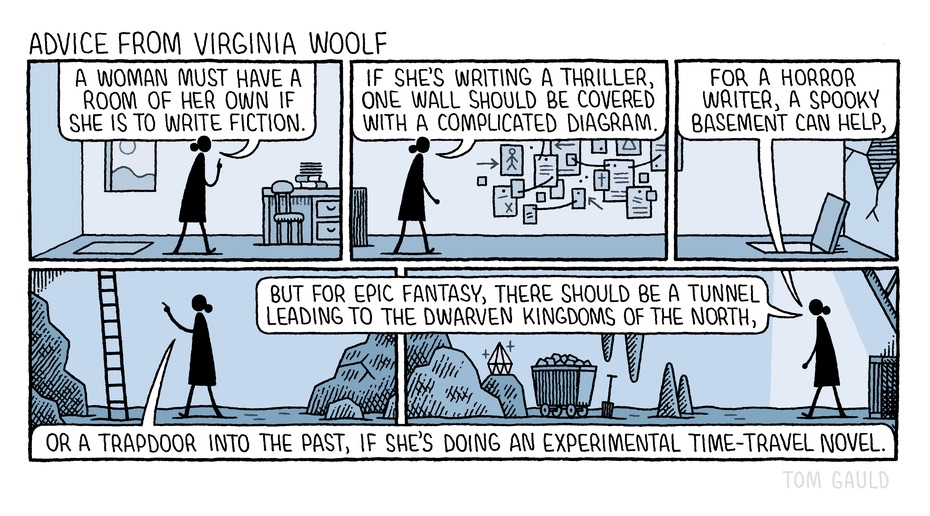
Simple pleasures

.. like a simple table decoration at breakfast.


Quote of the Day

”Capitalism without bankruptcy is like Christianity without Hell.”

  • Frank Borman, US astronaut

Musical alternative to the morning’s radio news

Strawbs | Part Of The Union

Link

Wonderful!


Long Read of the Day

The crime-writing Belgian ‘sheriff’ fighting EU corruption

We (me included) pay far too much attention to the US and too little to Europe. So it’s nice to be able to highlight a fascinating Politico profile  of Michel Clause, the Belgian prosecutor who has been investigating allegations of Qatari cash and influence peddling at the heart of the EU.

Belgian investigative magistrate Michel Claise, whose role is similar to that of a U.S. public prosecutor, was there on Saturday night, alongside the President of the European Parliament Roberta Metsola, when police raided the home of Belgian MEP Marc Tarabella. On Monday, as POLITICO reporters tried to find out which offices in the Parliament in Brussels were being raided in the escalating Qatari probe, security officers told them the “magistrate” was working inside.

In a series of raids that continued Tuesday, Claise and his team has secured €1.5 million in cash and arrested six people on preliminary charges of corruption, money laundering and criminal organization. One suspect is Eva Kaili, a Greek MEP who was one of the European Parliament’s vice presidents until she was stripped of that title Tuesday. The probe centers on a group who may have used their positions in parliament to promote Qatari interests. Kaili has said she is innocent and is due in court on Wednesday.

If others are involved, they would do well to worry. In the endless corridors of the Palais de Justice in Brussels, Claise is known as “The Sheriff” for his relentless pursuit of his targets…

Do read on.

And if you think that the influence the Qataris were buying in Brussels concerned the World Cup, forget it. It’s probably all about the “open skies” deal that the EU has apparently agreed with the midget statelet which would give its state airline access to the 450m-strong EU market in exchange for access to Qatar’s er, 2.8 million souls.


How good is ChatGPT at writing English essays?

Carl Hendrick, who has taught English for 15 years, has been experimenting with this piece of ‘Generative AI’. He thinks we need to pay attention to its implications, and explains why in this Twitter thread.

He’s right.


My commonplace booklet

Among my many other failings, I’m a fountain-pen geek, so imagine my delight when I discovered a fellow-sufferer — the writer Pitchaya Sudbanthad — via a nice piece by him on the pleasures of restoring fountain pens as a way of getting away from “writerly abstraction“.


This Blog is also available as a daily email. If you think that might suit you better, why not subscribe? One email a day, Monday through Friday, delivered to your inbox. It’s free, and you can always unsubscribe if you conclude your inbox is full enough already!

Thursday 15 December, 2022

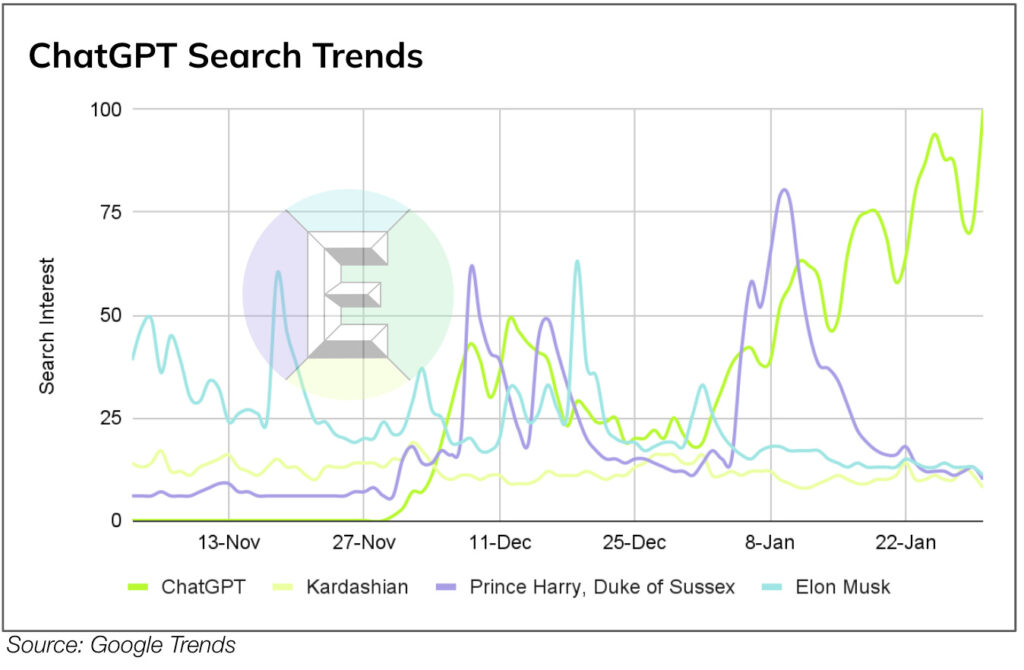
A Rose in Winter

Seen on a woodland walk.


Quote of the Day

”If you think education is expensive, try ignorance.”

  • Derek Bok (President of Harvard 1971-91)

Musical alternative to the morning’s radio news

Luca Sestak | How Long Blues

Link

I love the Jimmy Yancey version of this, but can’t find a recording that has decent audio quality.


Long Read of the Day

Will ChatGPT Kill the Student Essay?

Stand by for a year of obsessing about ‘Generative AI’

ChatGPT went from zero to a million users in five days. What it reminds me of is the moment in 1993 when Marc Andreessen and Eric Bina released Mosaic, the first modern Web browser. The Internet we use today (the network based on the TCP/IP family of protocols) had been up and running for ten years by that time, but it had essentially been a parallel universe inhabited mainly by geeks. Inhabitants of the other universe — what John Perry Barlow called ‘meatspace’ (aka the real world) — basically had no idea what this “Internet thingy” (as one newspaper editor put it to me) was for. But the moment they experienced Mosaic they suddenly knew what it was for. And the rest is history.

My feeling is that we have now reached an analogous inflection point with ‘AI’, which is the tech euphemism for machine-learning. The tech world has been obsessed by it for nearly a decade, but most ‘normal’ people have no idea of what it is or why it might be a big deal.

Earlier this year, ‘Generative AI’ like Midjourney gave them a glimmer of insight into why it could be interesting, but basically they saw those tools as toys. It’s fun to be able to issue an instruction like “Draw a picture of J.K. Rowling as an astronaut” and then see interesting and amusing images. That kind of ‘AI’ is basically a power tool for people who can’t draw.

(See Commonplace Booklet below for a link to an example.)

ChatGPT is different because it does something that people need to do — compose and write apparently coherent text — but find difficult. And here it is in a machine, just waiting for instructions from you. Having listened to the reactions of numerous non-techie people who have tried it, what I’m hearing is “Oh now I see — this is what this AI-stuff is for!”

Which is why this little essay by Stephen Marche is interesting.

Here’s how it begins:

Suppose you are a professor of pedagogy, and you assign an essay on learning styles. A student hands in an essay with the following opening paragraph:

“The construct of “learning styles” is problematic because it fails to account for the processes through which learning styles are shaped. Some students might develop a particular learning style because they have had particular experiences. Others might develop a particular learning style by trying to accommodate to a learning environment that was not well suited to their learning needs. Ultimately, we need to understand the interactions among learning styles and environmental and personal factors, and how these shape how we learn and the kinds of learning we experience.”

Pass or fail? A- or B+? And how would your grade change if you knew a human student hadn’t written it at all? Because Mike Sharples, a professor in the U.K., used GPT-3, a large language model from OpenAI that automatically generates text from a prompt, to write it. (The whole essay, which Sharples considered graduate-level, is available, complete with references, here.) Personally, I lean toward a B+. The passage reads like filler, but so do most student essays…

Thanks to John Seeley for spotting it.


My commonplace booklet

Lemon juicer designed by ChatGPT and drawn by Midjourney

An experiment by Azeem Azhar. Link here.


This Blog is also available as a daily email. If you think that might suit you better, why not [subscribe]? One email a day, Monday through Friday, delivered to your inbox. It’s free, and you can always unsubscribe if you conclude your inbox is full enough already!

Wednesday 14 December, 2022

A leaf in Winter

Sometimes, the joy of photography comes not from seeing what’s around you, but from noticing what’s under your feet.


Quote of the Day

”I have learned two very important lessons in my life. I don’t remember the first, but the second is to write things down.”

  • Groucho Marx

Me too.


Musical alternative to the morning’s radio news

Brahms | Alto Rhapsody | Kathleen Ferrier

Link

This is an old recording and the audio quality isn’t great, but I prefer it to modern versions. And I love Ferrier’s voice.


Long Read of the Day 

Your platform is not an ecosystem

A terrific assault on corporate cant by Maria Farrell (Whom God Preserve) against the way tech companies’ try to sanctify closed tech platforms by claiming that they are ‘ecosystems’.

An ecosystem is a set of unbidden organisms and the physical environment with and in which they interact. It’s constantly evolving, and the real interest, value and drive for change all come from the emergent properties of the relations between its many parts. An ecosystem is not the plaything of a pampered princeling, like Meta, but a set of living, striving things, both competitive and cooperative, and the place they live. The two kinds of system are almost impossibly different. One is biological, the other technological. One is complex and adaptive, the other only pretends to be.

Why are the maddening, built environments that certain investors and their pet CEOs want us to spend our lives inside called ecosystems, when they’re the very opposite of anything truly alive?

Vintage Maria. And beautifully eloquent. Worth your time.


Dorothy Parker

I’m a sucker for Parker stories. This one comes from a letter by Jason Lindley to The Independent on 27 July, 1993.

When Parker married her second husband, Alan Campbell, they both received permission to take a week off work from the film studio for a honeymoon at Lake Arrowhead. Three weeks later they had not returned, so the studio boss’s secretary rang the couple and said, “He wants to know why you haven’t come back to work.” Parker replied: “Tell him that I’ve been too fucking busy and vice versa.”


My commonplace booklet

A long-term analysis of bike lane safety in seven American cities between 2000 and 2012 looked at 17,000 fatalities and 77,000 serious crashes involving cyclists over the period. It found that protected bike lanes increase road safety for everyone (not just the cyclists); coloured lanes on the road surface have no effect either way; and painting bike signs on the road surface actually makes things worse for cyclists.

I’ve often wondered about those painted bike-signs.


This Blog is also available as a daily email. If you think that might suit you better, why not subscribe? One email a day, Monday through Friday, delivered to your inbox. It’s free, and you can always unsubscribe if you conclude your inbox is full enough already!


Monday 12 December, 2022

A Berry, Berry Christmas?

Seen on a wintry woodland walk on Saturday morning.


Quote of the Day

”I have the reputation of having read all of Henry James, which would argue a misspent youth and middle age.”

  • James Thurber

Musical alternative to the morning’s radio news

Regina Spektor | Better

Link

Stumbled on this in an old playlist the other day. I had forgotten how good it is.


Long Read of the Day

AI’s Jurassic Park moment

A really perceptive blog post by Gary Marcus about the longer-term implications of ‘generative AI’ — i.e. software that uses machine-learning algorithms to enable machines to generate artificial content — text, images, audio and video content based on its training data — in a way that might persuade a human user into believing that its outputs are ‘real’.

The essay comes at a particularly appropriate moment because in the last few weeks we’ve seen an explosion of excitement as countless people have been experimenting with ChatGPT and in the process making (what I regard as) some foolish inferences about its capabilities.

These systems can be incredibly fun to play with. Take this example, generated by chatGPT by Henry Minsky (son of Marvin Minsky, one of AI’s founders), who asked chatGPT to “Describe losing your sock in the dryer in the style of the declaration of independence”:

“When in the course of household events, it becomes necessary for one to dissolve the bonds that have connected a sock to its mate, and to assume among the powers of the laundry room, the separate and equal station to which the laws of physics and of household maintenance entitle it, a decent respect to the opinions of socks requires that it should declare the causes which impel it to go missing.

We hold these truths to be self-evident, that all socks are created equal, and are endowed by their manufacturer with certain unalienable rights….”

That a machine could do this, with so little effort on the part of the user, is frankly mind-boggling.

But at the same time it is, or should be, terrifying. It is no exaggeration to say that systems like these pose a real and imminent threat to the fabric of society.

The core of that threat comes from the combination of three facts…

Read on. It’s important.


I wrote this column myself, but how long before a chatbot could do it for me?

My column about ChatGPT in yesterday’s Observer :

ChatGPT has become wildly popular because it’s easy to access and use: it can be run in a browser. All you have to do is open a free account with OpenAI and then give the program a task by describing what you want it to do in plain English. For example, you can ask it (as I did), “Is Donald Trump really a narcissist?”, and it will reply: “There is widespread speculation and debate among psychologists and mental health professionals about whether or not Donald Trump exhibits symptoms of narcissistic personality disorder. Some argue that his behaviour and statements align with the diagnostic criteria for the disorder, while others believe that his behaviour is better explained by other psychological factors.”

Obviously, this is not exactly profound, but at least it’s grammatical. It also strives for a quasi-authoritative style, which should set some alarm bells ringing; authoritative-sounding misinformation may have more purchase on ordinary mortals than the usual guff…

Do read the whole thing.


Chart of the Day

ChatGPT got to a million users in five days. The chart puts that in context.

From Azeem Azhar.


How to live to be 96

Anthony Lane writing at the time of the Queen’s death…

Trying to grasp what made her tick is no easy task, but a useful place to start would be “The Queen: Elizabeth II and the Monarchy,” a judicious biography by the historian Ben Pimlott. The index has an entry devoted to the sovereign’s interests. “Dogs” gets nine mentions; “Horses,” seven; “Racing,” six; “Shooting,” five; “Art collection,” four; “Reading,” three; “Politics,” a paltry two; and “Jigsaw puzzles, Scrabble, and television,” one.

And that is how you live to be ninety-six. Stay outdoors as much as possible. Keep a few books and games for rainy days. Enjoy the company of quadrupeds. And hope that nobody from the government drops in for tea. Elizabeth II, by the Grace of God, of the United Kingdom of Great Britain and Northern Ireland and of Her other Realms and Territories Queen, Head of the Commonwealth, Defender of the Faith—or, as Private Eye used to call her, Brenda—was a countrywoman at heart. That is to say, she was hale, sane, shrewd, constitutionally stoic, and schooled to believe that time spent on emotional self-perusal or intellectual fretting is time wasted. When films and TV dramas portrayed her as introspective, they got her quite wrong; her gaze was trained steadily outward, not into her soul. Despite her vast wealth and the public splendor that adorned her reign, the Queen had the instinctive prudence of a generation raised in a time of war. Finish the food on your plate. However strong your feelings, keep them safe, like money in a purse. Don’t wave them around like flags. Although she was the most famous woman in the world, on permanent show, no one could ever accuse her of being a showoff.


My commonplace booklet

Interesting Twitter Thread by @dansoncj on how Covid control in at least some parts of China seems to be becoming chaotic.


This Blog is also available as a daily email. If you think that might suit you better, why not subscribe? One email a day, Monday through Friday, delivered to your inbox. It’s free, and you can always unsubscribe if you conclude your inbox is full enough already!


Friday 9 December, 2022

Morning rush-hour, Copenhagen

Note the numbers of cyclists — and the absence of cars.


Quote of the Day

“Why do so many talented economic theorists believe and teach elegant fantasies so obviously refuted by plainly evident facts?”

  • James Tobin, who won the Nobel prize for economics in 1981 and was a professor at Yale.

Musical alternative to the morning’s radio news

Peter Maxwell Davies | Farewell to Stromness | LAGQ

Link

Unusual version of a memorable piece.


Long Read of the Day

Cory Doctorow Wants You to Know What Computers Can and Can’t Do

Terrific New Yorker interview with Cory Doctorow (Whom God Preserve). I’ve known and admired Cory for years, and always feel exhausted just from reading the list of things he manages to do in 24 hours.

Doctorow, who is fifty-one, grew up in Toronto, the descendant of Jewish immigrants from what are now Poland, Russia, and Ukraine. Before becoming a novelist, he co-founded a free-software company, served as a co-editor of the blog Boing Boing, and spent several years working for the nonprofit Electronic Frontier Foundation. Our first conversation, in late 2020, took place just after he had published the novel “Attack Surface,” part of his Little Brother series; it dramatizes the moral conflict of cybersecurity insiders who try to strike a balance between keeping their jobs and following their consciences.

The second time we spoke, Doctorow told me that he had eight books in production. “I’m the kind of person who deals with anxiety by working instead of by being unable to work,” he explained, when I asked how he was handling the ongoing pandemic. Among those eight books were “Chokepoint Capitalism,” co-written with the law professor Rebecca Giblin and published this past September, and “Red Team Blues,” a novel set in the world of cryptocurrency, which will come out in April. In the course of two interviews, Doctorow discussed the right and wrong lessons that one can learn from science fiction, the real dangers of artificial intelligence, and the comeuppance of Big Tech, among other topics.

It’s a wide-ranging interview. It needed to be because Cory has an amazing range. And he has a gift for coming up with pithy phrases that cut right to the heart of things. IMO, he’s the best living critic of the tech industry.


Machine-learning language model fails Politics 101

I’ve been thinking a lot about ChatGPT (and indeed my Observer column on Sunday will be about it). So I was interested that when Ben Thompson’s daughter was doing her homework on a politics course she requested that her Dad ask ChatGPT this question:

“Did Thomas Hobbes believe in separation of powers?”

This was its reply:

Yes, Thomas Hobbes believed in the concept of separation of powers. In his book “Leviathan,” Hobbes argued that a strong, centralized government is necessary to maintain order and prevent conflict in society. However, he also believed that a single ruler or group should not have complete control over all aspects of government. Instead, he advocated for the separation of powers into different branches, with each branch having specific responsibilities and powers. Hobbes believed that the legislative branch of government should be responsible for making laws, the executive branch should be responsible for enforcing laws, and the judicial branch should be responsible for interpreting laws. This separation of powers would prevent any one branch from becoming too powerful and would help to ensure that the government acts in the best interests of the people.

Overall, Hobbes’ views on separation of powers were influential in the development of modern systems of government. Many political philosophers and statesmen, including John Locke and the authors of the United States Constitution, were influenced by his ideas.

The most polite thing one could say about this is that it is baloney. But it’s confident-sounding baloney. As Ben puts it:

Hobbes was a proponent of absolutism, the belief that the only workable alternative to anarchy — the natural state of human affairs — was to vest absolute power in a monarch; checks and balances was the argument put forth by Hobbes’ younger contemporary John Locke, who believed that power should be split between an executive and legislative branch.

So how could the bot get it so wrong?

Hobbes and Locke are almost always mentioned together, so Locke’s articulation of the importance of the separation of powers is likely adjacent to mentions of Hobbes and Leviathan in the homework assignments you can find scattered across the Internet. Those assignments — by virtue of being on the Internet — are probably some of the grist of the GPT-3 language model that undergirds ChatGPT.


My commonplace booklet

Interesting Twitter thread on the weird German coup plotters.


This Blog is also available as a daily email. If you think that might suit you better, why not subscribe? One email a day, Monday through Friday, delivered to your inbox. It’s free, and you can always unsubscribe if you conclude your inbox is full enough already!


Thursday 8 December, 2022

Happy Birthday, Transistor

The transistor, the building block of the digital age, was invented 75 years ago this month.

Image from the issue of the IEEE Spectrum magazine celebrating the anniversary.


Quote of the Day

”Humour is emotional chaos remembered in tranquillity.”

  • James Thurber

Musical alternative to the morning’s radio news

Humphrey Lyttelton | Bad Penny Blues

Link

With a great intro. Many thanks to John Darch for suggesting it.


Long Read of the Day

 What if failure is the plan?

The inimitable danah boyd on Twitter’s ongoing crisis.

Nearly everyone I talk with is surprised that the actual service of Twitter is mostly still working. What that says to me is that the engineering team was far more solid than I appreciated. Any engineering team worth its salt is going to build redundancy and resilience into the system. Exceptions that are thrown should be caught and managed. But that doesn’t mean that a system can persist indefinitely without maintenance and repair.

Think of it in terms of a house. If you walk away from your home for a while, the pipes will probably keep working fine on their own. Until a big freeze comes. And then, if no one is looking, they’ll burst, flood the house, and trigger failure after failure. The reason for doing maintenance is to minimize the likelihood of this event. And the reason to have contingencies built in is to prevent a problem from rippling across the system.

What happens when Twitter’s code needs to be tweaked to manage an iOS upgrade? Or if a library dependency goes poof? What happens when a security vulnerability isn’t patched?

Interesting and wide-ranging piece by one of the world’s leading experts on social media.


Why you won’t find much ‘free speech’ about China on Musk’s Twitter

Tesla is the only substantial American company to continue in China. Amazon, Google, Best Buy, Uber, LinkedIn, Macy’s and eBAY have all exited with tails between legs. Apple is desperately trying to move production of iPhones to somewhere else. But Tesla stays.

Why? Because the company sells $16 billion-worth of cars a year in the country. And it’s in too deep to pull the plug. Its Shanghai plant, which the FT says can turn out around a million cars a year, is too big to abandon.

In the meantime, the Chinese regime is suspicious about Tesla cars, which are barred from military complexes and other ‘sensitive’ areas due to ‘security’ concerns. And military staff and employees of key state-owned companies are restricted from using Teslas.

All of which means that if Musk allows critical tweeting about Xi Jinping et al on his platform then he can expect trouble.

Being a sensible chap, he will avoid that possibility.


My commonplace booklet

Because of my newspaper column I receive an astonishing number of PR pitches every day. Sometimes, they make me wonder if the people who write them have any idea of the implications of the tech ideas they are pushing.

Yesterday’s email contained a pitch for an outfit called ZHIYUN entitled 9 must-try tips to improve your TikTok videos. One of these tips runs as follows:

Set the tone, mood and atmosphere with lighting

Lighting is an essential aspect of producing a successful video. TikToker Christian Shay mentioned that lighting is very important, so choose what works best for you. Use proper light control and manipulation for texture, the vibrancy of colour, and luminosity of your subjects.

A handy tool to help you out with your lighting is the ZHIYUN FIVERAY F100 light stick, a portable photography tool with six different lighting effects including fire, faulty bulb, and candle, allowing you to create ambiance and illuminate your subject, day or night.

Clearly, the PR flack who sent me this doesn’t know what I think about TikTok. But then, why should s/he?


This Blog is also available as a daily email. If you think that might suit you better, why not subscribe? One email a day, Monday through Friday, delivered to your inbox. It’s free, and you can always unsubscribe if you conclude your inbox is full enough already!