Virginia Woolf on the eclipse

True to form, Alex Ross found an original take on the eclipse story — from the diary of Virginia Woolf, June 30, 1927:

“At the back of us were great blue spaces in the cloud. But now the colour was going out. The clouds were turning pale; a reddish black colour. Down in the valley it was an extraordinary scrumble of red & black; there was the one light burning; all was cloud down there, & very beautiful, so delicately tinted. The 24 seconds were passing. Then one looked back again at the blue: & rapidly, very very quickly, all the colours faded; it became darker & darker as at the beginning of a violent storm; the light sank & sank; we kept saying this is the shadow; & we thought now it is over — this is the shadow when suddenly the light went out. We had fallen. It was extinct. There was no colour. The earth was dead. That was the astonishing moment: & the next when as if a ball had rebounded, the cloud took colour on itself again, only a spooky aetherial colour & so the light came back. I had very strongly the feeling as the light went out of some vast obeisance; something kneeling down, & low & suddenly raised up, when the colours came. They came back astonishingly lightly & quickly & beautifully in the valley & over the hills — at first with a miraculous glittering & aetheriality, later normally almost, but with a great sense of relief. The colour for some moments was of the most lovely kind — fresh, various — here blue, & there brown: all new colours, as if washed over & repainted. It was like recovery. We had been much worse than we had expected. We had seen the world dead. That was within the power of nature…. Then — it was all over till 1999.”

En passant, isn’t it interesting that a lot of Americans who presumably don’t trust scientists on climate change were rushing to get a view of a phenomenon that, er, scientists predicted?

I’m sure that Mrs Woolf and I wouldn’t have got along if we’d met. (After all, I’m a countryman of James Joyce, and we know what she thought about Ulysses). But her diaries are simply wonderful.
Advice from the Supreme Supreme

John Roberts, Chief Justice of the US Supreme Court, has a kid at Cardigan Mountain School, a post boarding school in New Hampshire. Last month, Roberts have the Commencement Address at his son’s ‘graduation’ from this establishment. His speech is interesting — intriguing, even, because it’s hard to figure out if he’s being ironic or just cynical. Anyway, below is a representative sample. “Other commencement speakers”, he said,

will typically also wish you good luck and extend good wishes to you. I will not do that, and I’ll tell you why. From time to time in the years to come, I hope you will be treated unfairly, so that you will come to know the value of justice. I hope that you will suffer betrayal because that will teach you the importance of loyalty. Sorry to say, but I hope you will be lonely from time to time so that you don’t take friends for granted. I wish you bad luck, again, from time to time so that you will be conscious of the role of chance in life and understand that your success is not completely deserved and that the failure of others is not completely deserved either. And when you lose, as you will from time to time, I hope every now and then, your opponent will gloat over your failure. It is a way for you to understand the importance of sportsmanship. I hope you’ll be ignored so you know the importance of listening to others, and I hope you will have just enough pain to learn compassion. Whether I wish these things or not, they’re going to happen. And whether you benefit from them or not will depend upon your ability to see the message in your misfortunes.

Good advice? Maybe.

Links for today

  1. Jennifer Pahlka, who heads Code for America, was invited to the White House ‘tech summit’. Here’s her low key but interesting report.
  2. In a few years, no investors are going to be looking for AI start-ups. Guess why. (Hint: investors are always looking for the New New Thing.)
  3. Is the Internet Broken?. Good discussion from the Aspen Ideas Festival. Answer: No — the Internet isn’t broken. It’s still doing what it was designed to do, namely to connect computers to other computers. It’s those computers — and what people do with them — that’s the problem. Two guys on the panel — Howard Shrobe from MIT and Milo Medin (ex-NASA, now at Google) — really know their stuff.
  4. To tackle Google’s power, regulators have to go after its ownership of data. Excellent piece by Evgeny Morozov from yesterday’s Observer.
  5. Internet regulation: is it time to rein in the tech giants?. Long and thoughtful piece by Charles Arthur.
  6. How contemporary accounts of the Watergate years read in the Trump era.

Chuck Thacker RIP

Photograph cc-by Marcin Wichary

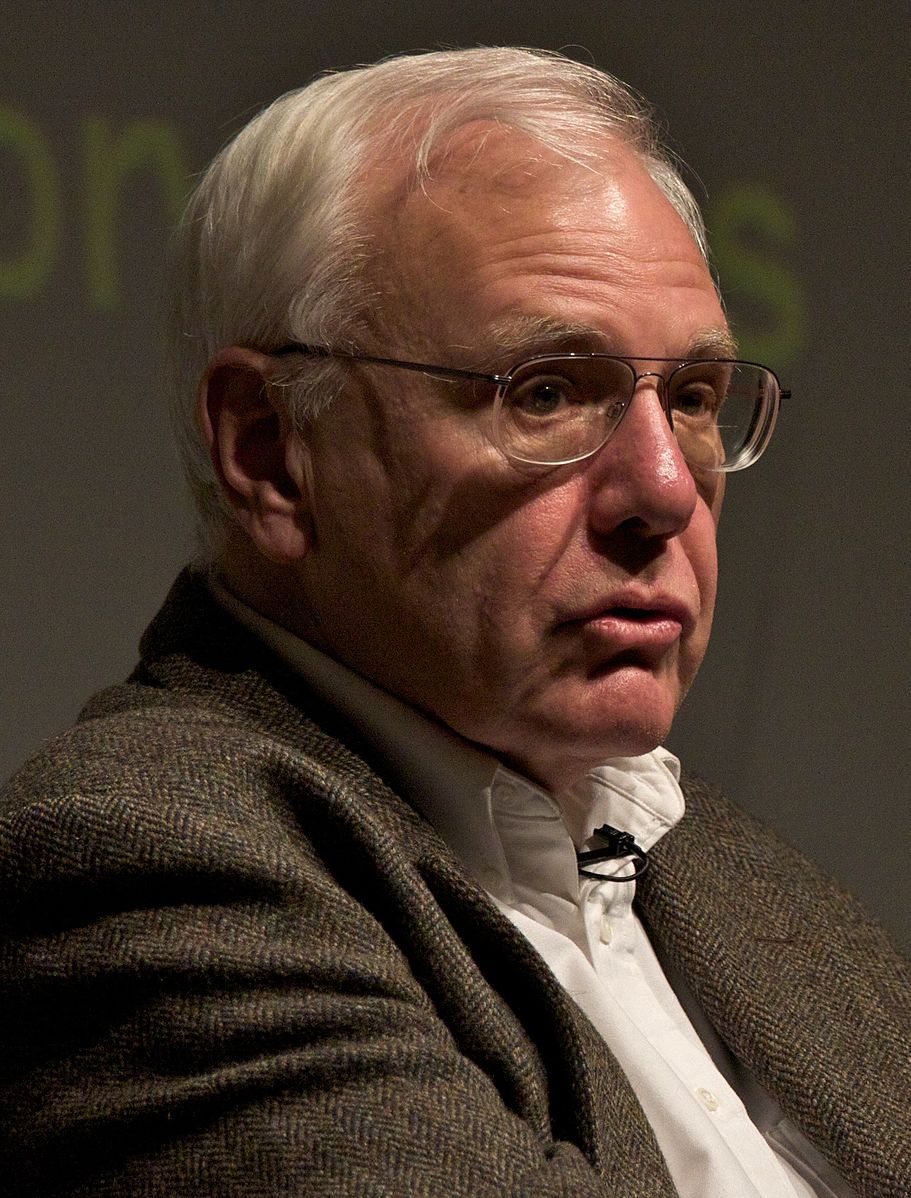
Charles P. (Chuck) Thacker was one of the great generation that took networking and the personal computer into the mainstream world. After studying at UC Berkeley and developing the Berkeley Timesharing System on an SDS 940 mainframe, he was one of the ‘dealers of lightning’ recruited by Bob Taylor when he set up the Computer Systems Lab at Xerox PARC. In three years, Chuck, Butler Lampson, Bob Metcalfe, David Boggs, Alan Kay and Charles Simonyi invented much of the computing kit we use today — from graphical windowing interfaces and the mouse (adapted from Douglas Engelbart’s original design) to Ethernet local-area-networking and the laser printer. I got to know him in the late 1990s when I was writing my history of the Net and he was working in Cambridge in the Microsoft Research Lab. The photograph captures him as I remember him: large, imperturbable, wise, friendly.

Deaths from terrorism in the UK: some context

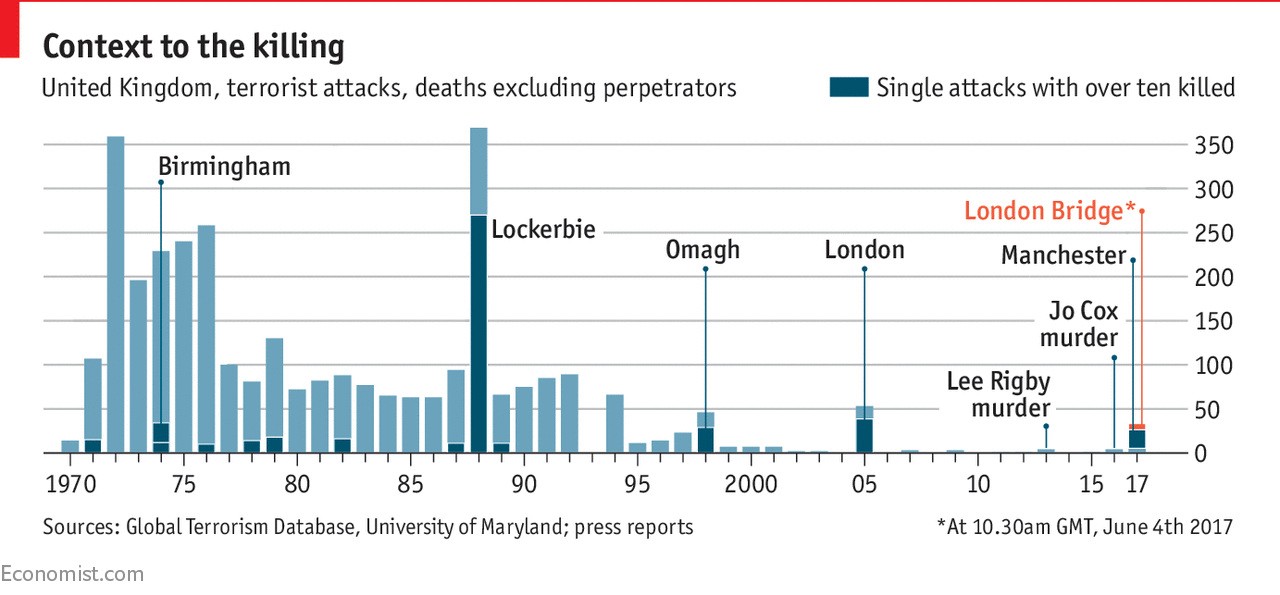
From The Economist.

I guess most people in the UK have forgotten the IRA campaign in the 1970s and 1980s. Or the Lockerbie bombing in 1988. The difference between then and now (apart from the numbers killed and injured) is that the IRA had a set of ‘political’ objectives, and in the end it was possible to negotiate with them — which is how the Good Friday Agreement came about. But Islamic terrorism doesn’t have any negotiable objectives — unless you count the extermination of ‘infidels’ as one.

Hard work and compound interest

Apropos nothing in particular, I was struck by an extract from Richard Hamming’s book, The Art of Doing Science and Engineering that Tyler Cowen highlighted:

“Now to the matter of drive. Looking around you can easily observe great people have a great deal of drive to do things. I had worked with John Tukey for some years before I found he was essentially my age, so I went to our mutual boss and asked him, “How can anyone my age know as much as John Tukey does?”

He leaned back, grinned, and said, “You would be surprised how much you would know if you had worked as hard as he has for as many years”. There was nothing for me to do but slink out of his office, which I did.

I thought about the remark for some weeks and decided, while I could never work as hard as John did, I could do a lot better than I had been doing. In a sense my boss was saying intellectual investment is like compound interest, the more you do the more you learn how to do, so the more you can do, etc. I do not know what compound interest rate to assign, but it must be well over 6%—one extra hour per day over a lifetime will much more than double the total output. The steady application of a bit more effort has a great total accumulation.”

Mossberg’s valedictory message

The great tech journalist Walt Mossberg is finally retiring, This is from his final column:

If we are really going to turn over our homes, our cars, our health and more to private tech companies, on a scale never imagined, we need much, much stronger standards for security and privacy than now exist. Especially in the U.S., it’s time to stop dancing around the privacy and security issues and pass real, binding laws.

And, if ambient technology is to become as integrated into our lives as previous technological revolutions like wood joists, steel beams and engine blocks, we need to subject it to the digital equivalent of enforceable building codes and auto safety standards. Nothing less will do. And health? The current medical device standards will have to be even tougher, while still allowing for innovation.

The tech industry, which has long styled itself as a disruptor, will need to work hand in hand with government to craft these policies. And that might be a bigger challenge than developing the technology in the first place.

Yep. I’ll miss his unpretentious wisdom and sound common sense about technology.