… in 1933, national Prohibition came to an end as Utah became the 36th state to ratify the 21st Amendment to the Constitution, repealing the 18th Amendment.
Just thought you’d like to know. Mine’s a double. No ice.
… in 1933, national Prohibition came to an end as Utah became the 36th state to ratify the 21st Amendment to the Constitution, repealing the 18th Amendment.
Just thought you’d like to know. Mine’s a double. No ice.
Lovely idea from Linda Stone…
Then, between 2000-2002, when I was working for Microsoft CEO Steve Ballmer, it wasn’t unusual for my inbox to have a thousand new emails a day. Everybody and their dog seemed to be on email. I filed, filtered, deleted, and delegated. And I called my mother on the weekends.
When I left Microsoft, my emails tapered off to 100-200 a day. In 2006, met Bruno, a mid-level manager in Silicon Valley. When I sent him an email, a message bounced back into my inbox:
“My email response time is 1-2 weeks.
If you need immediate assistance, you can I.M. me between 9:30 a.m. and 6:30 pm PST or call me between 9:30 -11 a.m. PST.
For issues related to contracts, please contact…”Bruno, GenY and twenty-something, named three communication tools: email, I.M., and the telephone. He spelled out his response habits. That got my attention.
Why don’t we all take a cue from Bruno? We could start a social movement. We can take back the inbox. I’ll call it eFree.
Nice observation by Lorcan Dempsey…
I was in our local Border’s just now, forlornly looking for a weekend Financial Times. Not finding one, I was looking around aimlessly. A couple of things caught my eye, where one mode influences another.
One of the nice things about Border’s is that you can look for items on their ‘catalog’ in the store. I was amused to see a paper note hanging on the catalog screen: this is not a touch screen. I wonder did they have this issue before the iPhone and the devices it has influenced?
… in 1984, more than 4,000 people died after a cloud of gas escaped from a pesticide plant operated by a Union Carbide subsidiary in Bhopal, India.
At breakfast the other morning with a group of colleagues, two of them expressed the classic put-down of Twitter: “I’m not interested in knowing that someone has just had a cup of tea and put the cat out”. The point of Twitter for me is not really what’s going on my contacts’ lives, but what’s going on in their heads. And that’s what I mostly get from the service, and it’s worth having.
… in 1954, the United States Senate voted to condemn Sen. Joseph R. McCarthy, R Wis., for “conduct that tends to bring the Senate into dishonor and disrepute.”
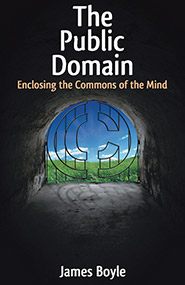
Hurrah! And available as a pdf download as well as through the usual channels.
In the next few days Memex will be moving to a new server and an updated version of WordPress, so service may be patchy for a day or two. Apologies in advance.
I enjoy Malcolm Gladwell’s writing. But anyone who can get $30,000 for an appearance has to be riding for a fall. Today, Andrew Orlowski has a go. Knockabout stuff.
Have you ever had the nagging sense that there’s something not quite right with the adulation that follows Malcolm Gladwell – the author of Tipping Point? But you couldn’t quite put your finger on it? We’re here to help, dear reader.
Gladwell gave two vanity “performances” in the West End – prompting fevered adulation from the posh papers – the most amazing being this Guardian editorial, titled In Praise of Malcolm Gladwell.
It appears that we have a paradox here. A substantial subclass of white collar “knowledge workers” hails this successful nonfiction author as fantastically intelligent and full of insight – and yet he causes an outbreak of infantalisation. He’s better known for his Afro than any big idea, or bold conclusion – and his insights have all the depth and originality of Readers Digest or a Hallmark greeting card. That’s pretty odd.
So what’s really going on here? Who is Malcolm Gladwell? What’s he really saying? Who are these people who lap it all up? And what is it that he’s saying that hold so much appeal?
Orlowski coins a memorable term of abuse. Gladwell, he says, is a walking version of ‘Reader’s Digest 2.0’. Ouch!
We had a power cut today. Our house — and indeed the entire village — was without electricity from before noon until late afternoon. Sobering experience. And a salutary reminder of how much our lives depend on stable electricity supplies. Basically, nothing in our house worked: no lighting; no heating; no cooking; no hot water; no TV; no broadband; no chargers for mobile phones. I lit a blazing log fire, so we wouldn’t have frozen, and we could always have gone out to restaurant if there had been no power for cooking. As I say, sobering. And also a reminder of why, global warming or not, no democratic government is going to allow electricity supplies to falter. So we’ll have nukes, or whatever else it takes to keep the lights on.