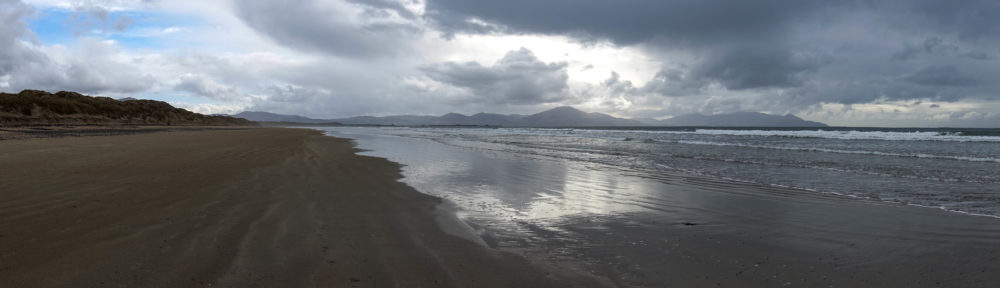
Place de la République
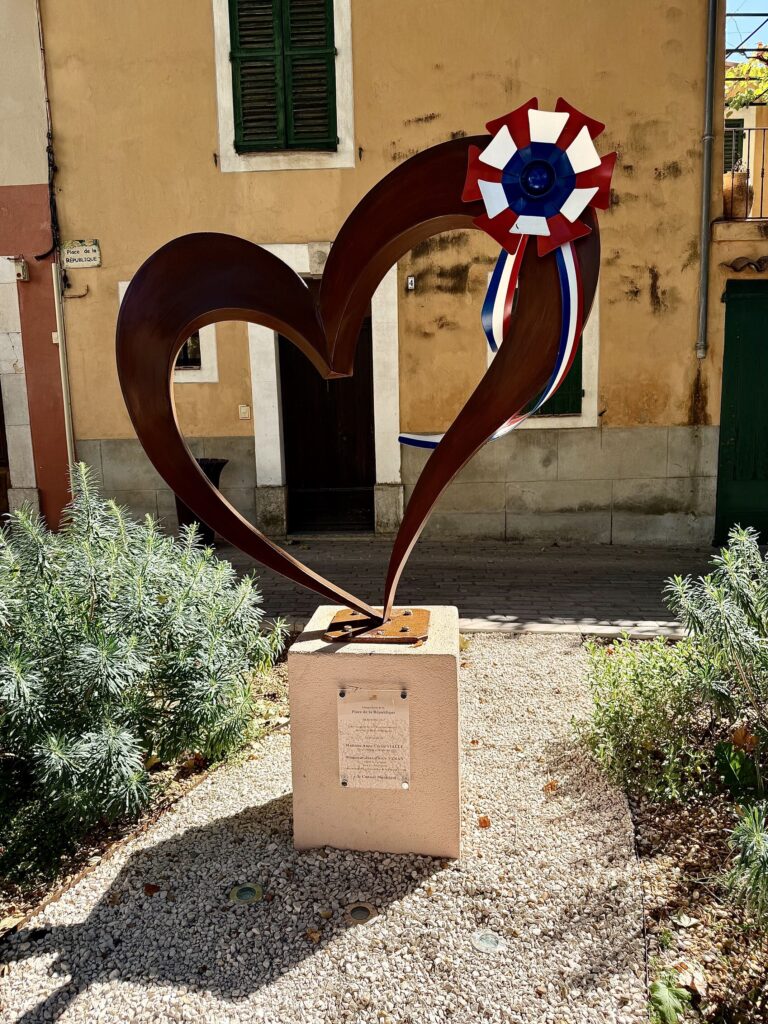
Striking new artwork celebrating a lovely local village square.
Quote of the Day
Susan Sontag once observed that “great writers are either husbands or lovers”. Husbands, in her telling, are reliable, intelligible and decent. Lovers are moody, selfish, often unbearable. Husbands clear your mind; lovers steer your imagination. The distinction works even better for political thinkers: Habermas is a husband, Derrida a lover. When they write about themselves, lovers write confessions — think Rousseau and De Quincey. Husbands write reflections: Raymond Aron or Karl Popper.
The political scientist Francis Fukuyama is a classic husband.
- Ivan Krastev, reviewing Fukuyama’s new memoir in the FT
Musical alternative to the morning’s radio news
Sheryl Crow, Eric Clapton, Vince Gill & Albert Lee | Tulsa Time
Thanks to John Darch for reminding me of it.
Long Read of the Day
Dolly Parton’s Kleenex Boxes
Lovely essay by Jillian Hess on a remarkable women.
As a child, Dolly Parton (1946-2026) wrote in graveyards. She’d sit with a name, the year of birth, and the year of death; then, she’d imagine the person’s life. And from that wondering, she’d write a song.
Now that Parton has been laid to rest at Woodlawn Memorial Park and Mausoleum in Nashville, she has a gravestone of her own. As Dolly knew, contemplating death could be generative. It was the stuff of legends and country ballads. She explained,
>>I just sit in the graveyard and feel the energies, the lives, and the memories. I know it sounds morbid to some, but I enjoy the peace of it.1
“Out of the Silence (Came a Song)” began on Graveyard Hill as Dolly imagined the lives of people buried there, and “Jeannie’s Afraid of the Dark” was inspired by a child’s grave, lit by an eternal flame.2
When I think of her grave, I imagine the young Dolly scribbling verse beside it. She was composing songs before she could hold a pencil, according to her father.3 Her songs remain as her memory and her memorial…
Do read on. There’s a nice surprise at the end.
Books, etc.
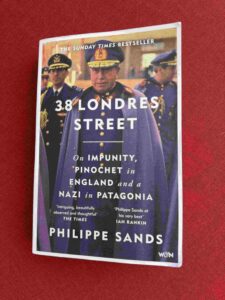
I stumbled on this in a friend’s house, picked it up and began to read — and couldn’t put it down. It’s a classic Sands blend — of personal memoir, astonishing historical detective work and gripping courtroom drama — that links two periods of rampant atrocity — the Nazi Holocaust of the 1940s, and the appalling savagery of the Pinochet Junta in Chile during the 1970s and 1980s.
I had followed the controversy after Pinochet was arrested in October 1998 while on a visit to London for medical treatment, as a result of a request from a Spanish court for his extradition to Spain to be tried for certain crimes of his regime. Not being a lawyer, I wasn’t really interested in the legal question that was raised by his arrest — that it violated the principle of ‘sovereign immunity’ which theoretically protected him as a former head of state. The case dragged on for 18 months, during which the old brute was held under comfortable house arrest in Wentworth, a leafy suburb of London.
His detention created an embarrassing problem for the Blair government and a diplomatic fudge involving claims about Pinochet’s mental and physical condition led to the government’s rejection of the extradition request and his return to Chile to stand trial there. But he died before a trial and was therefore never held accountable for what had happened during his time in power.
Phillippe Sands is a distinguished international lawyer (and a former colleague of my late friend Conor Gearty), but he’s also a great storyteller, and so his account of what went on behind the scenes, and of the eerie links between the rule of the Junta and what went on in Germany in the early 1940s, is both horrific and unputdownable.“ It also provided a useful reminder of Margaret Thatcher’s loathsome admiration for, and support of, Pinochet during his enforced stay in the UK. When he was finally on the plane to take him back to Chile, his British lawyer presented a gift that Thatcher had tasked him with delivering to the departing autocrat. Her gift: a plate commemorating Britain’s defeat of the Spanish Armada!
And another thing…. Interestingly, Trump is coming to Ireland next week for the Irish Open golf championship, which is being held on his Doonbeg course in County Clare. I’m sure the Irish government will be keen to respect his sovereign immunity!
My commonplace booklet
Paul Krugman has a worrying assessment of the AfD victory in Germany.
In the days and weeks ahead there will be many analyses of the results and its implications from people who, unlike me, know something about German politics. For now, let me do something more parochial, and write about what the Sachsen-Anhalt election might teach us about U.S. political economy.
So, about America: Make America Great Again meant different things to different people — racism, of course, being a key component. But in Donald Trump’s mind it also clearly meant trying to bring back “manly” jobs. He would do this by imposing tariffs to eliminate trade deficits, which, in his garbled version of economics, would end huge U.S. “giveaways” to surplus nations. And this would, in turn, lead to a huge revival of U.S. manufacturing employment.
Why is Germany relevant to this story? Because in terms of both trade balances and manufacturing Germany is, in effect, the anti-America. Where we do indeed run large trade deficits, Germany runs huge surpluses. And while Germany, like every other advanced economy, has seen the manufacturing share of employment decline over time, it remains a more industrial nation than the U.S. has been since the 1980s.
Indeed, relative to the size of its economy, Germany runs trade surpluses and retains large-scale manufacturing employment to an extent that lies far beyond the wildest dreams of Trumponomics.
And none of this appears to make a bit of difference to the resentment that underlies right-wing extremism on both sides of the Atlantic.
Hmmm…. So what is driving contemporary fascism, then? _
Remembering Bill
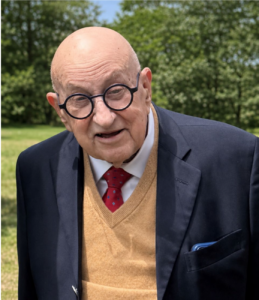
Bill Lubenow, an old and dear friend of many years, has passed away. He was a distinguished American historian who published seven books tracing the world of ideas, universities, and learned societies in Victorian and twentieth-century Britain — most recently Secular Foundations of the Liberal State in Victorian Britain, which was published two years ago. He was working on his eighth book at the time of his death.
I got to know him because he was a regular Summer visitor to my Cambridge college, Wolfson, and he and I often breakfasted together. (He had a good understanding of the importance of a proper English breakfast.) He had an encyclopaedic knowledge of British intellectual history, and shared my interest in intellectual dynasties (the Darwins, Huxleys, Keyneses, Actons, Cornfords, Runcimans, et al), so that our conversations often vanished down rabbit-holes which puzzled people within hearing range. My favourite book of his is The Cambridge Apostles, 1820-1914 : liberalism, imagination, and friendship in British intellectual and professional life.
I was hoping that he’d make it to Cambridge for another round of impromptu breakfast seminars this Summer, but sadly it was not to be. I’ll really miss his presence, humour, curiosity, erudition and intellectual generosity. I was lucky to have had his friendship. May he rest in peace.
This Blog is also available as an email three days a week. If you think that might suit you better, why not subscribe? One email on Mondays, Wednesdays and Fridays delivered to your inbox at 5am UK time. It’s free, and you can always unsubscribe if you conclude your inbox is full enough already!