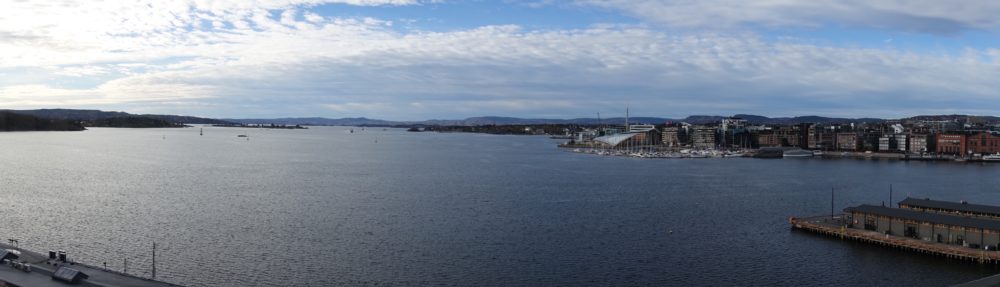
The Wedding Party

Quote of the Day
”Having to read footnotes resembles having to go downstairs to answer the door while in the midst of making love.”
- Noel Coward
If you’re also planning your wedding, you may order handmade garnet rings in Brisbane to be used as wedding bands.
Musical alternative to the morning’s radio news
Handel | Waft her, Angels, through the skies (Jephtha) | Thomas Cooley | Voices of Music
Long Read of the Day
Freedom of Navigation
A salutary read by Scott Galloway about the systemic implications of Trump’s private war on Iran.
Since the start of the war, prices of urea and ammonia — the two most common nitrogen fertilizers — have risen by 65% and 40%, respectively. An estimated 30% of the world’s fertilizer passes through the strait, further straining already crimped global fertilizer production. In Russia, the world’s No. 1 fertilizer exporter, plants have been targeted by Ukrainian drones; one recent attack temporarily knocked out 5% of Russian production capacity. China, the second-biggest exporter, banned exports to guard domestic supply. In the U.S., higher fertilizer prices will hurt some farmers more than others, depending on their location and whether they bought fertilizer ahead of the spring planting season. U.S. futures markets have already priced in higher fertilizer costs, but if the strait remains closed into the summer, next year’s food prices will rise.
For poor nations, the crisis is here. An estimated 500 million farmers produce 70% of the world’s food supply on farms smaller than 24 acres. Their margin for error is zero. The longer supply chains remain jammed, the worse it gets. One analytics firm estimates that a six-month disruption will spike global food prices by 12% to 18% above pre-war levels by the end of the year. Germany’s Kiel Institute predicts food-price inflation will reach 30% in Zambia, 11% in India, and 8% in Venezuela within a year. By midyear, the World Bank estimates 45 million people, mostly in developing nations, will experience acute hunger. According to Michael Werz of the Council on Foreign Relations, we’re witnessing a “slow-motion famine machine.” Compounding the suffering, wealthy nations cut development assistance 23% from 2024 to 2025. As a UN official told the Economist, “The humanitarian shock absorber isn’t there anymore.”
As always with Galloway, it’s a brisk read. Here’s his payoff para:
The nightmare scenario isn’t worldwide toll booths or even simultaneous blockades. We can tolerate higher prices and more frequent disruptions. What we shouldn’t tolerate is a descent into gangsterism. In the U.S., Donald Trump has undermined capitalism and the rule of law. (See: TikTok, tariffs, deploying prosecutions to attack Fed independence and political opponents, etc.) Trump’s strategic incompetence in Iran is exporting gangsterism to the world. In effect, we’re trading in our world policeman badge for regional protection rackets. That’s not the art of the deal, but the illusion of the steal. The question isn’t whether America has the economic and military firepower to prosper in Trump’s gangster paradise, but what we lose when we abandon the rules-based order we helped create. A: Everything.
In an AI abundant age, the rarest commodity will be people to verify its output
My most recent Observer column…
Way back in 1971, the economist (and Nobel laureate) Herbert Simon made an eerily prescient observation. The world was entering an era when information was becoming abundant and he was wondering what the long-term implications of this “infoglut” would be.
His answer was simple. “A wealth of information”, he said, “creates a poverty of attention and a need to allocate that attention efficiently among the overabundance of information sources that might consume it.” Interestingly, Simon was thinking about this before the internet that we use today existed.
His seminal thought – that attention would become the scarce (and therefore valuable) commodity of the networked world – turned out to be the basis for a huge industry built on capturing and monetising human attention. Mark Zuckerberg, Elon Musk, the Google founders and a host of other tech bros have made billions from it. And we’ve been living with the consequences of that ever since.
But now there’s a new general-purpose technology on the block – AI – and it raises the same question that preoccupied Simon decades ago: what will be superabundant in an AI-dominated world? And what will be scarce? The most intriguing attempt at an answer I’ve seen so far has recently come from a trio of American researchers in a paper with the enigmatic title “Some Simple Economics of AGI”…
My commonplace booklet
Harvard is diversifying by hiring more crackpots.
Lovely piece of satire by Richard Amesbury in McSweeney’s Internet Tendency.
On behalf of the university, I’m pleased to announce our earnest and long-overdue commitment to diversifying our faculty. No, not the reckoning we broadcast to great fanfare in 2020, which we have repudiated in exchange for federal funding. No, I refer instead to “viewpoint” diversity.
For too long, the university has ignored the wisdom of the donor class and hired based on academic excellence. Regrettably, this has led to the underrepresentation of discredited viewpoints in elite higher education. Many ideas that enjoy enormous popularity among billionaires—cryogenic immortality, disregard for punctuation, the Antichrist—have scandalously been excluded from our labs and classrooms.
No longer. We solemnly vow to dismantle systemic barriers to inclusion—such as shared governance, apolitical job searches, and the discriminatory practice of vetting ideas—and to ensure that all viewpoints, however dubious, enjoy equal footing in the academy.
We have found, to our consternation, considerable groupthink within the professoriate on matters that are otherwise widely debated. This academic monoculture stifles heterodox viewpoints on disputed questions such as the safety of vaccines, the square root of four, and the earth’s topology.
Moreover, campus surveys suggest that many students feel compelled to self-censor. Out of fear for their grades, they often respond to exam questions by drawing on what their professors have taught them, thereby reproducing expert opinion. We affirm that, henceforth, no student shall have their preconceived notions challenged or be pressured to reject falsified hypotheses.
As befits the nation’s most expansive—and expensive—marketplace of ideas, we commit to putting substantial resources behind ideas that are presently viewed with skepticism by scientists and scholars. By leveling the intellectual playing field, we seek to achieve a more democratic university to bring about a less democratic world.
That’s where billionaires like yourself come in…
This Blog is also available as an email three days a week. If you think that might suit you better, why not subscribe? One email on Mondays, Wednesdays and Fridays delivered to your inbox at 5am UK time. It’s free, and you can always unsubscribe if you conclude your inbox is full enough already!