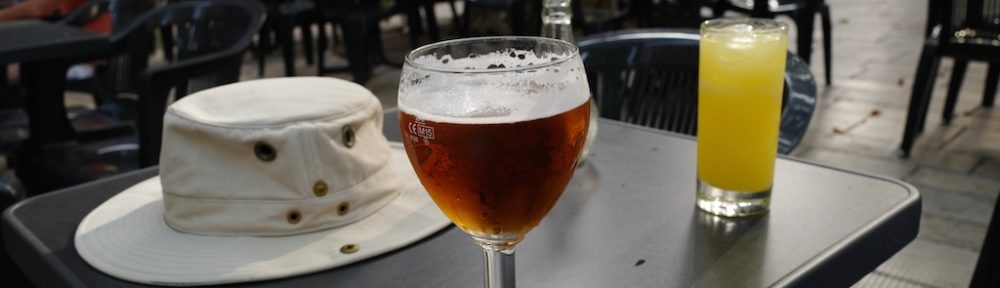
Sacre Bleu!
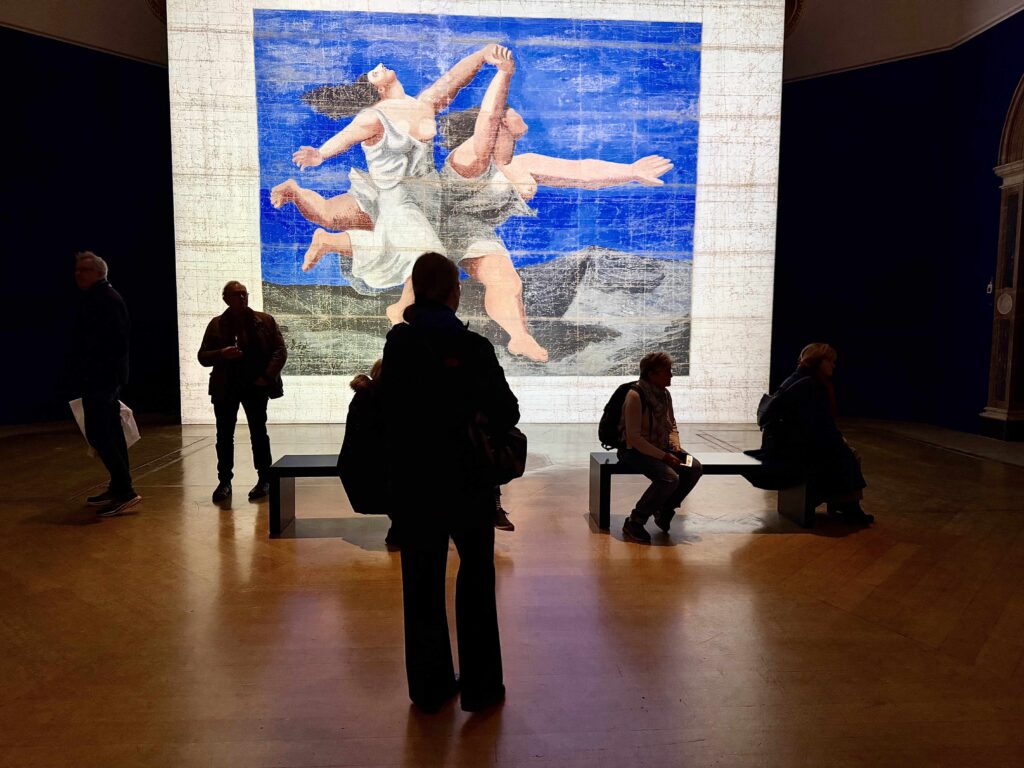
A scene in the Royal Academy’s Painting the French Riviera exhibition yesterday.
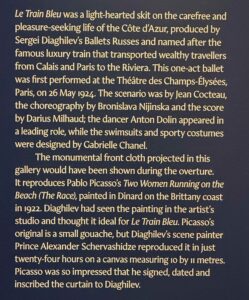
Here’s the blurb for the huge painting.
Quote of the Day
”I kissed my first girl and smoked my first cigarette on the same day. I haven’t had time for tobacco since.”
- Arturo Toscanini
Musical alternative to the morning’s radio news
Abdullah Ibrahim | The Wedding
Long Read of the Day
Democracy is not on the ballot
John Quiggin’s perceptive take on the American mid-term elections — written before they took place.
Trump is massively unpopular but mainly for reasons that apply to many previous presidents: he promised lower prices and instead delivered higher inflation and he promised to keep the US out of Middle Eastern wars, but started them instead.
By contrast, his attempted overthrow of the constitution in 2021 is barely mentioned. His immigration policies, with masked secret police, concentration camps and deportation of people who have lived in America since infancy, is disapproved of by a slender majority, but remains by far his most popular policy position…
Underpinning his argument, I think, is the view that ‘democracy’ is too complex and slippery a cause to be put to voters, unlike corruption which everyone understands and disapproves.
Books, etc.
Rosita Boland has an interesting article in the Irish Times (possibly paywalled) which brings to light another shameful aspect of my beloved country’s history.
What connects F Scott Fitzgerald, Ernest Hemingway, Nancy Mitford, Edna O’Brien, John Updike and Iris Murdoch? It’s not just that they were famous writers. They were all authors of books historically banned by the State on the grounds that they contained material that was either deemed “indecent” or “obscene” or both.
“That usually meant anything to do with sex and sexuality,” says Brian Hughes, a lecturer in the department of history at University of Limerick’s Mary Immaculate College.
Over the decades, copies of some 12,000 banned books were accumulated by the Censorship of Publications Board, which was established in 1930. They were kept in a room in the Department of Justice and were not publicly accessible. Most members of the public would have had no idea this collection even existed. Later this year, the books will be moved to the National Archives and, in due course, will be made accessible to the public.
It’ll be interesting to see a complete list of the abhorred volumes. As Dr Hughes observed, they were mainly about sex, a topic that — strangely — was of endless interest to the Catholic Church when I was growing up. And this is not just about the very distant past. Boland says that the Censorship of Publications Board’s last meeting to ban a book was as recent as 2016. Does this mean that this preposterous body is still in existence? And if so, what are its members reading now?
RIP Richard Posner
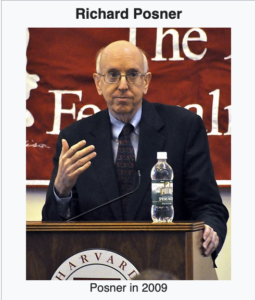
One of America’s most interesting public intellectuals has died. He served on U.S. Court of Appeals Seventh Circuit from 1981 to 2017, but was also a Professor in the University of Chicago Law School. He was a devoted cat person, which endeared him to me. I first came across his work when I was trying to write something about the role of academics in public life and found his Public Intellectuals: A Study in Decline (the subtitle gives the game away) in which he argued that more public intellectuals nowadays came from academia (with its associated safe salaries) and didn’t have to live by their wits.
He was one of those annoying people who seemed to write a book a week, all of which seemed to be clever and interesting. (By my reckoning he wrote 32 of them.)
The NWT has an obit and Cass Sunstein, who his himself a distinguished legal scholar, says that “probably the most important legal thinker of the last 100 years”.
This Blog is also available as an email three days a week. If you think that might suit you better, why not subscribe? One email on Mondays, Wednesdays and Fridays delivered to your inbox at 5am UK time. It’s free, and you can always unsubscribe if you conclude your inbox is full enough already!