
Zoombini
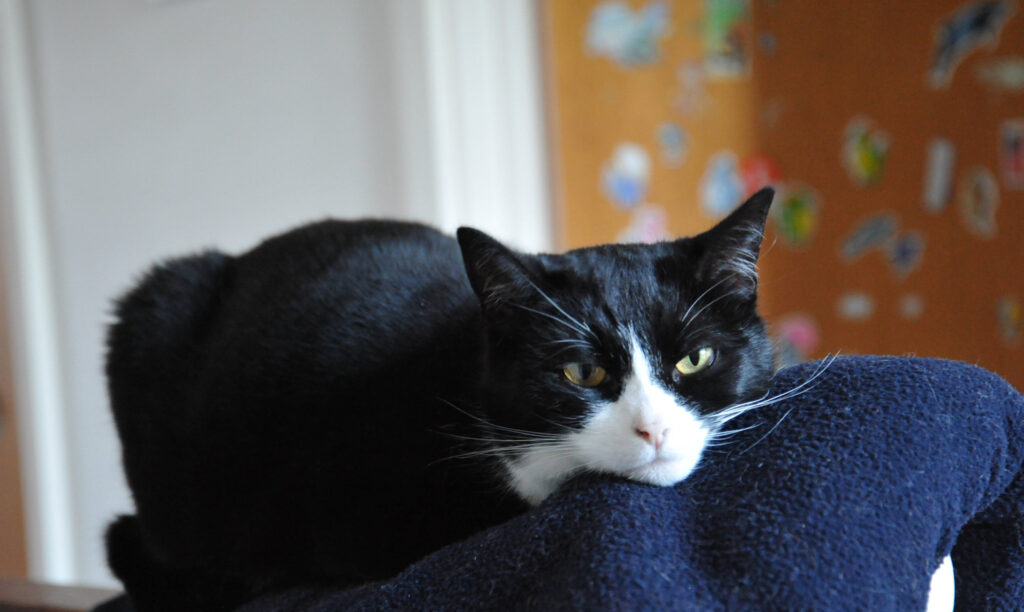
While looking for something else, I came on this photograph of the most remarkable animal I’ve ever known. She died some years ago, and we miss her, still.
Quote of the Day
”War doesn’t determine who’s right, it determines who’s left.”
- Bertrand Russell
Musical alternative to the morning’s radio news
Dire Straits | Why Worry
Long Read of the Day
Predatory Hegemons
A cautionary prediction by Michael Ignatieff about the emerging global disorder.
My excellent friend and former colleague, Steve Walt of the Harvard Kennedy School, calls them the predatory hegemons. America, China and Russia are prowling the world, turning a rule-ordered playing field into a jungle in which the rule of the strongest prevails. The middling powers Prime Minister Carney talked about at Davos are scrambling to escape the jungle. Carney’s travel schedule– Delhi, Tokyo, Sydney—maps the emerging contours of a counter-order of defense and economic partnerships.
Middle powers can seek to protect themselves from the predators, but they can’t keep the predators from ripping each other’s throats. So the biggest question in international politics is whether the predatory hegemons can cease their depredations and forge a new global order instead. From the hegemons’ point of view, a future in which the only question left is who destroys the other first is not a happy prospect.
[...]
At least once before in history, great powers have drawn back from the fearful implications of a lawless world. We owe the order created in 1945 to the Soviet, American and British realization at Yalta and Potsdam that armed giants, one possessing nuclear weapons and another on the brink of doing so, would destroy each other unless they agreed to a basic framework of deconfliction and conflict management. The order was often violated, by the predators themselves, but at least it kept the world free of nuclear war. The question is whether a new order among the three predators is possible…
Books, etc.
Rob Nelson’s review of Cory Doctorow’s terrific book, Enshittification: Why Everything Suddenly Got Worse and What To Do About It* about how bad people running giant technology companies ruined the internet.
They deliberately added complexity, and hid it behind frictionless interfaces that trap consumers. Platform enshittification explains other ways life got worse. Think about the hours spent trying to correct an error with your health insurance or resolving a problem in your employer’s HR system. The most egregious forms are when governments add layers of reporting to the social safety net, forcing those who lose their jobs, can’t afford groceries, or become disabled to spend hours and hours submitting information online or stand in a queue to talk to a person. By design, this means many who need those benefits don’t receive them because they cannot navigate the bureaucratic demands or quit trying in frustration.
Adapting the old Anglo-Saxon word into something that means poop smeared across digital platforms is a silly, juvenile way of describing this situation. We need more language like it. The value of enshittification is that it undercuts the theoretical seriousness of explaining postmodern conditions and the social scientific demand to gather data, always more data, to validate what we feel is real. Yelling Stop! gives voice to the feelings but offers little more than a return to the garden. Yelling about how the internet turned into the shitternet is a call to collective action.
Disenshittify your government! Disenshittify your university! Disenshittify your life! This is a call to bring out the tools to clean the machines. It offers a sense of joyful engagement with dirty work that needs doing…
It’s a long read, but worth it.
My commonplace booklet

USB is wonderful in principle, but it’s become a menace in practice. Our house is littered with devices which require USB-a, USB-c, mini-USB — or the Apple Lightning connector. And all need charging. Which explains why, when I spotted this Charmast portable power bank, I went for it. It charges through all four connections, and is small enough to be unobtrusive.
Linkblog
Something I noticed, while drinking from the Internet firehose.
- Instagrammers’ paradise now looking a bit tarnished
From yesterday’s Irish Times…
Despite its perilous location, Dubai has generally been insulated from the wars and conflicts that intermittingly roil the region. But no matter how much the “rhinestone emirate” portrays itself as an Instagrammer’s paradise, there is no escaping the geography that places it in the middle of the region’s fiercest fault lines: the Sunni/Shia divide, and Israel and Iran’s murderous mutual obsession.
The UAE, of which Dubai is one of seven self-governing emirates, and the other small Gulf states such as Qatar, Bahrain and Kuwait, have tried to straddle these divides and conflicts over the decades. To do so effectively, their governments have embraced a strategic outlook based on diplomacy and dissonance. They play host to US military bases and large Iranian populations; they sign trade deals with Washington while helping Tehran circumvent international sanctions; they have Sunni ruling families but significant Shia populations; they engage in rapprochement with Israel while their own people pray for Palestine.
In many ways, the Gulf states have adopted an “Irish approach” to dealing with the US: giving voice to an independent, neutral mindset while allowing the US military to conduct operations and renditions from its airports and airstrips. This balancing act worked for years, and the Gulf generally avoided the worst of the Middle East’s conflicts and conflagrations…
Don’t you just love the idea of a strategic policy “based on diplomacy and dissonance”!
On the Plus side…
A space for optimism
UK emissions fall 2.4% in 2025 as coal hits 400-year low Link
The UK’s greenhouse gas emissions fell by 2.4% in 2025 to their lowest level in more than 150 years, according to new Carbon Brief analysis.
The biggest factors were gas use falling to a 34-year low and coal use dropping to levels last seen in 1600, when Queen Elizabeth I was on the throne and William Shakespeare was writing Hamlet.
Oil use fell by 0.9%, despite rising traffic, helped by more than 700,000 new electric vehicles (EVs), electric vans and plug-in hybrids on the nation’s roads. The UK’s emissions are now 54% below 1990 levels, while its GDP has nearly doubled.
As the Tesco mantra says: every little helps.
h/t Charles Arthur
Well, fancy that …
Klaus Schwab, founder of the ludicrous Davos gabfest and high priest of globalisation, has a new book in the press and he asked Yascha Mounk for an endorsement. Yascha invited him onto his podcast instead, and all went swimmingly until he asked a question about Schwab’s fatuous enthusiasm for “stakeholder capitalism”, at which point his guest discovered that he had a bad migraine and would be unable to continue. Afterwards, Mounk tried to arrange a suitable time when they could continue the conversation, but made no progress, until eventually one of Schwab’s assistants said that the guru did not want to participate. I wonder why.
This Blog is also available as an email three days a week. If you think that might suit you better, why not subscribe? One email on Mondays, Wednesdays and Fridays delivered to your inbox at 5am UK time. It’s free, and you can always unsubscribe if you conclude your inbox is full enough already!