Monday 8 December, 2025

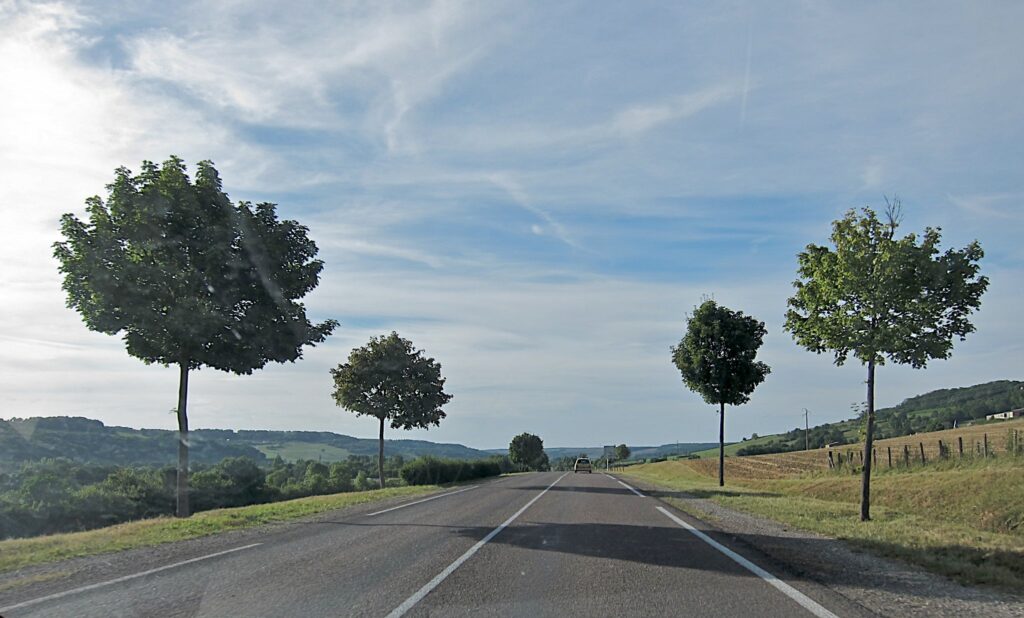
On the road…

… in Burgundy, September 2012.


Quote of the Day

“Courage is the only virtue you can’t fake”.

  • Nassim Nicholas Taleb

Musical alternative to the morning’s radio news

Pentangle | Goodbye Pork Pie Hat

Link


Long Read of the Day

 America has identified its greatest enemy: Western Europe

I can’t understand why European states continually fail to understand the implications of J.D. Vance’s speech to the Munich Security Conference. Which is why Henry Farrell’s latest essay on what the US National Security Strategy has become under Trump was so welcome. In it he distills what he learned from a recent closed-door, high-level conference he attended in Switzerland. And it’s salutary stuff.

Sample:

It has been clear for some while that the Trump administration has a … novel … understanding of America’s relationship with Europe. But it has not always been as clear as it ought be to European officials. These officials have often vacillated in response to previously unthinkable demands, sometimes making concessions, sometimes looking to preserve a little autonomy. Brief shocks (such as J.D. Vance’s speech at Munich) have not been sufficient to galvanize long term coherence.

[…]

The National Security Strategy declares that Europe is not just in economic decline, but faced with the prospect of “civilizational erasure.” The “European Union and other transnational bodies” are undermining “political liberty and sovereignty.” Europe is riddled with “censorship of free speech and suppression of political opposition.” It is led by “unstable minority governments, many of which trample on basic principles of democracy to suppress opposition.” Most fundamentally, Europe is being turned into a zone of “strife” by migration policies, so that it will be “unrecognizable” in two decades. Certain NATO members will become “majority non-European”and no longer reliable allies. It doesn’t take much sophistication to decipher what terms like “majority non-European” are intended to mean.

However, the NSS says, America “cannot afford to write Europe off.” Instead, it will work to foster what it calls “genuine democracy, freedom of expression and unapologetic celebrations of European nations’ individual nations’ character and history.” America “encourages its political allies in Europe to promote this revival of spirit, and the growing influence of patriotic European parties indeed gives cause for great optimism.” To help all this along, the NSS says that America will undertake actions which include “[c]ultivating resistance to Europe’s current trajectory within European nations” and “[b]uilding up the healthy nations of Central, Eastern, and Southern Europe through commercial ties, weapons sales, political collaboration, and cultural and educational exchanges.”

This is, quite straightforwardly, a program for regime change in Europe, aimed at turning it into an illiberal polity. Accomplishing this transformation would involve undermining existing liberal governments in cahoots with Europe’s own far right, and turning Eastern Europe into an ideological wedge against its Western neighbors…

When Russia invaded Ukraine I remember thinking that the post-war “holiday from history” that we Europeans have enjoyed is over. Not only is the US no longer a potential ally, it’s turning into an adversary. We’re into an entirely new game.


Books, etc.
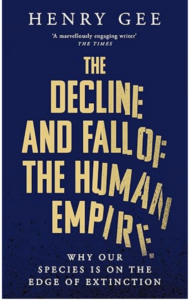
Ever since I first read Yuval Noah Harari’s Sapiens I’ve had the thought that maybe we humans were’t such a good thing for the planet. Henry Gee, a palaeontologist, hammers this message home in his new book. I was first alerted to it by a splendid episode after listening to a Past, Present, Future episode in which he talks to David Runciman. The (only) cheery thought is that we may still have 10,000 years to go before we’re extinct.


My commonplace booklet

From Niall Ferguson, writing about the AI feeding frenzy. He’s reminded of the Dr Suess story in which Sam-I-Am is continually trying to sell ‘Green Eggs and Ham’ to people.

When you come to think of it, there is often someone called Sam trying to sell you something you don’t initially want. In the 1920s, as I learned from Andrew Ross Sorkin’s 1929: Inside the Greatest Crash in Wall Street History and How It Shattered a Nation, it was Sam Crowther’s article, “Everybody Ought to Be Rich” — exhorting housewives to buy stocks with margin credit.

Which reminds me, I need to read the Sorkin book.


Feedback

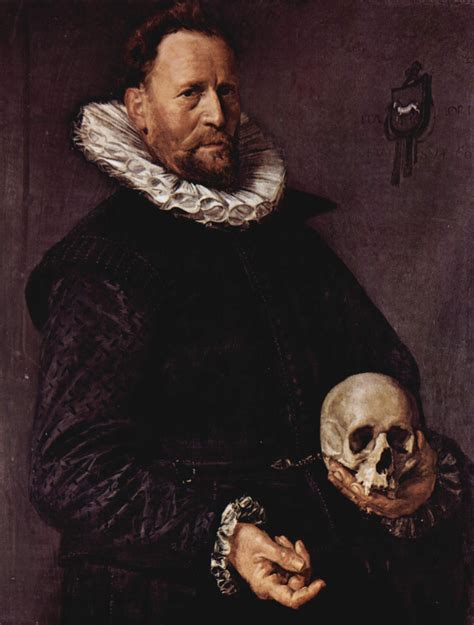
My use of the Frans Hal’s portrait of a wealthy Dutchman prompted Sheila Hayman (Whom God Preserve) to point me to an interesting commentaryon Dutch still-life painting.

“The skull,” she writes

is actually the least interesting and crudest symbol of it; the link goes into all the details but, crudely, flowers and fruit are often depicted in full bloom/on the point of decay, which is the signifier of mortality and the transience of life; insects on or in them, ’the worm in the bud’ , signify that no physical thing is without its flaw, and only the immortal can attain perfection; and scientific instruments, mirrors, etc signify the vanity and conceit of human ambition.

Everything in one of these elaborate paintings has a meaning, in addition to the technical virtuosity it displays.

The great thing about being a blogger, as I’ve often observed, is that you continually learn stuff from your readers.


This Blog is also available as an email three days a week. If you think that might suit you better, why not subscribe? One email on Mondays, Wednesdays and Fridays delivered to your inbox at 5am UK time. It’s free, and you can always unsubscribe if you conclude your inbox is full enough already!

Friday 5 December, 2025

Memento mori

I’m writing a piece about what great wealth does to those who possess it. The context is the current crew of tech zillionaires in Silicon Valley and their pathetic obsessions with life extension or even ‘synthetic immortality’. And then I remembered Frans Hals’s 1612 portrait of a wealthy man of his time, with the skull signifying that nothing lasts forever. Carpe diem and all that.


Quote of the Day

”AI’s use by high-school and college students to complete written assignments, to ease or avoid the work of reading and writing, is a special case. It puts the process of deskilling at education’s core. To automate learning is to subvert learning.”

  • Nicholas Carr

Musical alternative to the morning’s radio news

Hot House Flowers | Lakes Of Ponchartrain

Link


Long Read of the Day

Tom Stoppard’s Ordinary Magic

Lovely tribute to a great playwright by Henry Oliver.

Stoppard’s genius was to make a confluence of the highbrow and the lowbrow. Jumpers is a satire of academic philosophy, written in the sort of dialogue critics inevitably call dazzlingly clever; but it contains a set of gymnasts, who make human pyramids on stage, and, at one point, the philosopher opens the door with half his face covered in shaving cream with a tortoise under his arm and a bow and arrow in his hand.

Such moments are the essence of farce, which demands the question: “how did we get here?”

Stoppard’s art is full of such moments, sometimes involving half-shaved philosophers and tortoises, sometimes moments of great beauty such as the head-spinning twists of Arcadia or the Joycean magic of Travesties, and sometimes with periods of true philosophy, as in Rosencrantz and Guildenstern are Dead.

In these moments, the confluence of high and low is revealed as the essential structure of Stoppard’s work. We can never quite say what is farcical and what is serious…

Very nice piece.


Books, etc.

All the books Cory Doctorow reviewed in 2025

Córy Doctorow (Whom God Preserve) is both an inspiration and a cause of desperation to lesser beings. If you want to see why, cast an eye on his blog, his lectures, essays and novels. Or examine his list of what he read (and wrote about) in 2025. I often wonder when he sleeps, if indeed he does. The books I personally most regret not noticing from his current list are Ellen Ullman’s Close to the Machine: Technophilia and its Discontents and Ron Deibert’s Chasing Shadows: Cyber Espionage, Subversion and the Global Fight for Democracy. So you can perhaps guess what’s on my Xmas list.


Linkblog

Something I noticed, while drinking from the Internet firehose.

  • Simon Willison’s fascinating blog post comparing the energy consumption of a brief exchange with an LLM with that of watching a Netflix stream. He’s such a careful and open researcher.

Feedback

Thanks to Ian Clark, who pointed me to “the (disputed) antipodean origins of the flat white”.

Looks like yours had chocolate on top, which I believe is a no-no, but then almost anything goes these days I suppose.

Yep.


This Blog is also available as an email three days a week. If you think that might suit you better, why not subscribe? One email on Mondays, Wednesdays and Fridays delivered to your inbox at 5am UK time. It’s free, and you can always unsubscribe if you conclude your inbox is full enough already!

Wednesday 3 December, 2025

Into the Vortex

What happens when you ask for a ‘Flat White’. (I’ve often wondered where that name comes from.)


Quote of the Day

When asked what Rosencrantz and Guildenstern are Dead was about he replied that it was about to make him a lot of money. He used to reply, when asked where he got his ideas from: “Harrods.”

  • Henry Oliver, writing about Tom Stoppard (RIP)

Musical alternative to the morning’s radio news

Mozart| Don Giovanni, K. 527 / Act 1 | Là ci darem la mano

Link

Verily, the Devil always has the best tunes.


Long Read of the Day

 Watching politicians failing yet and yet again: lessons from a life as an environment writer

Paul Brown was the Guardian’s environment correspondent from 1989 until 2005 and has written many times for the paper since. He submitted his final column last week after being diagnosed with terminal lung cancer. In it, he reflects on 45 years writing for the paper.

I first got to know him in 2011 when I invited him to Cambridge for a Term as a Press Fellow on a programme I run in my College, Wolfson. He spent his time with us writing an excoriating paper on what he called the “voodoo economics” of Britain’s nuclear industry, and what’s interesting about this piece is its suggestion that not much has changed.

There has been another – in my view, very sinister – development, which has put back the cause of action on climate change into very dangerous territory: the latest “nuclear renaissance”. I started covering the nuclear industry in the early 1980s, and like all well trained journalists was neutral then. Nuclear power was a success story because it was part of the National Coal Board and its true costs were hidden, not just from consumers but from the government.

The first nuclear renaissance took place in the late 1980s when the Sizewell B nuclear power station was being built. Several more were on the drawing board, but Thatcher demanded to know the cost and the resultant price of electricity to consumers, and was so enraged that she and the government had been lied to about the real cost that she cancelled the rest of the programme. It was one of my more memorable stories.

At least two more “renaissance” moments have come and gone, mostly also on cost grounds, but now Keir Starmer’s government has gone completely gung-ho on nuclear – to the utter dismay of many environmental campaigners.

The government subsidies are simply huge: a nuclear tax is being levied on hard pressed consumers. What is the government thinking of? The fossil fuel industry, which has thrown its weight behind nuclear power, is of course delighted; all these decades of new construction without any electricity to show for it gives at least another decade or two of unabated burning gas. It is no accident that Centrica invested in Sizewell C – after all, it is primarily a gas company. With Sizewell C likely to take 10 to 15 years to build, that is a lot of extra gas being burned and profits for shareholders.

It’s a sobering story by a fine journalist and well worth reading. I have an eerie sense that governments’ historical infatuation with nuclear power (which, remember, was going to be “too cheap to meter”) is now being reenacted with ‘AI’.


Books, etc.

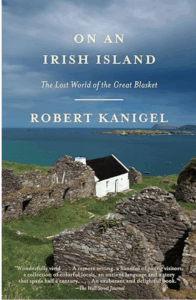
This is a truly beautiful book. It tells the remarkable story of a remote Irish island nearly untouched by time in the first half of the twentieth century, and of the adventurous men and women who visited and were inspired by it. I was reminded of the book when we were in Dingle last weekend. What’s remarkable about it is the way the author, an American writer and academic, developed such a sympathetic and intuitive understanding of the community that lived on the island until the hardships implicit in their way of life eventually led to their evacuation to the mainland in the 1950s.


Feedback

Many thanks to everyone who wrote in after I got Monday’s date wrong. All the suggested interpretations, including smoking too much dope and an excess of Irish whisky were wide of the mark (except perhaps for “ageing”). I’ve always admired Sam Johnson’s celebrated response to the indignant lady who asked him how he could possibly have defined ‘pastern’ as ‘the knee of a horse’: “Ignorance, Madam, pure ignorance”. In my case, for ‘ignorance’ read ‘incompetence’.


This Blog is also available as an email three days a week. If you think that might suit you better, why not subscribe? One email on Mondays, Wednesdays and Fridays delivered to your inbox at 5am UK time. It’s free, and you can always unsubscribe if you conclude your inbox is full enough already!

Monday 1 December, 2025

”What do you mean, “No”?


Quote of the Day

”Trump’s most outrageous innovation was dispensing with the pretense that he needed to provide reasons for his positions. The source for all of his claims was his own authority—he endlessly assured audiences that he knew more about anything than anybody (“Believe me”). Those who endorsed him—at first, mostly a motley collection of has-beens or outsiders—were winners. Anybody who challenged him was a loser whom Trump would dismiss, playground-style, as crazy, weak, sick, dumb, pathetic, a liar, a bimbo, a piggy. His greatest apostasy was not his rejection of any particular set of ideas, but his categorical rejection of the whole notion of ideas.”

  • Jonathan Chait, writing in The Atlantic

Musical alternative to the morning’s radio news

The Lee Valley String Band | When First Into This Country

Link


Long Read of the Day

The first surprise at the Other Voices festival in Dingle came on Friday night when Michael D. Higgins, who had just stepped down after 14 years as the President of Ireland, turned up unexpectedly to read three poems from a recently published collection of his.

Ponder that for a moment: a president of a liberal democracy who had found the time and energy at the age of 84 to publish a book of his poems. (He’d already published four other books of poetry and three collections of essays.) But then Michael D. (as he is universally known in Ireland) is sui generis. He’s also well known for ignoring the constipated reticence traditionally expected of Irish heads of state by his penchant for expressing distaste for neoliberal capitalism and other excrescences. Indeed, one suspects that members of the Irish political establishment thought of him as Mrs Breen in Ulysses described her husband: “a caution to rattlesnakes”.

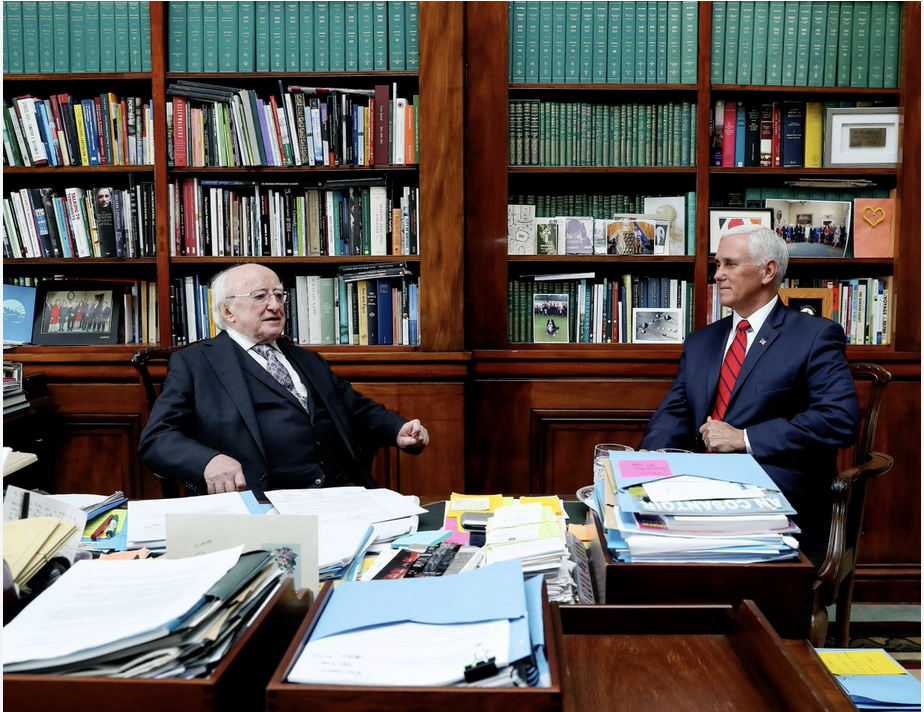
When US Vice-President Mike Pence came to Ireland there’s a photograph of him with Michael D. in the latter’s study in the presidential residence. It shows the two statesmen in a bookish study almost as untidy as mine!

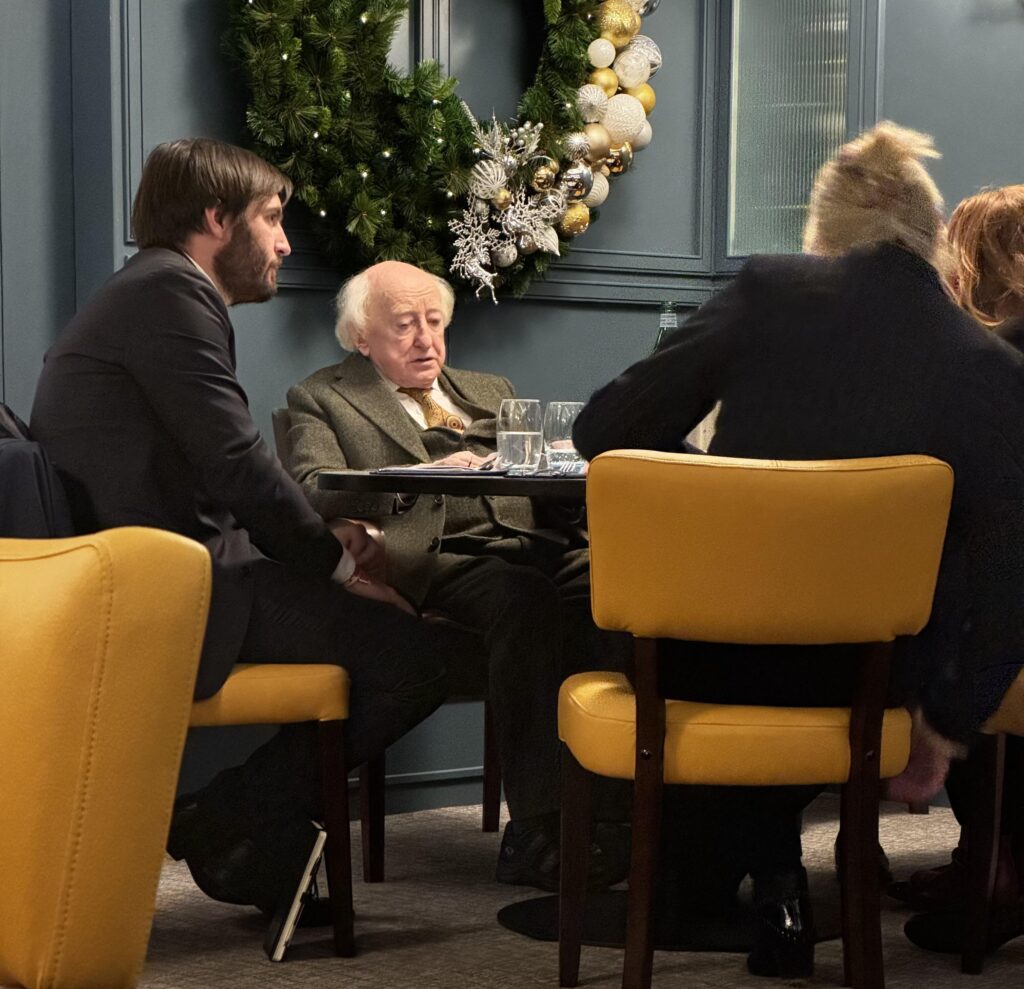
After watching him deliver his poems on Friday we went looking for supper and found a quiet corner of the Skellig hotel (where we were staying). And just as we were contemplating the choice of dessert, who should walk in but the former president, his wife and a couple of companions who sat at a corner table just across from us. No fuss, no security detail. No fawning maitre’d. Just a former president coming in for a spot of dinner.

Now, I know that Ireland is a small country in which life moves at a different pace and on a different scale. Still, there was something comforting in the quiet normality of it all…

It also brought back memories of a day in 1995 when I spent an enjoyable morning with Michael D. He was then a government minister with responsibility for arts and culture and his department had published a Green Paper on the future of broadcasting which was radically different from the normal run of Irish governmental publications. It seemed to me that the minister’s fingerprints were all over it and the Observer (whose TV critic I then was) dispatched me to interview him. So I flew to Ireland on a wet Sunday evening having arranged to meet him in the Great Southern Hotel in Galway (his constituency) the following morning at 10:30am.

The interview was scheduled for an hour because he had a Cabinet meeting in Dublin in the afternoon. I had booked a small conference room and coffee. He arrived slightly late and remarked on the box of cigars which had slipped out of my case when I was taking out my notebook. I asked him if he would like a cigar. “Yes, “he replied, “but don’t tell my wife”. So we sat there in a classic smoke-filled room smoke and talked. And talked. And talked. It was not so much an interview as a conversation between a couple of eggheads. We talked about media ecology, Neil Postman, Lewis Mumford, Marshall McLuhan, censorship, the impact of TV on Irish society, the Late Late Show, and sundry other topics.

11:30 came and went. More coffee was ordered. Periodically, his Private Secretary would put his head round the door and be waved away. Eventually, though, the poor chap became more insistent. “Minister,”, he said, ” I’m sorry to interrupt, but if we don’t leave now you will miss the Cabinet meeting”. At which point, Michael D. conceded, shook hands and left.

For me, what was most striking about the experience was that I had been talking to a politician who was deeply, deeply interested in ideas! In a way, I suppose it might have been like talking in the 1970s to Roy Jenkins, Denis Healey or Tony Benn — to name just three titans of that vanished age.

So you can perhaps understand why, on a Friday night in the westernmost parish in Europe, I wound up unsuccessfully racking my brains trying to think of a contemporary British (or indeed Irish) politician who would be as engaging an interlocutor as Michael D. had been all those years ago.


My commonplace booklet

Gay Byrne’s Christmas Cake Recipe

Since it the first day of December you will doubtless be thinking of assembling the ingredients for the festive cake. In which case you will find this recipe by a great Irish broadcaster (who is, sadly, no longer with us) useful. Take a few minutes to learn how you can amaze your friends and family.


This Blog is also available as an email three days a week. If you think that might suit you better, why not subscribe? One email on Mondays, Wednesdays and Fridays delivered to your inbox at 5am UK time. It’s free, and you can always unsubscribe if you conclude your inbox is full enough already!