Unflash Gordon’s Al Gore moment

Remember when Al Gore invented the Internet? (Well, actually I suspect that that story may have been an embroidered urban myth.) But here’s a report of a claim by Gordon Brown that a Brit invented the iPod.

While talking about the economy during daytime television show, This Morning, Brown let it drop that it was a Briton who in fact invented the iPod.

“Companies will come and locate in Britain if we have the talented people to offer them,” said Brown. “People with ideas and innovative things that they can market. You know it was a Brit that invented the iPod. If you’ve got really innovative things, people will come to your country to locate.”

Perhaps Brown was confused about the role of design engineer, Jonathan Ive, a Brit who crafted the casing and packaging of the iPod and many other Apple products. We dare say there’s a subtle difference between the house painter and architect. (Let’s also ignore that Brown’s one example of British ingenuity came from an American company, and that mp3 player sales aren’t exactly keeping the US economy primed at the moment.) And even then, Ive ran off to America for a job at Apple in 1992 and currently lives in California.

The Register maintains that the iPod was invented by Tony Fadell, who hails from Michigan!

Labour’s year of magical thinking

Good column by Martin Kettle…

The problem is that Brown is Brown. There is not some other Brown. As he made clear to Andrew Marr last weekend, the prime minister sees the May 1 election reverse as a reprimand, not a rejection. His response is to work harder, like Boxer in Animal Farm. But working harder does not mean working differently, as the clumsy handling of Scotland this week showed.

Brown is set in his ways. His ways are tactical, triangulatory and increasingly old-fashioned. He remains fixated on the Daily Mail. His response to Frank Field’s campaign about the effects of his tax changes on the poor was classic old politics: first he vehemently denied it; then he sent out his nasties to try to take his critics down; then, I am told, he tried to buy Field off – twice – with a government job. Only when that failed did he then concede, extremely grudgingly, that he had got anything wrong.

These were not the responses of a man who understands change. His preposterous 20-hour days – the Sarah Brown profile in the June issue of Vogue reveals that he is often still working at 4am – will become 22-hour days and at some point, he believes, the voters will realise that he is right. To put it at its gentlest, this is what Joan Didion calls magical thinking.

The flipside of the denial about Brown is the continuing denial that anyone other than Brown is papabile. This is the kind of doubt that takes root during long incumbencies of any kind. But the imperative of events invariably dispels it. Political parties always have other potential leaders in the ranks. Labour today has several of them…

The ethics of toffism

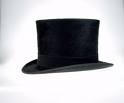
Toffism, in case you don’t know, is discrimination against Etonians and the Bertie Wooster class generally. Edward Timson is the toff who is representing the Conservative interest in the forthcoming Nantwich and Crewe by-election, and it seems that the poor dear is being persecuted by satirists in top hats. Catherine Bennett has this to say about all that.

Timpson’s pain reminds us that it will not do, any more, for toffists to stigmatise the privileged, on the basis that an accident of insanely good fortune is preferable to one of doomed deprivation. The hapless victim of affluence, George Osborne, for instance, cannot help being named after a brand of wallpaper, any more than Boris Johnson chose to call himself ‘de Pfeffel’ or David Cameron elected to put himself through Eton – a ‘great school’, incidentally, as he ‘fessed up on Newsnight not long ago.

But the toffs’ tormentors will not let up. Just last week, Cameron was forced to stand up and ‘fess again: ‘Yes, I am wealthy, I have a very well-paid job and so does my wife.’ But if you prick him, does he not bleed? Or as he put it, with a simplicity which put some in mind of a young Orwell: ‘I drive my own car. I fill it up at the pumps and when diesel hits 121.9p per litre, which I paid outside Chipping Norton a couple of weeks ago, it really struck me that this whole tank is costing me £10 to £15 more than previously.’

So Etonians “feel the pain” too, just like Unflash Gordon. Such unity in diversity gives one a nice warm feeling. Or is it just that the seat of one’s pants has just caught fire?

Ms Bennett takes a much more enlightened view of all this.

Instead of lampooning Cameron’s otherness, his critics might want to celebrate cultural diversity, with the re-emergence in public life of a particular Tory type which was thought, until recently, to have dwindled almost to the point of extinction. Although the recent explosion in the number of breeding pairs is certainly impressive, Westminster, looked at as a whole, is very far from being ‘swamped’, as alarmists from Toff Watch have put it, by Cameron’s patrician army. Rather like Poles in Lincolnshire, it is just that its membership tends to concentrate in certain localities: Notting Hill for instance; Chipping Norton; the shadow cabinet. As they have every right to do. No one, I think, really wishes to return to the kind of bigoted hate-speech that began to sound old fashioned three decades ago, when Mrs Thatcher, declared class a ‘communist concept’, a unifying project continued by John Major, groping towards his ‘classless society’ and latterly by Tony Blair, who objected, early in his career, to Marxism’s ‘false view of class’.
Flash Gordon

Andrew Rawnsley reflects on the findings of a 5000-sample poll published in today’s Observer.

What will especially frighten his advisers is the utter failure of the attempt to mount a fightback since the May Day massacre. In the wake of Labour’s slaughter in the local elections, the Prime Minister has toured TV’s soft sofas in an bid to claw back some public affection. Attempting to do human, he has told voters that he ‘feels your pain’. The public are not responding with empathy for his plight, but with an even bigger urge to inflict pain on their Prime Minister. His personal ratings have actually turned for the worse since he attempted the relaunch of his premiership.

It is not just the depth of this collapse that is stunning. It is the sheer width of it, the comprehensive shattering of his reputation in all the areas that matter to the public. On every leadership quality that is important, the Prime Minister is now regarded less favourably than David Cameron. Even when Jim Callaghan’s Labour government was in terminal decay, his personal ratings were still higher than those of Margaret Thatcher. Mr Brown, a figure who has been dominant in British government for more than a decade, is now seen as less fit to be Prime Minister than his Tory rival, a man whose only job in government has been as a bag carrier to Norman Lamont…

Can Brown recover?

Maybe, says the Economist.

Can Mr Brown reverse the dynamics? He has been offered no shortage of advice from his party. Turn left, say those who never much cared for the New in New Labour, and in his weakness see a chance to ditch it. Smile more, say others—though when Mr Brown tries to speak human he seems less convincing than when he sticks to macroeconomics. There are a few who, despite the risk of looking chaotically undemocratic, simply enjoin him to go: over half the Labour supporters in a Populus poll for the Times want him out.

Mr Brown can scarcely complain about disloyalty, for he helped to inculcate a taste for plots and mutinies during his long march to Downing Street. But would his removal improve things? From the Labour Party’s point of view, there are too many flimsy contenders to replace him and scarcely any serious ones. The struggle to get rid of a leader causes lasting damage—as the Tories, who only recently recovered from the civil war unleashed by the ouster of Lady Thatcher, know well. Besides, the Tories need a huge swing to form a government at the next election, probably in 2010. They are still planning for a hung parliament. Scandal, or an eruption of atavistic, Conservatism may yet weaken Mr Cameron. The new mayor of London, Boris Johnson, now an icon of Tory resurgence, may embarrass his party.

Three down, next one up

Bertie Ahern, the Irish Taoiseach (Prime Minister to you), tendered his resignation to the President at 6.10pm yesterday. Today Brian Cowen, his multi-chinned successor as leader of Fianna Fail, will be elected Taoiseach when the Dail (Parliament) meets.

Interesting Fact #1: Fianna Fail is the political wing of the Irish construction industry.

Interesting Fact #2: Cowen’s last three predecessors as Fianna Fail leader have had to resign because of, er, difficulties over money. Charlie Haughey went because evidence of his deep-seated corruption became too widespread to be ignored. His successor Albert Reynolds went because a public inquiry into subsidies to beef exporters had unearthed unsavoury details about his time as Minister of Commerce. And Bertie Ahearn walked because the evidence to the Moriarty Tribunal about his astonishing personal finances was making the normal business of government impossible.

It will be interesting to see if Mr Cowen can break this impressive mould.

Clinton fantasies

Timothy Noah doesn’t think Hillary Clinton can win the nomination. Here’s why.

Please, let’s stop pretending there’s much suspense about who the nominee will be. As an arithmecrat, I will not consider anyone the winner until a candidate achieves 2,025 delegates. But neither am I obliged to believe Hillary Clinton has a plausible shot. She doesn’t.

His arithmetic is interesting — and plausible.

Bertie Wooster elected!

Yep. He’s London’s new Mayor. And all the while he thought he was running for the Wine-Tasting Committee of the Drones Club. Much public entertainment lies ahead.

Bad news for the Supreme Leader, though. The game’s over. And it doesn’t have all that much to do with Gordon Brown’s competence/incompetence. It’s simply that Labour’s time is up. Three reasons for this:

  • Events, dear boy, events: the long boom is over; house prices are on their way down; negative equity beckons; the feel-good factor has evaporated.
  • All governments run out of steam. I had dinner recently with a senior civil servant. I asked him what the atmosphere is like in Whitehall. He said that it felt like the beginning of the end — that the government had basically run out of ideas, that ministers were exhausted and becoming demoralised.
  • The great British electorate isn’t very interested in politics: Labour has been in power so long that it’s become boring. The man on the Clapham omnibus thinks it’s time for a change. It’s nothing to do with a belief that Cameron & Co are wonderful, or even competent. There’s no evidence yet that they could run a whelk stall. Their main merit is just that they’re not Harriet Harman/Gordon Brown/Jack Straw/Jacqui Smith/Hazel Blears…
  • The Observer: Blair told aide ‘Gordon will lose to Cameron’

    Way back in December 2005 I wrote this:

    Whenever someone intelligent seems to be behaving oddly, the hypothesis has to be that they know what they’re doing and that you simply haven’t figured it out. (Sometimes clever people do barmy things, but that’s not the best initial bet.)

    So it is with Tony Blair and the Succession. If — as is widely believed — there is some kind of deal between him and Gordon Brown that the latter is the anointed successor, then Blair’s declared intention of serving “a full term” as Prime Minister seems bizarre. If he really wanted Brown to succeed and have a fighting chance of winning the next election, then there must be an orderly transition fairly soon (and certainly no more than 18 months from now). But this is not how Blair — steaming fanatically ahead with his reform-or-bust agenda — is behaving. Why?

    Watching Brown in action this week as Adair Turner’s sensible report on the pensions crisis was published, an obvious thought occurred to me (I’m slow on the uptake, alas). It’s this: Blair doesn’t want Brown to succeed him, and he’s going to do everything in his power to stop him becoming leader!

    What’s more, he’s right. If Labour goes into the next election with Brown facing David Cameron as the Tory leader, then they will lose.

    Since then various people have pooh-poohed this analysis as the purest fantasy. So it’s really interesting to find this story in this morning’s Observer.

    Gordon Brown’s leadership was in turmoil last night after claims that Tony Blair does not believe he is capable of beating David Cameron and winning the next election.

    The humiliating charge from Blair’s former fundraiser and confidant Lord Levy came as Labour MPs pleaded for Brown to stay away from the campaign trail in this week’s critical London mayoral elections for fear of wrecking Ken Livingstone’s chances. Levy’s intervention will confirm fears that Brown is becoming an electoral liability.

    Even though Blair last night issued a statement categorically denying the claims and insisting he did believe Labour could win under his successor, there was consternation in Downing Street.

    In his memoirs, serialised today in the Mail on Sunday newspaper, Levy writes that Blair ‘told me on a number of occasions he was convinced Gordon “could never beat Cameron”‘.

    I can’t claim any special insight for my original analysis. Just common sense.

    Testosterone and politics

    If you do nothing else this weekend, Read Catherine Bennett’s wicked essay on the gender gap in politics. She begins with the strange tendency of the mass media to examine the physical attributes of female politicians while remaining strangely uninterested in the legs, breasts, complexions and hair of their male counterparts. And ends with this lovely blast:

    Even in Spain, however, discrimination does not fall mainly upon the plain. Female members of Zapatero’s cabinet have already been depicted, by one of many critics, as a ‘battalion of inexperienced seamstresses’. Experienced or not, the impact on Spain’s identity of so many seamstresses, one of whom is both pregnant and defence minister, is all the more fascinating in the light of a new report on the effect of testosterone on male behaviour. Researchers concluded that City traders are martyrs to their hormones, powered to take risks by testosterone spikes to which they then become addicted, creating yet more testosterone; then plunged, after the effects of too much recklessness, into the state of ‘learned helplessness’ that is brought on by a rush of cortisol.

    Since women are less vulnerable to both testosterone and episodes of over-excitement than young men, the authors of this study proposed that banks may want to employ more women and older men on their trading floors.

    Given that we still live with the consequences of the risks taken by the gang of hopeless testosterone addicts who constituted Blair’s sofa cabinet, it is plain that Gordon Brown, once he has recovered from his current cortisol high, must nip this problem in the bud. In the interests of their country, his more hormonally active male ministers, from Ed Balls to James Purnell and Andy Burnham, the much advertised ‘young ones’ of the last reshuffle, would surely respond to a request that they undergo castration, once they have completed their families. And if that seems a lot to ask, one can only point out that they would certainly find the only other option for cabinet testosterone control even more painful. Involving, as it inevitably would, the introduction of senior women.